


Jewish Onliner is an independent publication. If you find our work valuable, please consider becoming a paid subscriber. You can also subscribe to us on WhatsApp and Telegram. Follow us on Instagram, Discord, and X.
The sixth piece of the Gaza GenoLIE campaign’s eight-part puzzle documents how Hamas embedded tunnels, fighters, weapons and command infrastructure within Gaza’s civilian environment while reserving its underground protection for the terror group’s own members.
The piece focuses on Hamas’s use of civilians and protected sites to shield military objectives from Israeli attack. The strategy provides essential context for assessing the images and casualty figures used to support the manufactured narrative that Israel is committing genocide in Gaza.
Hamas Built Its Military Network Beneath Civilians
International humanitarian law prohibits using civilians to shield military objectives. Hospitals receive special protection, but that protection is not unconditional.
Under the laws of war, hospitals can lose their protected status when they are used to commit “acts harmful to the enemy,” including housing fighters, weapons or military command posts, according to the ICRC.
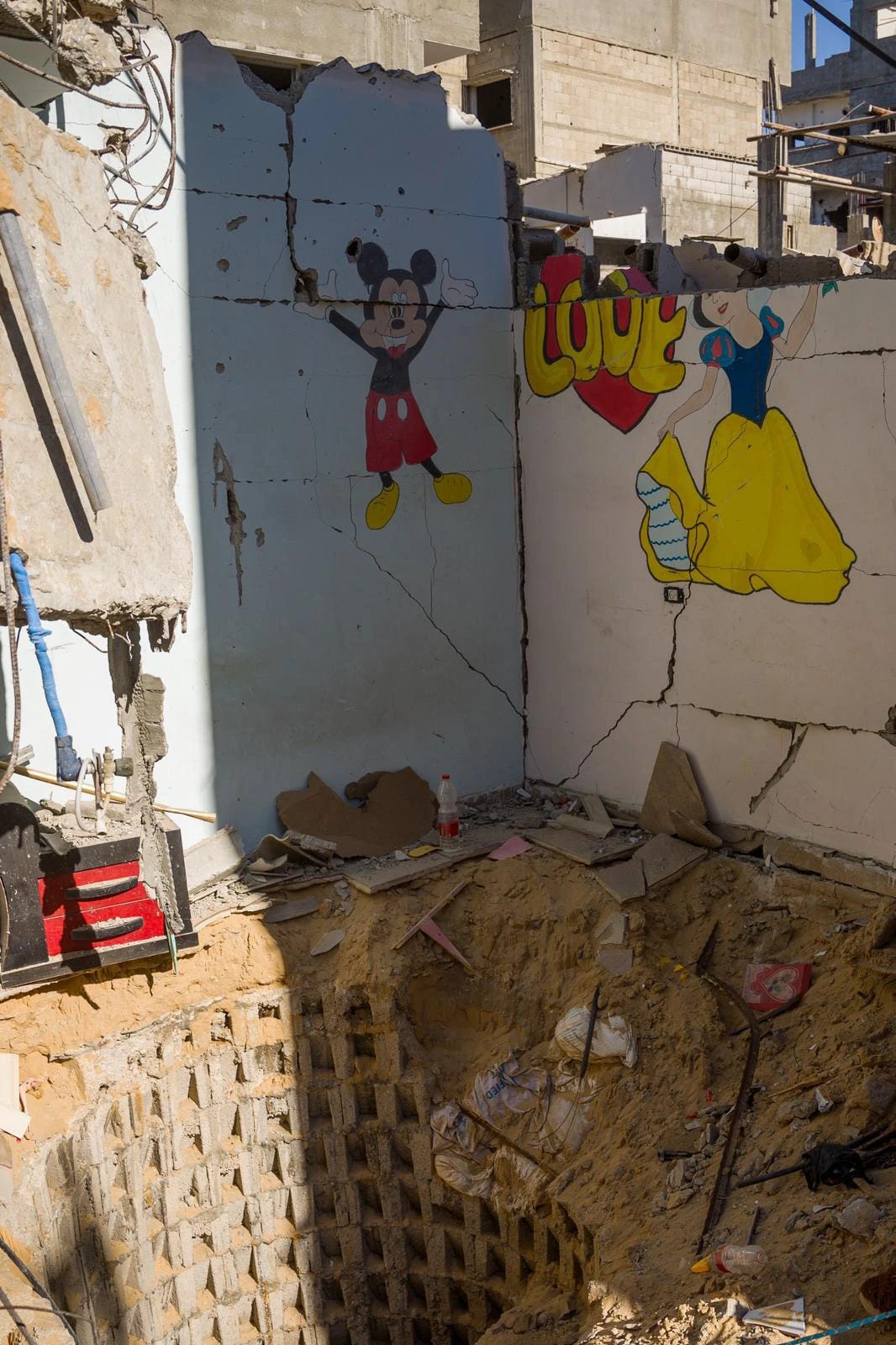
Hamas deliberately converted Gaza’s civilian population into a defensive asset by constructing a subterranean network exceeding 350 miles beneath its cities. Tunnel entrances were placed beneath hospitals, schools, mosques and even children’s bedrooms, positioning Hamas’s military infrastructure inside locations that constrain Israeli operations.
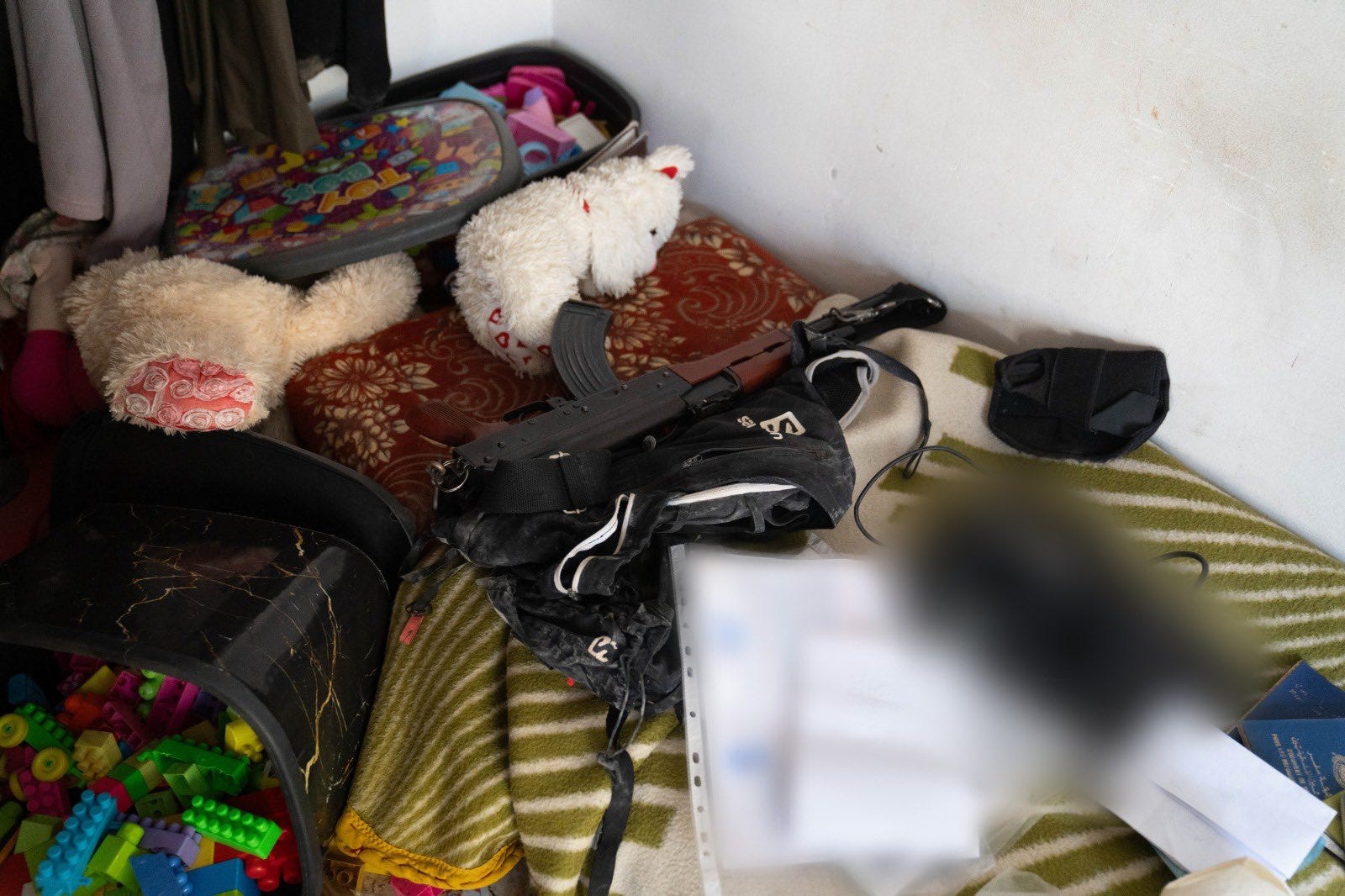
Urban-warfare expert John Spencer described the tunnels as a military network built beneath Gaza’s urban areas. The IDF has also published extensive documentation of tunnel shafts, weapons and operational infrastructure discovered within civilian sites.
In September 2024, Israeli forces located the shaft leading to the tunnel where the bodies of six murdered hostages were recovered. The entrance was beside stuffed animals and cartoon artwork in a children’s area.
Hamas Said Its Tunnels Protected Fighters
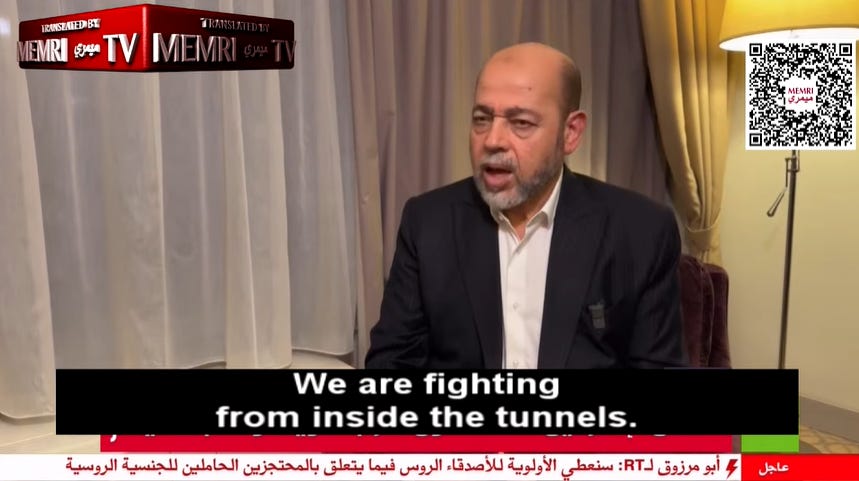
Senior Hamas member Mousa Abu Marzouk described the purpose of the tunnels during an October 2023 interview with Russia Today Arabic.
Asked why Hamas had constructed a vast tunnel network but had not built shelters for Gaza’s civilian population, Abu Marzouk said the tunnels existed to protect Hamas members from Israeli airstrikes.
“We are fighting from inside the tunnels,” he said.
Abu Marzouk assigned responsibility for protecting Gaza’s civilians to the United Nations and Israel, according to the interview.
Hamas placed its fighters underground while leaving civilians without access to comparable protection. It also discouraged or prevented Palestinians from evacuating combat areas or seeking safety, according to a May 2026 analysis by the Foundation for Defense of Democracies.
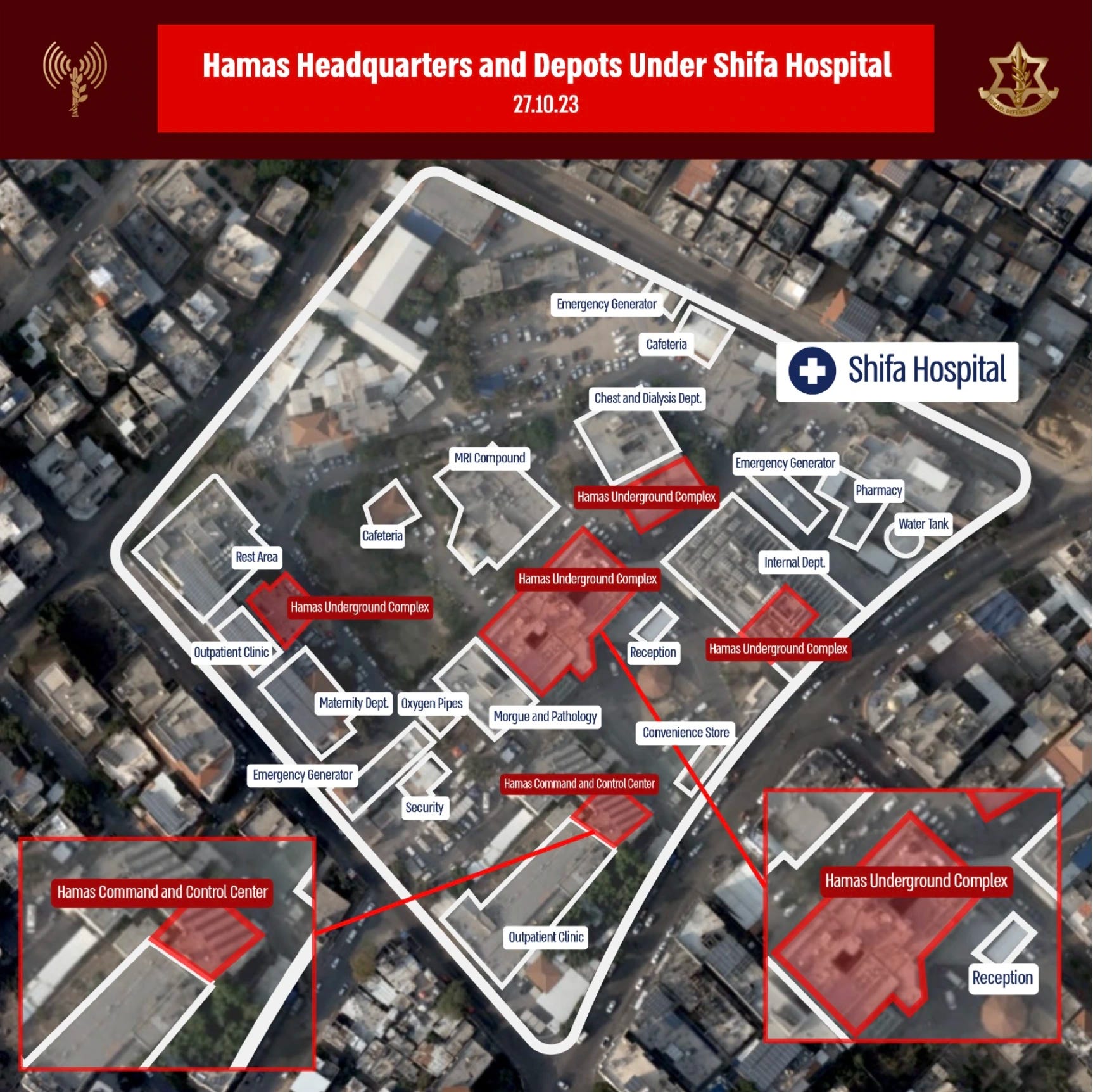
Al-Shifa Hospital, Gaza’s largest medical complex, became the most prominent test case for Hamas’s use of protected civilian infrastructure. Israel and the United States asserted that Hamas used the hospital for military purposes above a tunnel network. In November 2023, the IDF released footage of a fortified tunnel beneath the compound.
A subsequent New York Times investigation reported that Hamas used the hospital for cover, stored weapons inside it and maintained a hardened tunnel beneath the complex. The tunnel was supplied with electricity, water and air-conditioning. Haaretz also concluded that the hospital had been used for military purposes. The IDF separately identified a Hamas command center beneath the compound.
Al-Shifa was one of several documented cases involving Hamas’s use of hospitals and other civilian infrastructure for military purposes. An April 2025 report by the Henry Jackson Society compiled evidence from international media reports, military assessments, legal analysis and firsthand accounts. It documented tunnels beneath residential areas, schools and hospitals, weapons and command posts inside civilian sites, and military activity within humanitarian zones as components of Hamas’s broader human-shields strategy.
Human Shields Change How Casualties Are Assessed
When military operations are deliberately embedded within protected civilian sites, the party using those sites bears primary responsibility for the danger imposed on civilians. The presence of human shields also affects how an attack is evaluated under the laws of war. Proportionality is assessed by weighing anticipated civilian harm against the military advantage of the target. It is not determined through a simple casualty count.
A high civilian toll during combat against an enemy operating from civilian infrastructure is therefore not, by itself, evidence of an intent to destroy a population.
Hamas’s human-shields strategy was designed to place Palestinian civilians in danger and produce images of civilian casualties capable of generating international pressure against Israel. Those images cannot be assessed separately from the tunnels, weapons, fighters and command infrastructure positioned within the civilian environment.