


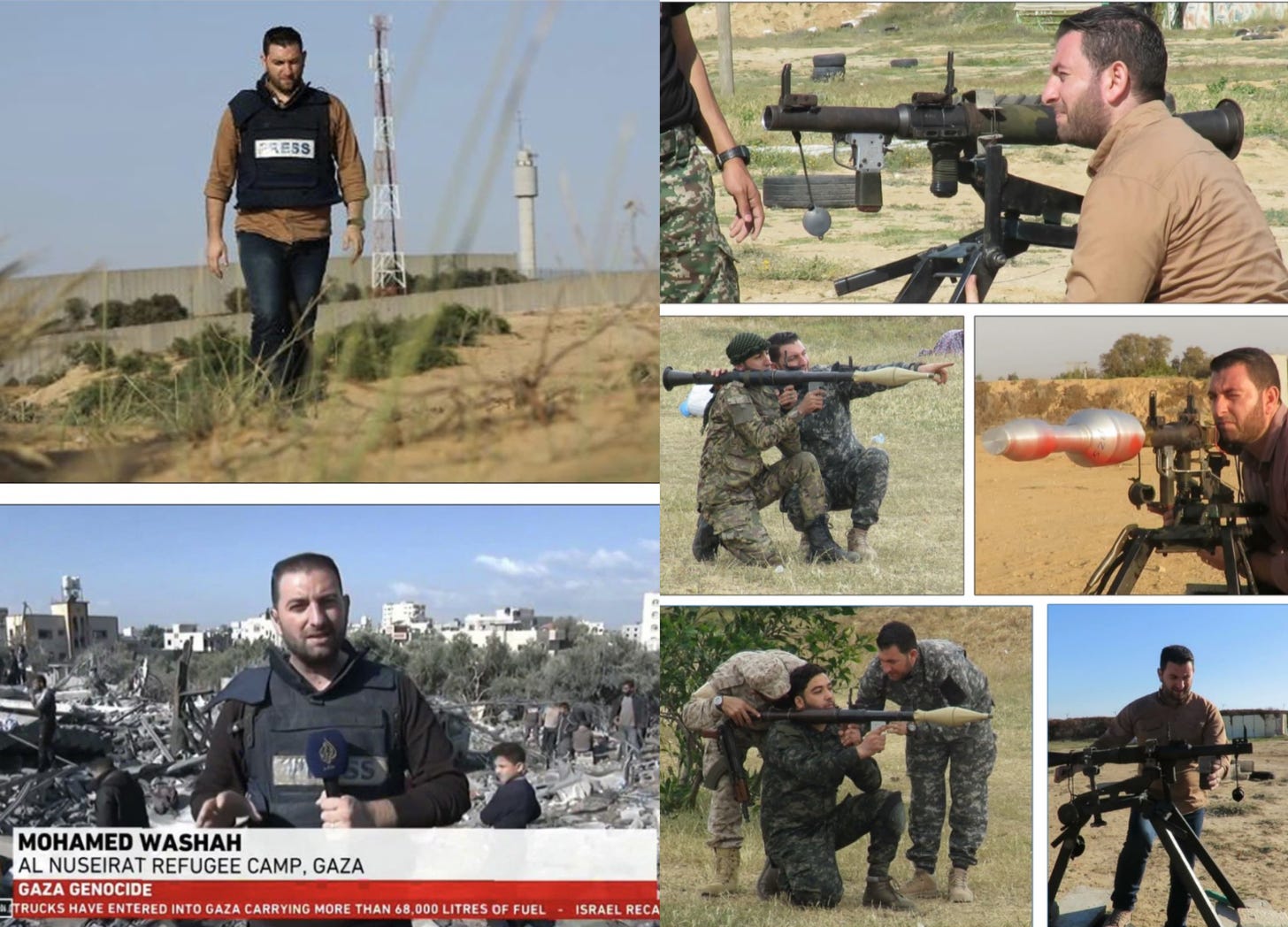
On April 8, 2026, an Israeli drone strike eliminated Muhammad Samir Muhammad Washah, a Hamas operative operating under the false identity of an Al Jazeera Mubasher correspondent in Gaza. The IDF had previously documented extensive evidence establishing Washah’s role as a key commander in Hamas’ military infrastructure, including his involvement in rocket and weapons production, drone manufacturing, and planning attacks against Israeli forces.
Yet across mainstream media outlets and international organizations, his death was reported as that of a “journalist,” with coverage omitting his documented terrorist affiliation and operational role within Hamas’ military wing.
The sanitization of Washah’s identity began with Al Jazeera itself, which immediately issued a statement calling his death “a deliberate and targeted crime intended to intimidate journalists” and condemning the strike as an attack on press freedom. The network made no mention of the IDF’s documented evidence establishing Washah’s position as a Hamas weapons officer.


The IDF’s Public Evidence
Avichay Adraee, the IDF’s official spokesperson for Arab media, had publicly confirmed Washah’s Hamas affiliation on February 11, 2024, sharing detailed documentation from a seized laptop computer.
According to the IDF’s 2024 statement, documents recovered from Washah’s computer indicated that he was a ‘prominent commander’ in Hamas’ anti-tank missile unit and later worked in research and development for Hamas’ air unit. In a separate statement issued on April 9, 2026, the IDF said Washah had been involved in the production of drones, rockets, and other weapons, the transfer of arms through Gaza, and the planning of attacks on Israeli troops.


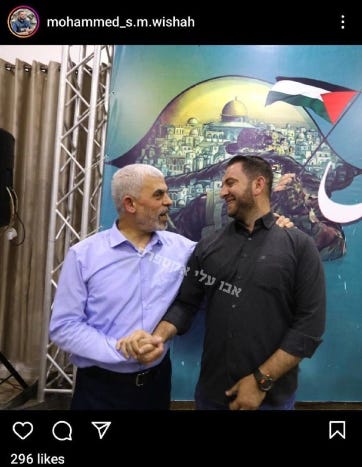
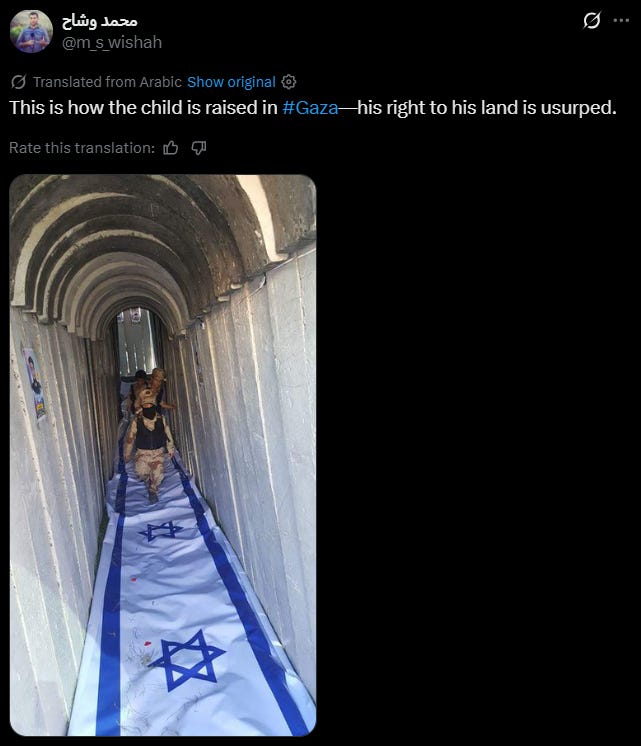
Social media photos showed Washah meeting with Hamas leadership including former leader Yahya Sinwar. Furthermore, posts from Washah's personal X account included photos praising Hamas' militarization of children and their terror activity in Gaza.
Press Freedom Organizations Obscure His Combatant Status
The Committee to Protect Journalists (CPJ), an international press freedom organization, issued a statement on April 8 that condemned "the killing of at least three journalists" in Lebanon and Gaza by Israel.
The CPJ statement identified Washah as "a correspondent for Qatari-based Al Jazeera Mubasher" whose car "was targeted by an Israeli drone attack in Gaza City." The organization made no mention of the IDF's public evidence establishing Washah's role as a Hamas military combatant involved in weapons production and military command operations.
The Palestinian Journalists' Syndicate similarly contextualized Washah's death as an attack on journalism and truth-telling, obscuring his terrorist combatant status. In a statement released April 8, the organization declared that the targeting of Washah constituted "an extrajudicial execution of journalism and truth" and characterized it as part of "a systematic campaign by the occupation to silence the Palestinian voice and target journalists."
International News Reporting Pattern
Drop Site News reported on Washah’s death via social media with the headline “BREAKING: Al Jazeera Mubasher correspondent Mohammed Samir Washah has been killed in Gaza following an Israeli drone strike on his car.” The outlet provided no context regarding the IDF’s public evidence of Washah’s Hamas military combatant status, command role, or weapons operations.
International news outlets such as Middle East Eye, Le Monde, TRT World, and Anadolu Agency all reported Washah's death as that of a killed journalist, systematically omitting any reference to the IDF's public evidence of his Hamas military combatant status and operational role in Hamas' armed infrastructure.
Al Jazeera’s framing was further amplified by social media influencers including Mario Nawfal. Jewish Onliner previously reported that Nawfal was among the top amplifiers of anti-Operation Epic Fury content on X and later changed his X location label from the UAE to North America


The Narrative Framework
The cumulative effect of this reporting created a false equivalency. By reporting Washah’s elimination exclusively through the lens of “journalist killed in conflict,” outlets enabled audiences to place his death into existing narratives about press freedom, civilian casualties, and international humanitarian law — narratives that fundamentally change when an individual holds combatant status through operational involvement in a U.S.-designated terrorist organization.