


Jewish Onliner is an independent publication. If you find our work valuable, please consider becoming a paid subscriber. You can also subscribe to us on WhatsApp and Telegram. Follow us on Instagram, Discord, and X.
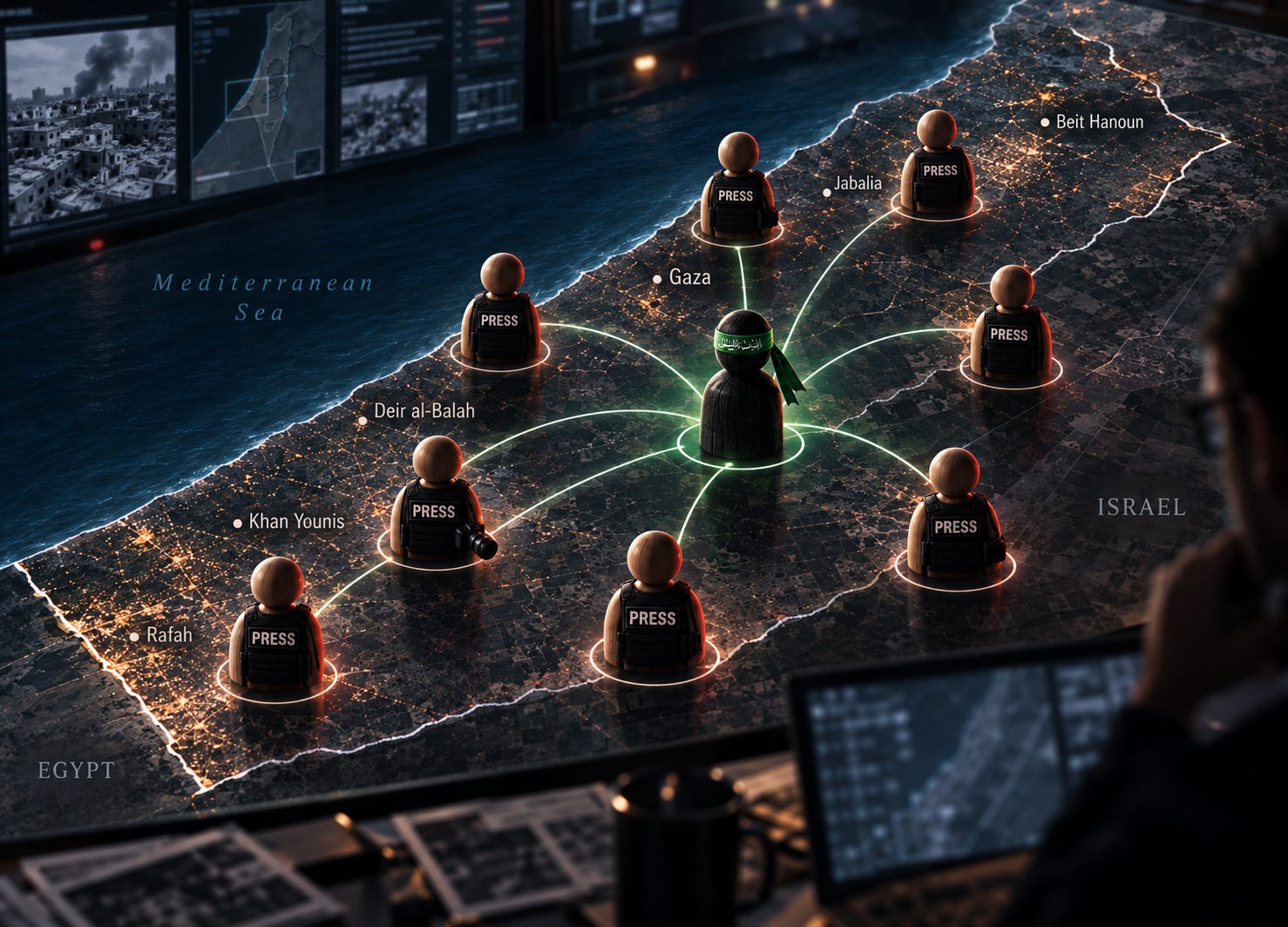
Prominent Gazan photojournalist Motaz Azaiza has described a media environment in the Gaza Strip in which journalists withheld criticism of Hamas, feared retaliation for confronting the organization, and belonged to a Hamas-linked WhatsApp group he said was used to manage narratives and organize attacks against critics.
In a September 3 interview with the Taqarob Podcast, Azaiza also said he grew up supporting Hamas, continues to support armed “resistance,” had friends and professional contacts inside Hamas, experienced “goosebumps” as he watched October 7 unfold, and deliberately withheld footage showing Palestinians striking Israeli captives.
Journalists Lowered Their Cameras When Gazans Blamed Hamas
Among Azaiza’s most consequential disclosures was his description of what Gaza journalists did when civilians criticized Hamas. He recalled filming a Palestinian emerging from an ambulance who began blaming Hamas, prompting other journalists around him to lower or turn off their cameras. Azaiza said he did not follow them, but described the behavior as part of a broader pattern, saying he had never seen a Gaza journalist publish material like that and that journalists commonly stopped filming when Palestinians began attacking Hamas.


Azaiza said fear helped enforce that system. He explained that publishing criticism could lead to a confrontation with Hamas and said a journalist could face accusations, beatings or assault. Elsewhere in the interview, he described an environment in which dissenters could be beaten, shot in the leg or subjected to damaging accusations, leaving many people to conclude that remaining silent was safer.
The Washington Post separately reported in 2025 that Gaza journalists feared covering anti-Hamas demonstrations. One journalist described fears of being branded an Israeli spy or facing Hamas “revenge,” while another said Hamas internal-security personnel followed journalists as they worked.


A Hamas-Linked Group Used to “Manage the Narrative”
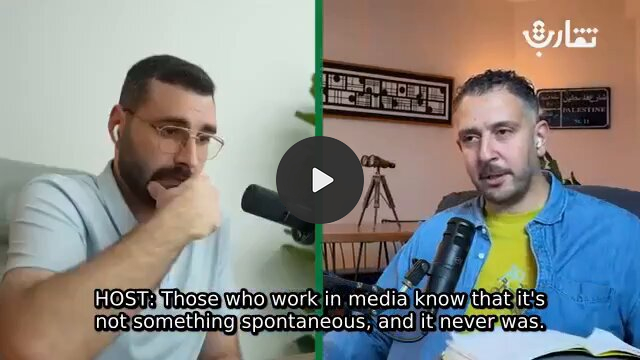
Azaiza also described a Hamas-linked WhatsApp group called Smart that included Gaza journalists and Hamas media personnel. He said Smart was one of several groups used to manage the “discourse” and the “narrative.”
According to Azaiza, participants could be directed to focus attention on particular issues or mobilized against people who departed from the preferred line. He described posts being circulated with instructions to attack their authors and said an individual’s phone number could be distributed so participants could contact, insult and harass the person. Azaiza emphasized that such campaigns were organized rather than spontaneous.

Separate records reinforce his account. A 2016 Palestinian report identified Wael Abu Omar as executive director of the Smart Media Center in Rafah, while Abu Omar was later identified publicly as a media official at the Rafah crossing. i24NEWS, citing Palestinian sources, subsequently identified Abu Omar as a Hamas media official and reported that Smart was used to distribute Hamas-linked messaging directives.
He Withheld Footage of Israeli Captives Being Beaten
Azaiza also disclosed that he filmed Palestinians striking Israeli captives on October 7 but never released the footage. He said he encountered an al-Qassam Brigades vehicle carrying captives as Palestinians surrounded it, with some people hitting those inside while Azaiza followed behind and filmed.
He said he deliberately withheld the footage because identifiable Palestinians appeared in it and he feared Israel could use the images to identify and target them. The disclosure provides a concrete example of significant imagery from October 7 that existed in the possession of a prominent Gaza photographer but never entered the international media record.
He Grew Up Supporting Hamas and Still Supports Armed “Resistance”
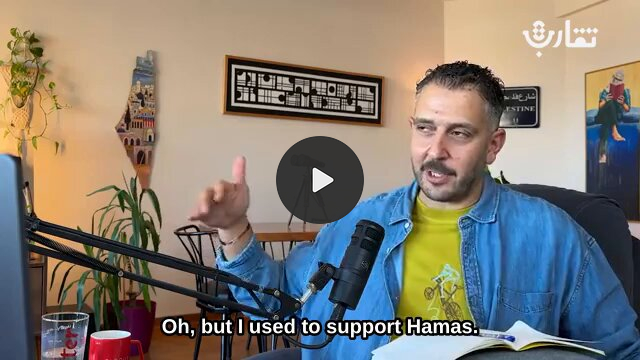
Azaiza also spoke candidly about his own political development. He described himself as having been a Hamas supporter as a child, recalled wearing Hamas headbands sold outside his school for one shekel, and said the things that appealed to him included Hamas, “resistance,” rockets and weapons.
He said his views of Hamas itself changed as he grew older, but he explicitly maintained his support for armed struggle. “I support armed resistance,” he said during the interview, repeating that he was “with” armed resistance while arguing that it should achieve results rather than waste Palestinian lives.
Azaiza also said he had friends inside Hamas whom he could contact in connection with his journalistic work, including when he wanted to fly a drone, enter an area to film or resolve a problem.
“I Got Goosebumps” as October 7 Unfolded
Describing the morning of October 7, Azaiza said he awoke as the attack began, went to the roof, watched rockets being launched, listened to Hamas military commander Mohammed Deif and began viewing footage of the assault.
“I won’t hide it,” he said, explaining that what he saw gave him “goosebumps.” He described the scale of the event as enormous before saying he then began thinking about the Israeli response and the consequences that would follow.
His precise timeline is unclear. Elsewhere in the interview, Azaiza said that at approximately 6:30 a.m. he was already outside with his camera after paying his neighbor’s son 50 shekels to drive him around, even though the Hamas attack itself began at roughly that time.
Critics Paid a Heavy Price
Azaiza also named Palestinians who he said suffered severe consequences for opposing Hamas. He cited Oday Rabey, saying Hamas killed him because of opinions he expressed on Facebook. The Washington Post reported, citing relatives, that masked men identifying themselves as members of the al-Qassam Brigades kidnapped, tortured and beat Rabey to death after he defended a relative involved in anti-Hamas demonstrations.
Azaiza also mentioned Ziad Abu Hayya, saying he was shot in the head after publicly condemning Hamas. The Post separately reported that Abu Hayya was shot dead and that his family blamed Hamas.
What Gaza’s Cameras Did Not Show
Azaiza became one of the most internationally recognizable faces of the Gaza war. TIME placed him on its 2024 TIME100 list and described him as having served for 108 days as the world’s “eyes and ears” in Gaza. Palestinian Authority President Mahmoud Abbas later met him in Doha, while Rep. Rashida Tlaib formally recognized him in the Congressional Record.
His account offers a rare look inside the media system that produced much of the imagery consumed internationally during the Gaza war. It suggests that what reached foreign audiences was shaped not only by what journalists saw, but by organized narrative management, intimidation, self-censorship and decisions about what never made it in front of the public at all.