


Jewish Onliner is an independent publication. If you find our work valuable, please consider becoming a paid subscriber. You can also subscribe to us on WhatsApp and Telegram. Follow us on Instagram, Discord, and X.
The seventh of eight pieces in the Gaza GenoLIE campaign documents how images of emaciated Gazan children became central to allegations that Israel was deliberately starving Gaza, even when some of the most widely circulated photographs omitted serious medical conditions affecting the children shown.
Its central example is Mohammed Zakaria al-Mutawaq, an emaciated toddler whose photograph appeared prominently on the July 25, 2025, front page of The New York Times. The original caption relayed his mother’s statement that he had been born healthy and was recently diagnosed with severe malnutrition. Days later, the Times added previously undisclosed information about health problems affecting his brain and muscular development.
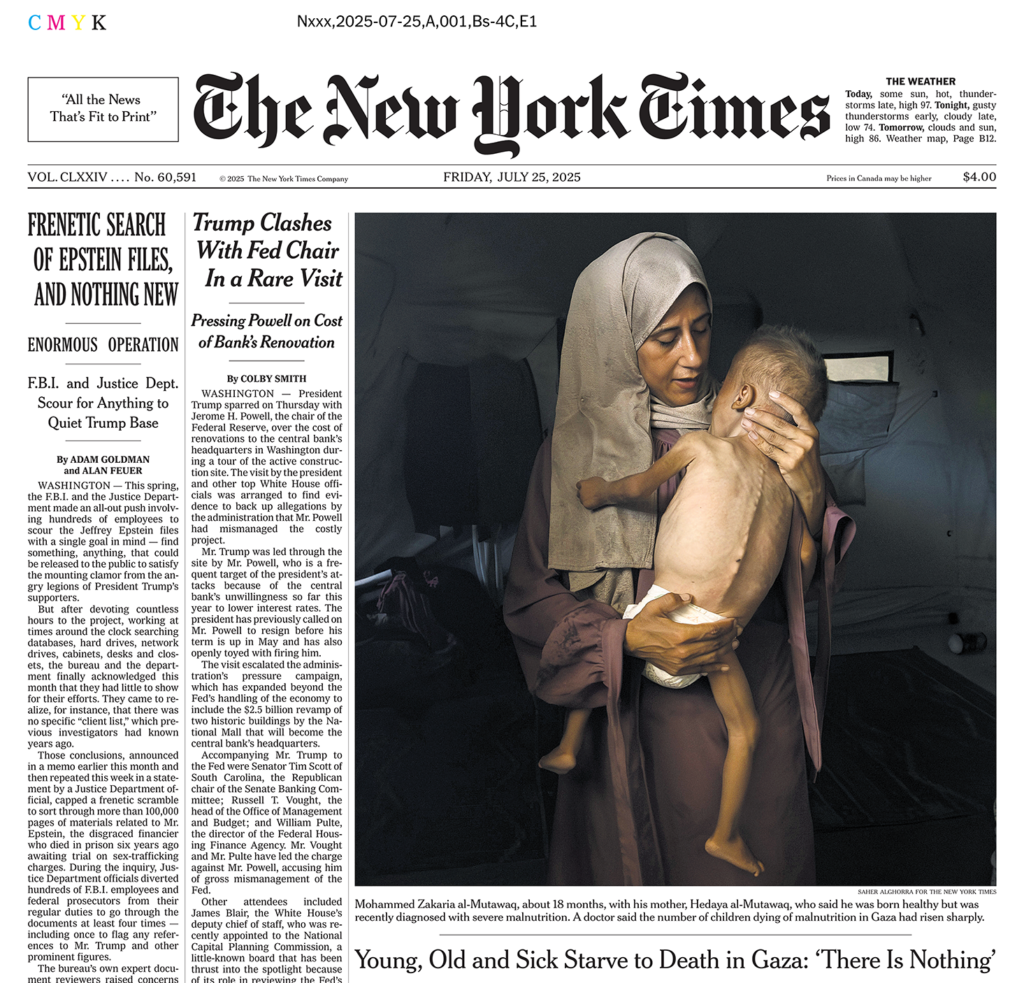
The July 25, 2025, issue of the New York Times with an image of Mohammed al-Mutawaq, Source: The New York Times
The Image That Reached the Front Page
The photograph showed Mohammed in his mother’s arms, with his ribs and spine visibly protruding. It rapidly became a prominent image used to illustrate reports of starvation in Gaza.
Independent investigator David Collier reported that a May 2025 medical document identified cerebral palsy, hypoxemia and a suspected inherited disorder. These conditions affected Mohammed’s health and nutritional vulnerability but were absent from the initial presentation of his case.
Additional photographs showed Mohammed’s mother and older brother appearing considerably better nourished. The campaign presents those wider images as context that was missing when the closely framed photograph of Mohammed was circulated internationally.
The Times subsequently updated its report after obtaining information from Mohammed’s hospital and medical records. The newspaper said the additional material gave readers a fuller understanding of his condition while maintaining that he suffered from severe malnutrition.
The omission of an unusually vulnerable child’s medical history allowed his appearance to be treated as evidence of a population-wide policy.
The case was not confined to one newspaper. Euronews reported that the BBC, CNN and The Guardian also distributed Mohammed’s image before the Times added its clarification. A later investigation by The Free Press examined 12 children whose photographs had become symbols of Gaza’s hunger crisis and reported that all had additional medical conditions, including cystic fibrosis, rickets and neurological disorders.
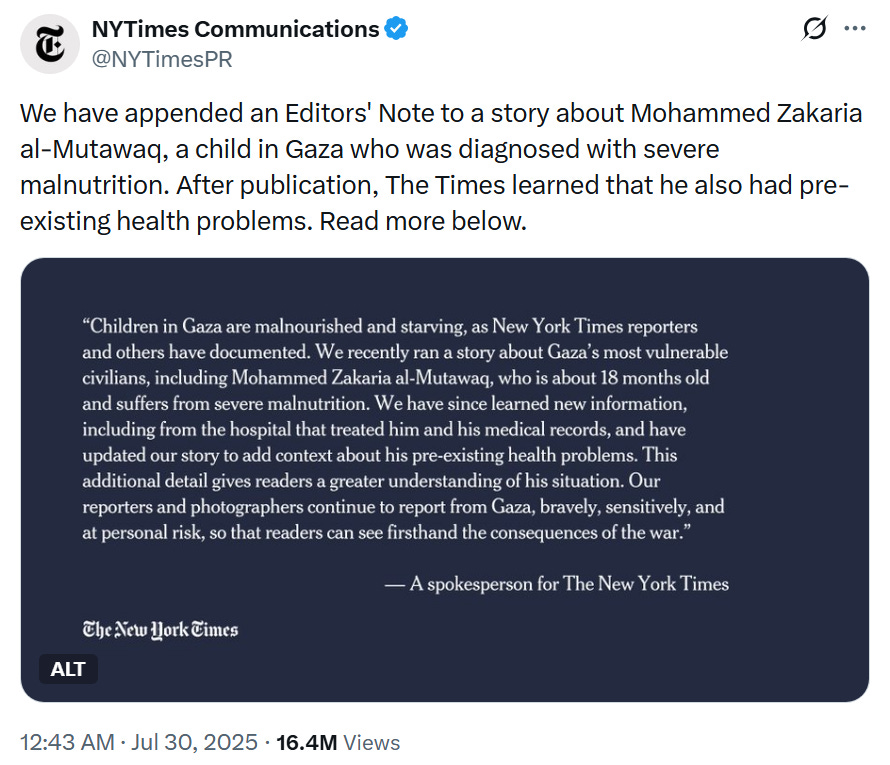
The New York Times issued this correction to the story on Mohammed al-Mutawaq, who they claimed was emaciated from famine in Gaza even though he suffers with severe pre-existing health conditions that make it difficult for him to eat. July 2025. Source: NY Times Communications X
Hunger and the Claim of Genocidal Intent
The Gaza GenoLIE campaign explains the distinction between the existence of hunger during a prolonged war and the allegation that Israel imposed starvation with the specific intent required for genocide.
The August 2025 famine designation was highly controversial. A Foundation for Defense of Democracies analysis said the Integrated Food Security Phase Classification lowered the threshold for determining famine and used new metrics to apply the designation to Gaza. Israel rejected the finding, saying it relied on Hamas-influenced data and criteria applied inconsistently.
The campaign does not dispute that Gazans experienced hunger. It maintains that hunger or a famine classification does not independently establish an Israeli intent to destroy Palestinians as a group.
Aid Entered, but Much of It Never Reached Warehouses
Israeli measures taken to prevent starvation contradict the allegation of a deliberate policy intended to decimate Gaza’s population through hunger.
In July 2025, the IDF introduced daily 10-hour operational pauses in al-Mawasi, Deir al-Balah and Gaza City. Designated convoy routes remained open from 6 a.m. until 11 p.m. to facilitate the movement of food and medicine. Israel also conducted airdrops containing flour, sugar and canned food and coordinated additional deliveries by Jordan and the United Arab Emirates.
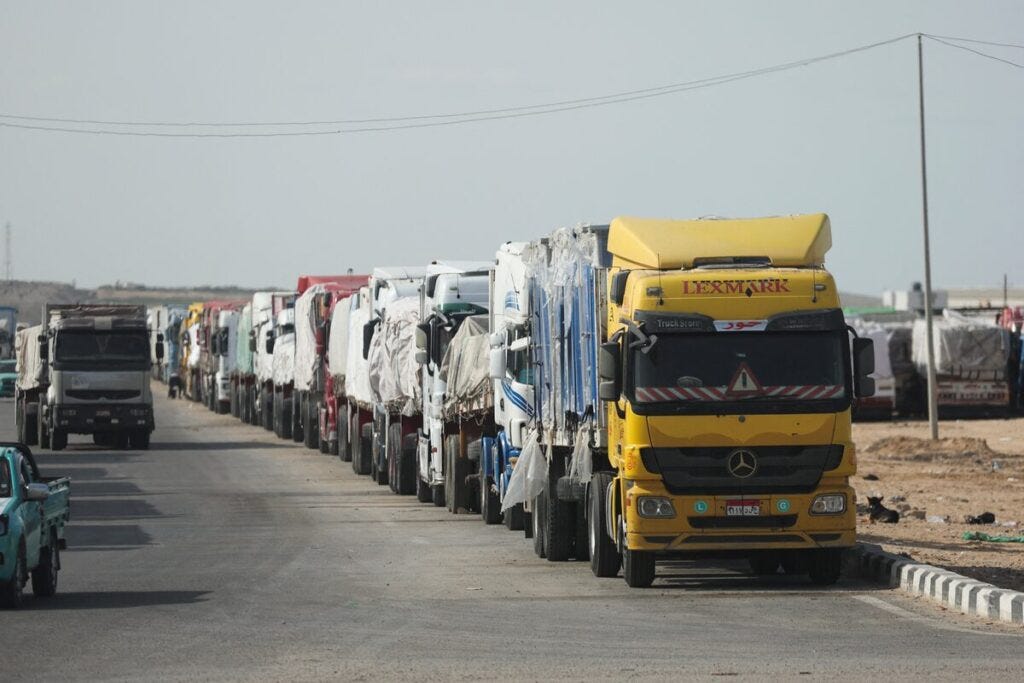
Aid entering Gaza did not necessarily reach its intended recipients. Between July 20 and August 3, at least 12,000 metric tons of food entered through the UN-coordinated system, according to OCHA. More than 90 percent was offloaded by hungry crowds or looted by armed gangs along convoy routes before reaching warehouses.
The campaign also cites Israeli figures reporting that approximately 1.78 million tons of food entered Gaza between October 2025 and June 7, 2026. COGAT said the increased supply coincided with falling staple prices.
Separate COGAT figures cited by the campaign state that more than 70,000 cubic meters of water were being supplied to Gaza each day through pipelines, desalination facilities and other infrastructure.
How the Fabricated Narrative Was Built
The campaign shows how Gaza’s deprivation resulted from the war initiated by Hamas on October 7, the embedding of its forces within the civilian population and the breakdown and theft of humanitarian aid after it entered the territory.
This is seen in how the false starvation allegation was presented. Images of medically vulnerable children were separated from essential clinical context, circulated internationally and incorporated into claims of deliberate famine and genocidal intent. Corrections and clarifications followed only after the photographs had already reached global audiences.
The emotionally overwhelming images reached global audiences first, cementing the famine allegation long before the medical and logistical context that undermined it emerged.
The NYT and other mainstream media deliberately cropped out the healthy, well nourished and well groomed little boy standing next to his mother who was holding his “starving” brother, in a pose staged to evoke Madonna and suffering child, all the more clearly to link “Jews killed Christ” to “Jews kill babies”. This is a medieval / Der Sturmer level blood libel, pure and simple.