


Jewish Onliner is an independent publication. If you find our work valuable, please consider becoming a paid subscriber. You can also subscribe to us on WhatsApp and Telegram. Follow us on YouTube, TikTok, Instagram, Discord, and X.
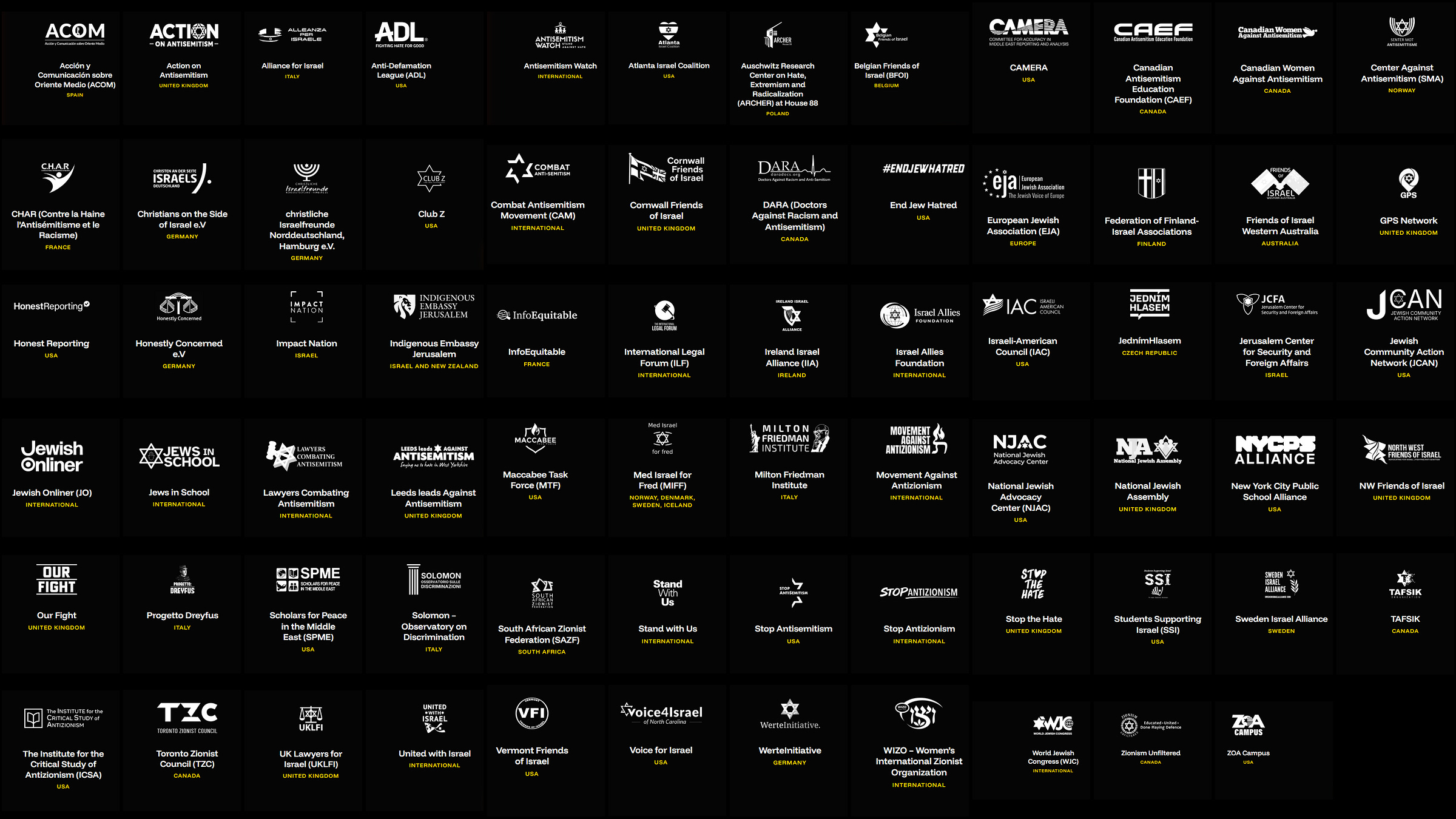
Less than a week after its Aug. 11 launch, the Gaza GenoLIE campaign has expanded from 40 to 71 participating organizations across at least 19 countries, an increase of 77.5 percent. The Jerusalem Post recorded 55 participants within the campaign’s first two days, while the latest coalition roster reflects its continued growth. The campaign has also reached wider audiences through international news coverage, diplomatic amplification and social media.
Thirty New Organizations Extend the Campaign’s Reach
The 31 new participants significantly expand the campaign’s geographic and institutional footprint.
The American organizations joining the initiative are the Atlanta Israel Coalition, CAMERA, End Jew Hatred, New York City Public School Alliance, The Institute for the Critical Study of Antizionism, Vermont Friends of Israel and Voice for Israel.
Six Canadian organizations have signed on: the Canadian Antisemitism Education Foundation, Canadian Women Against Antisemitism, Doctors Against Racism and Antisemitism, TAFSIK, Toronto Zionist Council and Zionism Unfiltered.
New British participants include Action on Antisemitism, Cornwall Friends of Israel, GPS Network and Leeds Leads Against Antisemitism. Friends of Israel Western Australia has joined from Australia.
The European expansion includes the Auschwitz Research Center on Hate, Extremism and Radicalization at House 88 in Poland; the Center Against Antisemitism in Norway; CHAR and InfoEquitable in France; Christliche Israelfreunde Norddeutschland in Germany; the Federation of Finland-Israel Associations; and JednímHlasem in the Czech Republic.
Five internationally focused organizations have also joined: Antisemitism Watch, Jews in School, Lawyers Combating Antisemitism, Stop Antizionism and WIZO, the Women’s International Zionist Organization.
The additions extend the coalition into countries that were not represented in its original roster while strengthening its presence in the United States, United Kingdom and Germany.
Campaign Breaks Into International Media
The campaign’s message has moved beyond the websites and social media accounts of its participating organizations.
The National Post introduced the initiative to a Canadian national audience with an article on its effort to counter genocide accusations against Israel. The report highlighted the campaign’s position that Hamas and aligned networks hijacked the legal term to promote a modern blood libel against Israel and Jews.


On Aug. 13, The Jerusalem Post published a detailed report on Gaza GenoLIE, explaining several components of its eight-part framework. The newspaper highlighted the appearance of genocide accusations immediately after the Oct. 7 massacre, before Israel began its ground operation in Gaza. It also covered the campaign’s analysis of the legal requirement to establish genocidal intent, Hamas’s use of human shields and the use of images of severely ill children to support famine allegations.

Later that day, The Algemeiner reported on the initiative’s expanding coalition. Its coverage focused on the campaign’s eight-part framework and documentation of how the accusation entered mainstream political discourse.


Israeli newspaper Makor Rishon published a detailed Hebrew-language analysis on Aug. 17 under a headline translating to “Eight Layers of Propaganda: How the Gaza ‘Genocide’ Libel Was Built.”
The campaign also reached a Spanish-speaking audience when Peleg Lewi, Israel’s ambassador to Chile, promoted it through his official X account.


From Initial Reach to International Impact
The campaign’s early impact lies in the coalition now distributing its evidence. Advocacy organizations, news outlets and a diplomatic account have carried its core material into different countries, languages and audiences, extending the initiative beyond its original participants.
This expanding coalition provides a strong foundation for continued circulation among journalists, educators, students, legal advocates and public officials. Within its first week, Gaza GenoLIE transformed a single campaign launch into an international effort carrying its evidence across institutional and national boundaries.