


Jewish Onliner is an independent publication. If you find our work valuable, please consider becoming a paid subscriber.
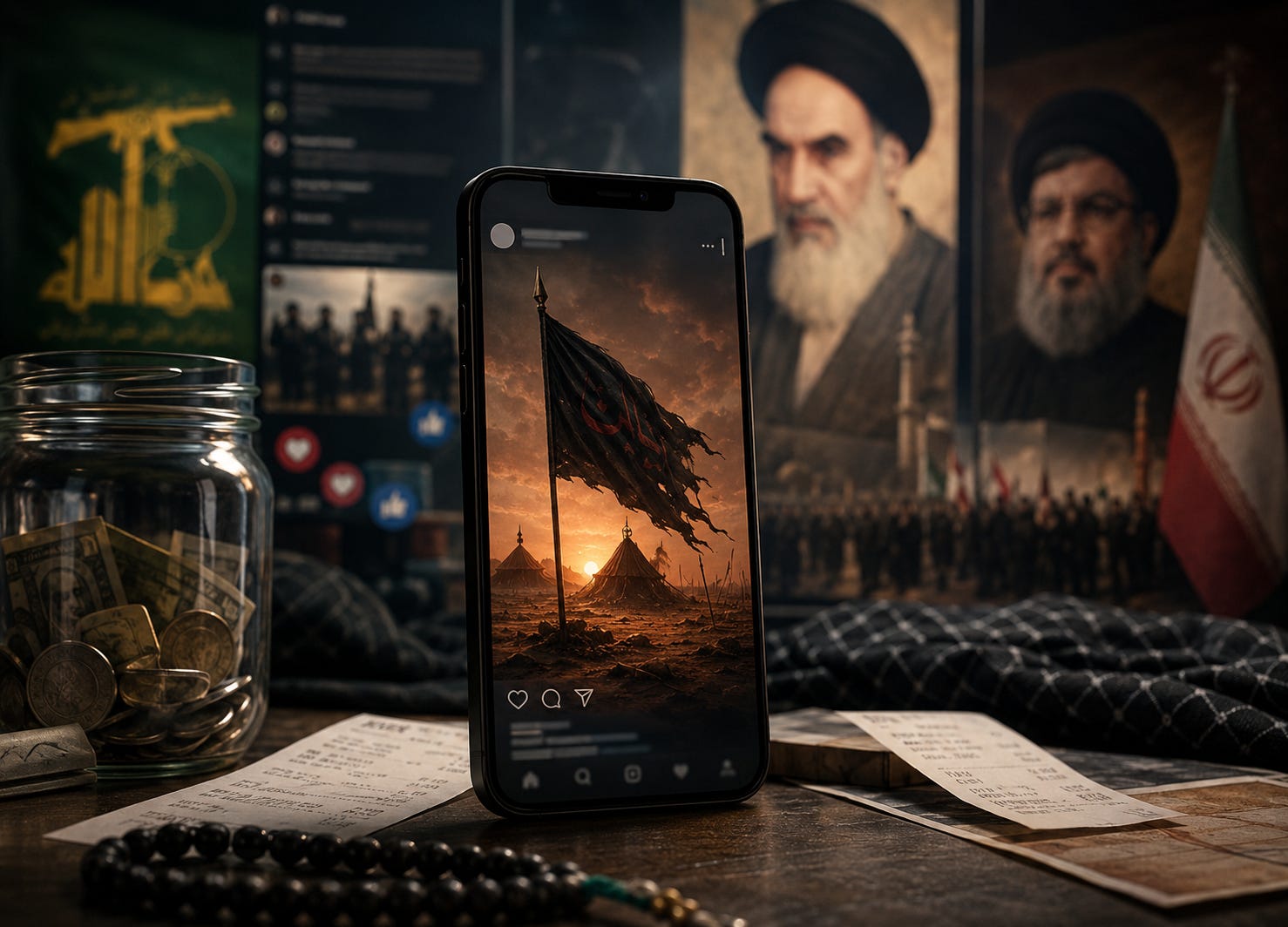
A three-part online workshop series titled “Karbala and the Ethos of Shi’i Resistance” will examine how historical Shi’i narratives are framed as a “living moral and political framework” for contemporary struggles, led by a speaker whose social media posts have connected the Karbala framework to the Iranian regime, Hezbollah, and Lebanon.
The series, scheduled for June 21, June 28, and July 5, 2026, will be led by Jalees Hyder, a Portland-based writer and New York University graduate, and organized by the anonymous collective Workshops4Gaza.
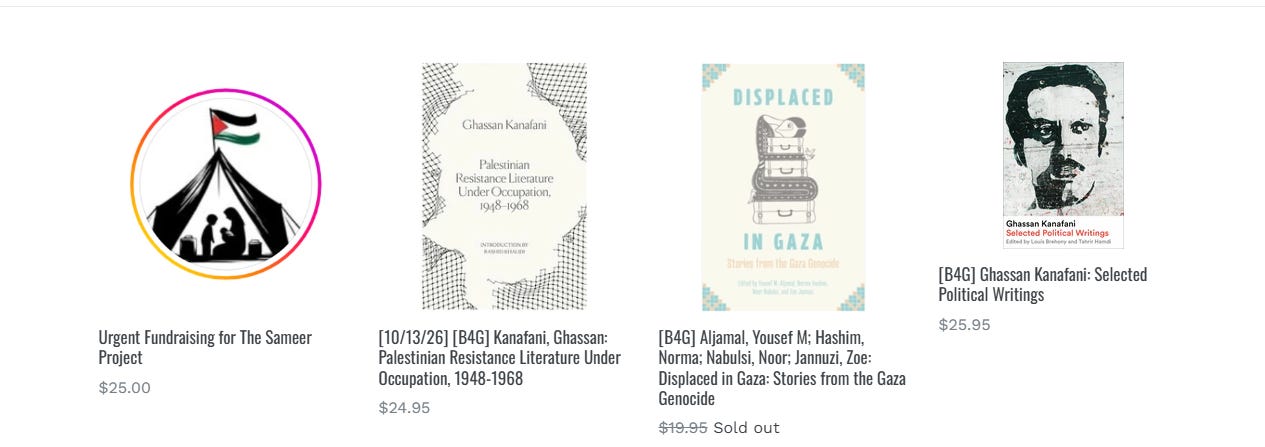
All proceeds are slated to go to the Sameer Project, a London-based Gaza aid initiative whose April 2024 GoFundMe campaign was shut down after raising $250,000. According to The Progressive, GoFundMe told founder Hala Sabbah the campaign violated its terms of service and refunded the donations.
In Instagram posts promoting the workshops, Hyder has featured images of Ayatollah Ruhollah Khomeini, Imam Musa al-Sadr—a cleric who mobilized Lebanon’s Shia population in the 1970s—and other figures associated with Iran’s Islamic Revolution and the ideological foundations of Hezbollah.
The Upcoming Workshop Series and Its Ideology
The workshop materials describe the series as exploring “the origins and enduring ethos of Shi’i resistance, a framework rooted in the spirit of Karbala.” Participants will be told they are examining “martyrdom, sacrifice, steadfastness” and learning “how a historical stance against injustice transformed into a living moral and political framework.” The promotional posts explicitly state that attendees will receive “anti-imperialist readings” on Shia history.
The workshops will focus on the Battle of Karbala in 680 CE, when Imam Hussain refused to pledge allegiance to the Umayyad caliph Yazid and was killed along with his companions. In Shia Islam, this event symbolizes resistance against tyranny and has been invoked by various movements, including Iran’s 1979 Islamic Revolution.
Hyder has drawn explicit contemporary connections in a series of Instagram posts that have received over 31,000 likes. The posts feature images of Ayatollah Khomeini, founder of Iran’s Islamic Republic; Imam Musa al-Sadr, whose disappearance in 1978 came after he helped organize Lebanon’s Shia community; and Ayatollah Mohammad Baqir al-Sadr, executed by Saddam Hussein in 1980.
One promotional slide featured an image of Hassan Nasrallah, the late Hezbollah secretary-general, followed by another with text stating: 'Shia resistance did not begin with Iran, Hezbollah, or any modern state. It began in Karbala, in 680 CE, when Imam Husayn ibn Ali (AS) refused to give allegiance to Yazid.' The post accumulated over 31,000 likes.
“Shia resistance did not begin in Tehran. It began in Karbala,” Hyder wrote in February 2024. “When Shias stand with Palestine, Lebanon, Bosnia, or Armenia, this is not a foreign policy calculation. It is Karbala’s logic moving through history.”
The Anonymous Collective and Its Network
Workshops4Gaza has described itself as an anonymous collective, writing in one Substack post: “We are a collective. We are anonymous on purpose.” The group has also said its members work remotely from different cities and that it is not a business, charity or nonprofit. Since May 2024, the group has raised over $300,000 through various workshops and events.
The collective actively directs supporters to Open Books: A Poem Emporium through a “bookstore” link on their main website. The Seattle-based poetry shop operates a dedicated “Bookshop for Gaza“ page that channels all proceeds to the Sameer Project. Among the works available are books by Ghassan Kanafani, who was a spokesman, founder, and chief propagandist for the Popular Front for the Liberation of Palestine (PFLP), a U.S.-designated terror group.
As a key member of the PFLP's political leadership, editor-in-chief of its Al-Hadf magazine, and right-hand man to founder George Habash, Kanafani shaped the group’s ideology through his Marxist essays, which justified terrorism as a form of “armed struggle.” Kanafani drafted the PFLP’s 1969 platform officially adopting Marxism-Leninism and appeared in photographs with the perpetrators of the 1972 Lod Airport massacre shortly before his death.
Other Workshop Instructors
While Hyder will lead the upcoming Karbala series, Workshops4Gaza has featured other controversial instructors in past events. In May 2025, the collective hosted Eric King, an anarchist activist who pleaded guilty to using explosive materials to commit arson after throwing Molotov cocktails at Rep. Emanuel Cleaver’s Kansas City office in 2014. DOJ said King was sentenced in 2016 to 10 years in federal prison without parole.
Internal Controversies and Broader Connections
In October 2025, Workshops4Gaza faced internal controversy within activist circles after Eric King and other activists accused them of mishandling funds intended for political prisoner Kojo Sababu. The group published a lengthy defense, providing receipts showing they eventually transferred $2,500 to Sababu through the Jericho Movement after initial Western Union payments showed as “in progress” for months without confirmation.
Hyder has also been promoted as a speaker for a “Kashmir-Palestine solidarity” teach-in organized with MIT Taara and other partners. He is listed as a contributor to Cartography of Darkness, a platform that has also featured Mahmoud Khalil, whom the site identifies as a “Palestinian student organiser and negotiator in the 2024 Columbia Encampments for Palestine.” Khalil was detained by ICE in March 2025 and later released in June 2025 while his immigration case continued.
The documented connections span a London-based Gaza aid initiative whose GoFundMe campaign was terminated after raising $250,000, an anonymous workshop collective that says it has raised hundreds of thousands of dollars, a Seattle bookstore selling works by a PFLP spokesman, and instructors whose materials connect Shia resistance ideology to the Iranian regime and Hezbollah. Taken together, the overlap raises questions about transparency, oversight, and ideological framing inside the rapidly expanding Palestine solidarity fundraising ecosystem.
Gmail is marking your email as a phishing attack. I assume it's because of the embedded dodgy links from the people you're referring to...