


Jewish Onliner is an independent publication. If you find our work valuable, please consider becoming a paid subscriber.
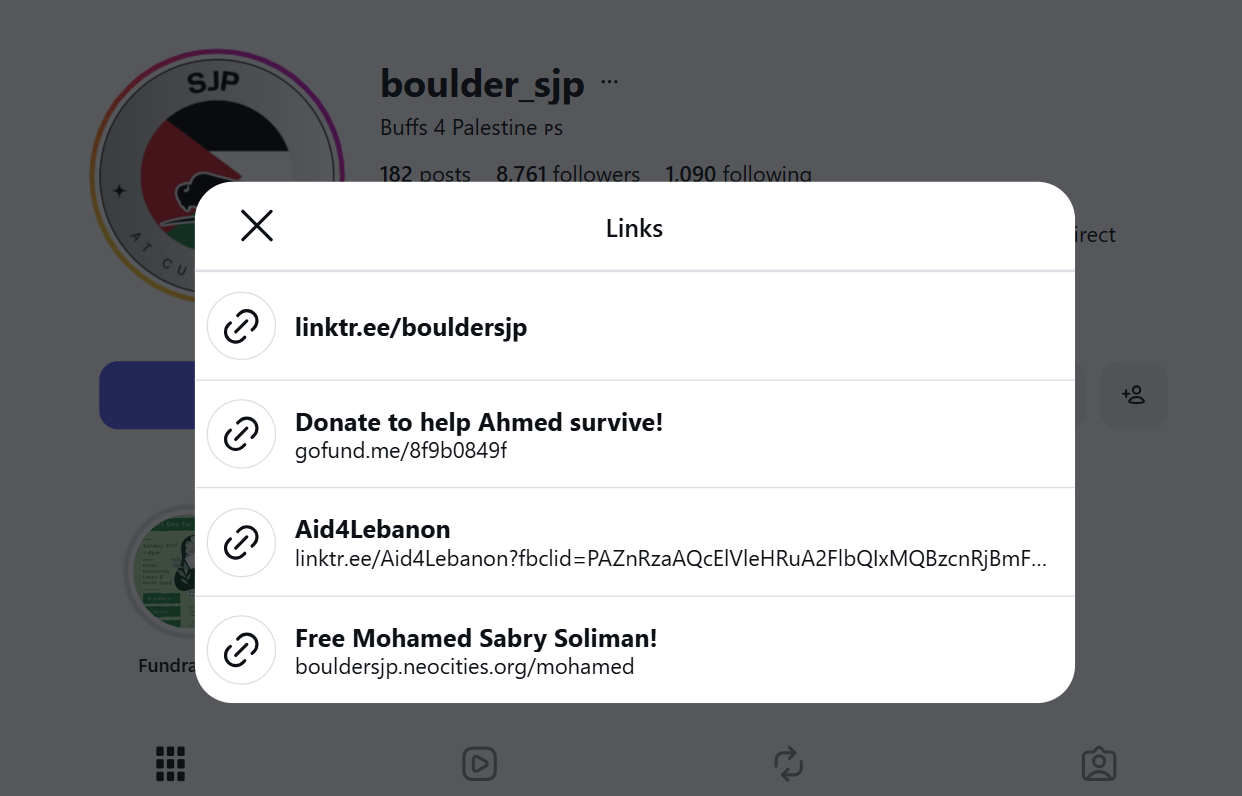
Boulder Students for Justice in Palestine, an unsanctioned University of Colorado Boulder activist group, is drawing new scrutiny after its public link network connected a statement defending convicted Boulder firebomber Mohamed Sabry Soliman with donation portals for Lebanon that raise significant terrorism-finance due-diligence concerns.
The widely covered controversy is that Boulder SJP published a statement praising Soliman’s June 1, 2025 attack on a Run for Their Lives walk for Israeli hostages; the less-examined issue is what else sat inside the same online ecosystem.
A Jewish Onliner review of Boulder SJP’s Linktree found that it promotes Aid4Lebanon, a fundraising aggregator that remains live and includes a center with prior public links to Samidoun, and fundraising promoted through Dahiyeh-linked channels in a geography closely associated with Hezbollah.
The Underreported Link: Fundraising Infrastructure
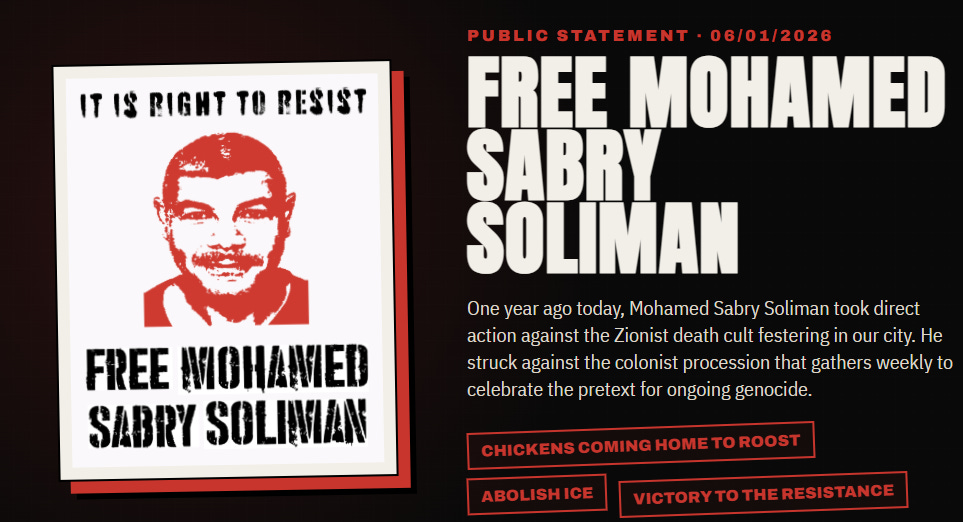
Boulder SJP’s Soliman statement was explicit. The page called the convicted attacker’s firebombing “direct action,” described the hostage-awareness walk as a “colonist procession,” and said Boulder SJP “stands in solidarity” with Soliman. The Justice Department charged Soliman after prosecutors said he threw two lit Molotov cocktails at people gathered near the Boulder courthouse for Run for Their Lives, a weekly walk calling attention to Israeli hostages in Gaza.
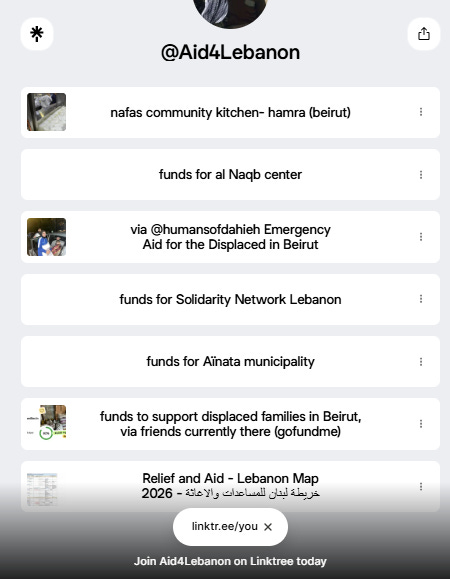
The fundraising network is the added finding. Aid4Lebanon’s Linktree, created in March 2026, lists several donation options: a Hamra community kitchen, a Venmo for the al Naqb Center, a Fundahope campaign promoted “via @humansofdahieh,” a Venmo for Solidarity Network Lebanon, a Venmo for Aïnata municipality, a GoFundMe for displaced families, and a Lebanon aid map. Not all of those campaigns appear problematic on their face. The concern is that several rely on personal payment accounts, rather than transparent nonprofit infrastructure, while others point into political or geographic environments closely associated with U.S.-designated terrorist networks.
The Samidoun Connection
One Aid4Lebanon link routes donations to “funds for al Naqb center” through a personal Venmo account. Al Naqab Center for Youth Activities describes itself as a youth and education center in Beirut’s Bourj al-Barajneh Palestinian refugee camp, but its public fundraising history includes a documented connection to Samidoun. That connection dates to 2020, when Samidoun posted a fundraiser for Al Naqab Center following the Beirut port explosion, and when Al Naqab Center co-initiated Samidoun’s “#Action4Return” campaign alongside the network.
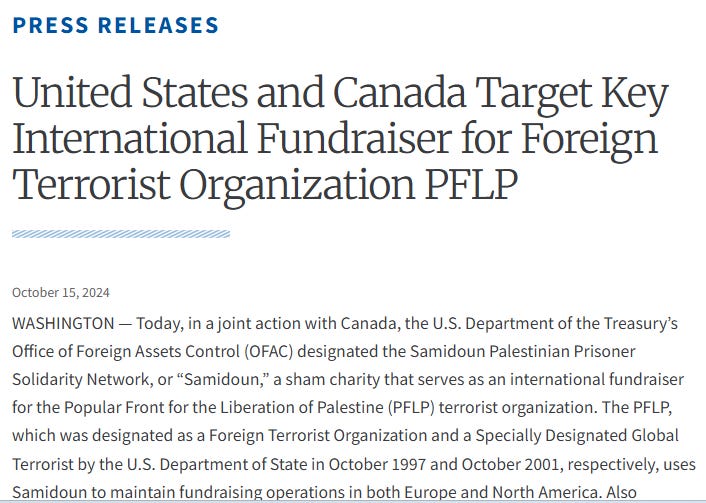
That matters because the U.S. Treasury Department designated Samidoun in October 2024 as “a sham charity” that served as an international fundraiser for the PFLP, a U.S.-designated foreign terrorist organization. Treasury said Samidoun functioned as a PFLP front and provided financial support to the group. At the time of the co-organizing and fundraising, Samidoun had not yet been sanctioned by either the United States or Canada.
The link does not prove that current donations to the al Naqb Center are routed to Samidoun or the PFLP. But it creates a potential due-diligence question: why would a U.S.-based campus group direct followers toward a personal payment account for a center with a prior fundraising connection to an organization now sanctioned by the U.S. government as a terrorist fundraiser?
Why Payment Rails Matter
Aid4Lebanon also includes campaigns that appear to be ordinary civilian-aid efforts, including a Hamra community kitchen and a fundraiser for displaced families. But the combination of opaque payment rails, personal Venmo accounts, and links into Hezbollah- and PFLP-adjacent networks is precisely the type of charitable-sector risk U.S. officials have warned about.
Treasury said in 2025 that Hamas and the PFLP have used sham charities and humanitarian fronts to raise or move funds, and warned that terrorist fundraising can mix legitimate charitable work with diverted or obscured flows.
That broader warning does not mean every Aid4Lebanon campaign is illicit. It does mean Boulder SJP’s role as a promoter is relevant. A campus group that has already praised a convicted killer as a resistance figure was also directing attention to fundraisers that require serious donor scrutiny.
The After Effect
Soliman is now serving life without parole plus 2,128 years after he pleaded guilty to more than 100 state charges in the attack that killed 82-year-old Karen Diamond. Boulder County prosecutors identified 29 victims, 13 of whom suffered physical injuries. Yet Boulder SJP’s page honored him and demanded his release.
The Boulder case is no longer only a story about rhetoric or recognition status. It is a case study in how an unsanctioned campus group can use public link hubs to normalize violence against Jewish civilians while simultaneously steering followers toward donation channels with unresolved terrorism-finance red flags.
Student or alumna of the University of Colorado need to contact the Administration about getting SJP thrown off campus. This case provides the why. If there is a Hillel chapter on campus, reach out to them for help. Other schools have banned SJP. They promote disruption to events and classes, e.g., involving Israeli art and Jewish history.