


Jewish Onliner is an independent publication. If you find our work valuable, please consider becoming a paid subscriber.

On May 23, an administrative court in Nantes, France upheld a prefectural order, issued at the request of French Interior Minister Laurent Nuñez, banning the two-day Rencontre annuelle des Musulmans de l’Ouest hours before roughly 2,000 people were expected to attend.

Authorities said the gathering posed a risk because of the planned presence of speakers, particularly senior figures from Musulmans de France, whose remarks they said could constitute criminal offenses or undermine human dignity, republican principles, and national cohesion. Prime Minister Sébastien Lecornu praised the decision as "an important step" in the fight against Muslim Brotherhood "entryism,” what French officials describe as a covert, long-term strategy to infiltrate public institutions, schools, and local governments to implement Sharia law and undermine French secularism.


The gathering was organized by the Association Islamique de l’Ouest de la France, or AIOF, which manages the Assalam Mosque in Nantes. The group said after the ruling that it took note of the court’s decision and reaffirmed its attachment to the rule of law.
Musulmans de France Under Scrutiny
One of the figures at the center of the broader controversy is Makhlouf Mamèche, who was elected president of Musulmans de France in November 2025. Mamèche has long been involved in institutions linked to the former Union des Organisations Islamiques de France, or UOIF, which rebranded as Musulmans de France in 2017.
A May 2025 French Interior Ministry report identified Musulmans de France as the main French emanation of the Muslim Brotherhood. The report identified 139 places of worship affiliated with Musulmans de France and another 68 considered close to the federation, spread across 55 departments. It estimated Friday attendance at mosques affiliated with or close to the movement at about 91,000 worshippers, alongside roughly 280 associations and 21 Muslim confessional schools linked to or close to the movement.

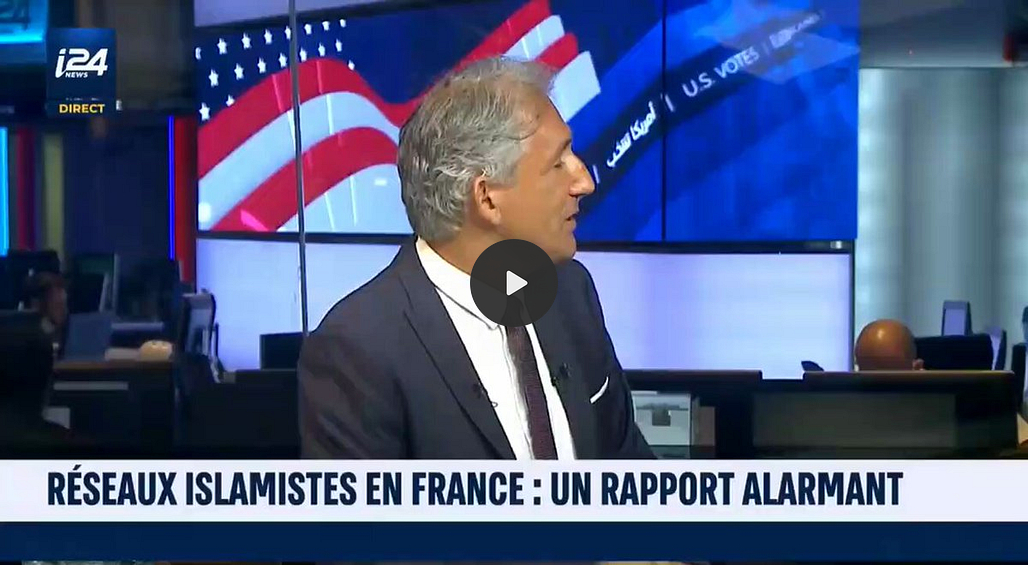
The intelligence assessment concluded that the movement poses “a threat to national cohesion” and seeks “to gradually bring about changes to local or national rules,” particularly concerning secularism and gender equality.
Officials also cited the previous year’s gathering at Le Bourget, where speakers advanced “Jewish conspiracy” theories. Authorities also referenced the 2025 Nantes gathering, where a tribute was paid to Hassan Iquioussen, a preacher close to Musulmans de France who was listed as a security concern and expelled from France in 2022.
Parliamentary Pressure Builds
On January 22, the National Assembly voted 157 to 101 for a European resolution calling for the Muslim Brotherhood movement to be placed on the European Union’s list of terrorist organizations, citing its “subversive ideology, its backing of terrorist entities like Hamas, its calls for hatred, and its covert action against democratic institutions.”
On May 5, senators adopted 208 to 124 a bill aimed at strengthening the state’s ability to combat Islamist “entryism.” The bill, introduced by former Interior Minister Bruno Retailleau, creates a new criminal offense punishable by five years’ imprisonment and a €75,000 fine for anyone who “works to induce a body or group to make decisions contrary to legally established rules, with the aim of seriously undermining the principles of the Republic.”
France has also used dissolution powers against institutions it says promote radical ideology. In September 2025, authorities dissolved the Institut Européen des Sciences Humaines, or IESH, after officials accused it of legitimizing violence and promoting radical teachings, asserting that Muslim Brotherhood figures have led the institution since 1990.

The Nantes ruling shows how France’s campaign against Islamist “entryism” is moving from reports and parliamentary votes into local enforcement, with authorities increasingly targeting events, associations, schools, and religious structures they believe form part of a coordinated ecosystem of Brotherhood influence.