


Jewish Onliner is an independent publication. If you find our work valuable, please consider becoming a paid subscriber.
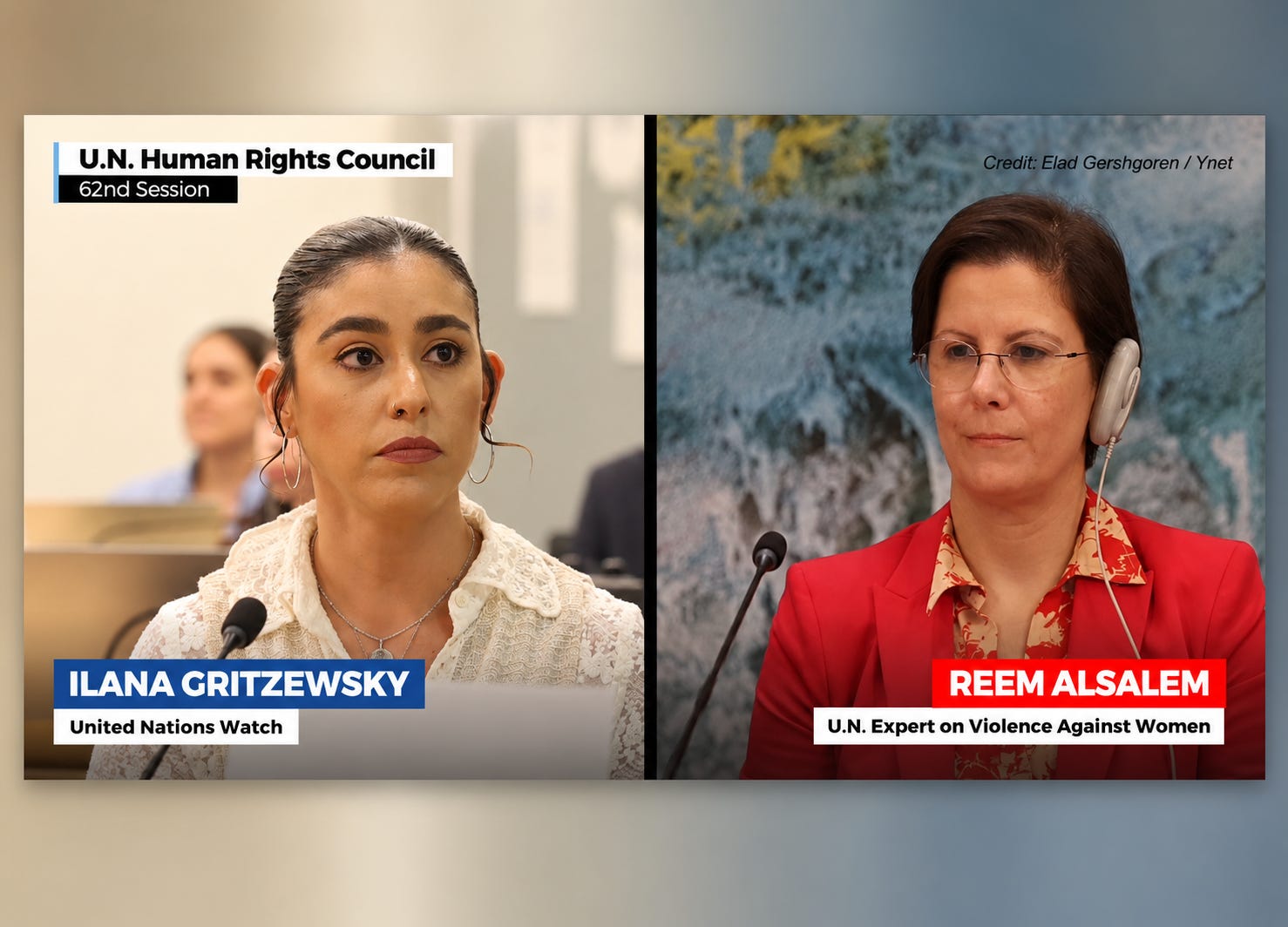
Former Israeli hostage Ilana Gritzewsky, who was abducted during the Hamas-led October 7 attack and held in Gaza stood before the UN Human Rights Council in Geneva last week and confronted Reem Alsalem, the UN Special Rapporteur on violence against women and girls, over her over statements critics say dismissed or minimized evidence that Israeli women were sexually assaulted during the October 7 attacks and in captivity.
The exchange, amplified by Israeli Foreign Ministry spokesperson Oren Marmorstein, mattered because it placed a survivor’s account inside the same UN system that has produced evidence of Hamas sexual violence while one of its women’s-rights experts has continued to cast doubt on it. Gritzewsky, who was abducted from Kibbutz Nir Oz and held in Gaza for 55 days, said she was “not a report, not a statistic,” but “living proof of sexual violence by Hamas.”
“Please look at me”
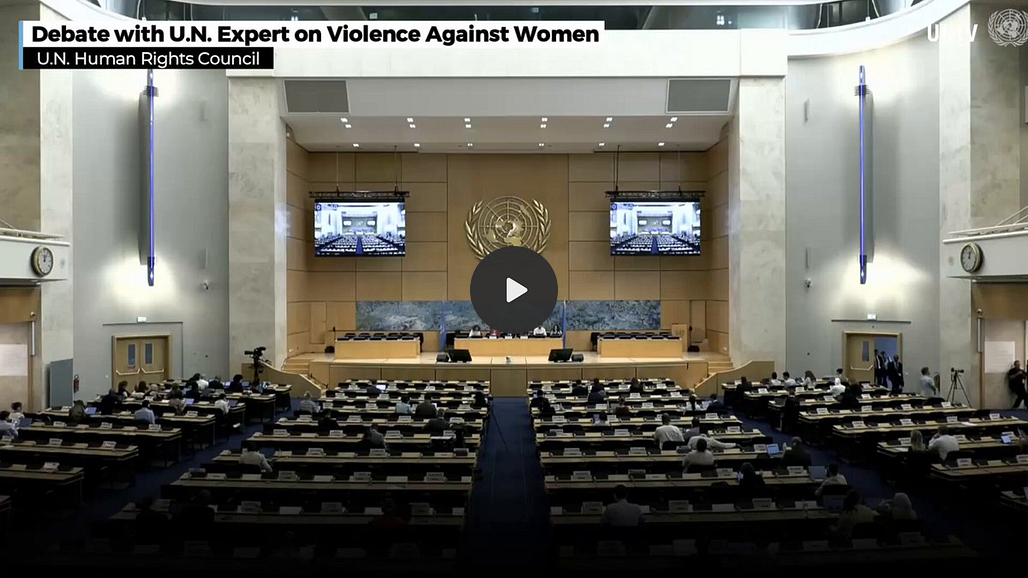
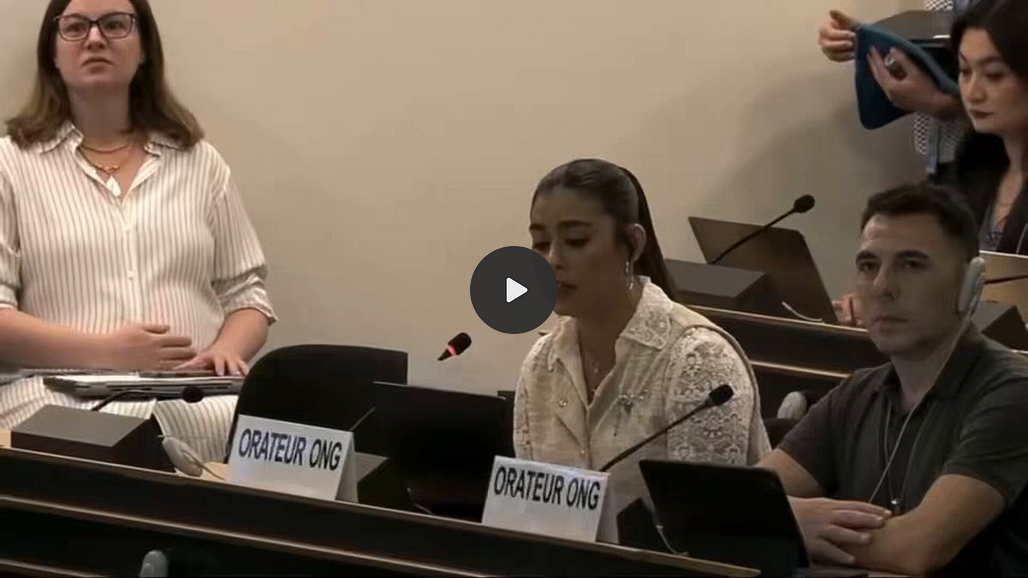
Gritzewsky’s testimony was delivered during the 62nd session of the Human Rights Council, shortly after Alsalem presented a report on violence against mothers. According to a transcript published by UN Watch, Gritzewsky opened by asking why the report contained “no mention of Hamas.”
She then described the October 7 assault on her kibbutz: “terrorists stormed our Kibbutz — murdering, kidnapping, and burning.” Gritzewsky said she was beaten, mutilated, and lost consciousness. “I woke up half naked with seven terrorists standing over me, not knowing what happened to me in those lost moments,” she said.
Her most direct remarks were aimed at Alsalem. “On October 7, and in captivity, Jewish women were raped, abused, and humiliated,” Gritzewsky said. “And you, Special Rapporteur, you chose silence and denial.”
“Ms. Alsalem, you said there was no evidence of sexual violence on October 7,” she continued. “I am standing here today — not as a report, not as a statistic. I am a woman who survived. I am the living proof of sexual violence by Hamas.”

The Allegation Against Alsalem
Alsalem has faced criticism from Israeli officials, Jewish organizations, and some human-rights advocates for her statements about October 7 sexual violence. The Jerusalem Post reported in November 2025 that Alsalem wrote, “No independent investigation found that rape took place on October 7,” despite prior UN findings documenting grounds to believe sexual violence occurred during the attacks.
UN Watch also said Alsalem had dismissed allegations of Hamas sexual crimes against Israelis as “misinformation” used to “justify the genocide against Palestinians.” That statement has not resolved the central contradiction: the UN system itself has produced findings that directly undercut blanket denials of sexual violence on October 7.
The official OHCHR page for the mandate identifies Alsalem as the UN Special Rapporteur on violence against women and girls, its causes and consequences, a position she has held since August 2021.

What UN Investigators Found
The strongest UN-backed findings cited in the debate came from Pramila Patten, the UN Secretary-General’s Special Representative on Sexual Violence in Conflict. After a mission to Israel and the West Bank, Patten’s office found “reasonable grounds” to believe conflict-related sexual violence occurred during the October 7 attacks, including rape and gang rape, and “clear and convincing information” that hostages in Gaza were subjected to sexual violence.
A separate UN Commission of Inquiry documented evidence of sexual violence in several locations in southern Israel, citing witness testimony and images of victims’ bodies displaying indications of sexual violence. The commission also identified “a pattern of sexual violence” that it said was corroborated by collected digital evidence.
The same commission noted limits to its findings, but those limits did not erase the findings. The commission concluded there was evidence of sexual violence, gender-based violence, public display of victims’ bodies, and gendered humiliation during the attacks.
Other documented accounts
Gritzewsky had previously testified before the UN Security Council in August 2025, describing sexual abuse during her abduction, beatings, starvation, and being held for part of her captivity at Nasser Hospital in Khan Younis. “I had to beg not to be raped, telling them I was on my period,” she said then, according to a transcript cited by the Times of Israel.
Other released hostages have also publicly described sexual assault or sexual abuse in captivity. The Times of Israel reported that Amit Soussana told The New York Times she was forced to commit sexual acts by a captor, and that other former hostages later described sexual abuse.
The Dinah Project, an Israeli legal initiative, released a report finding evidence of widespread and systematic sexual violence on October 7, including cases documented through witness accounts, first responders, security personnel, mortuary workers, and visual material.
Why the confrontation matters
Gritzewsky’s testimony was not merely a personal rebuke. It exposed a broader institutional failure: the gap between evidence gathered by UN mechanisms and the reluctance of some UN figures to acknowledge Israeli and Jewish victims of sexual violence with the same clarity applied elsewhere.
That distinction is what Gritzewsky forced into the room. Her question to Alsalem — “Do you believe us now?” — was not only directed at one rapporteur. It was directed at an international system whose own documents have already answered much of the factual question, even as recognition has lagged behind.