


Jewish Onliner is an independent publication. If you find our work valuable, please consider becoming a paid subscriber. You can also subscribe to us on WhatsApp and Telegram. Follow us on Instagram, Discord, and X.
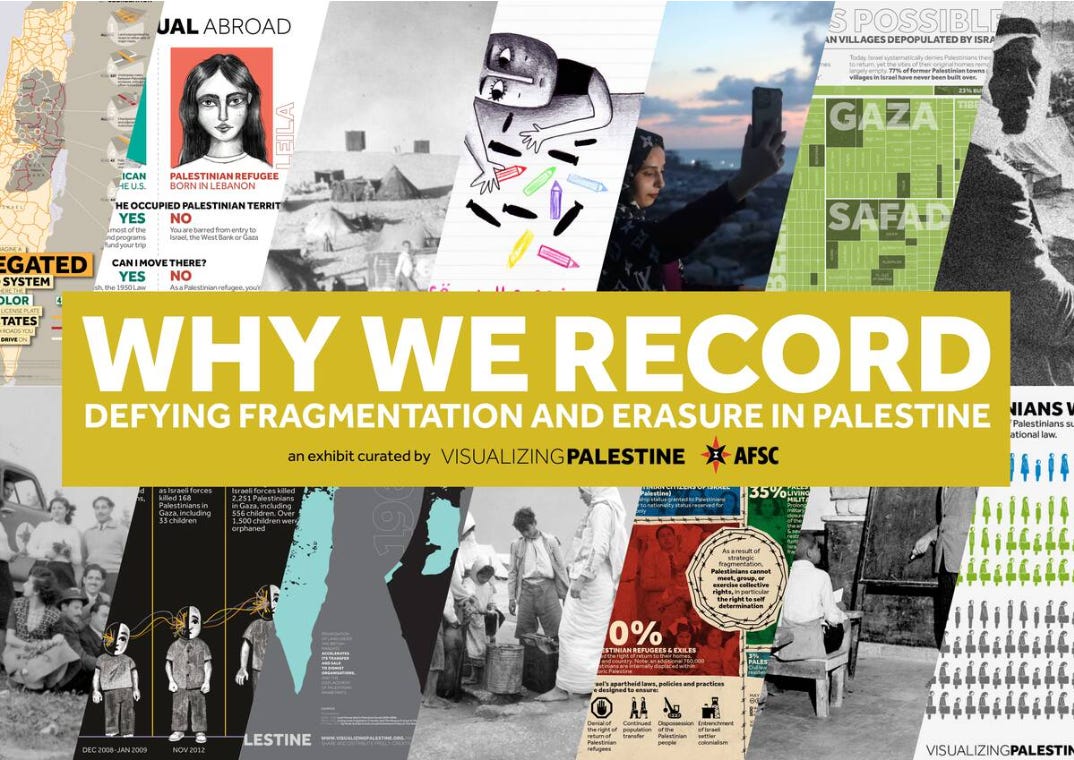
A new exhibition produced by Visualizing Palestine and the American Friends Service Committee opened this week at Winona State University, a public university in Minnesota, bringing radical pro-Palestine-focused visual materials into a U.S. higher education setting while connecting educators with additional classroom resources from advocacy-oriented education organizations.
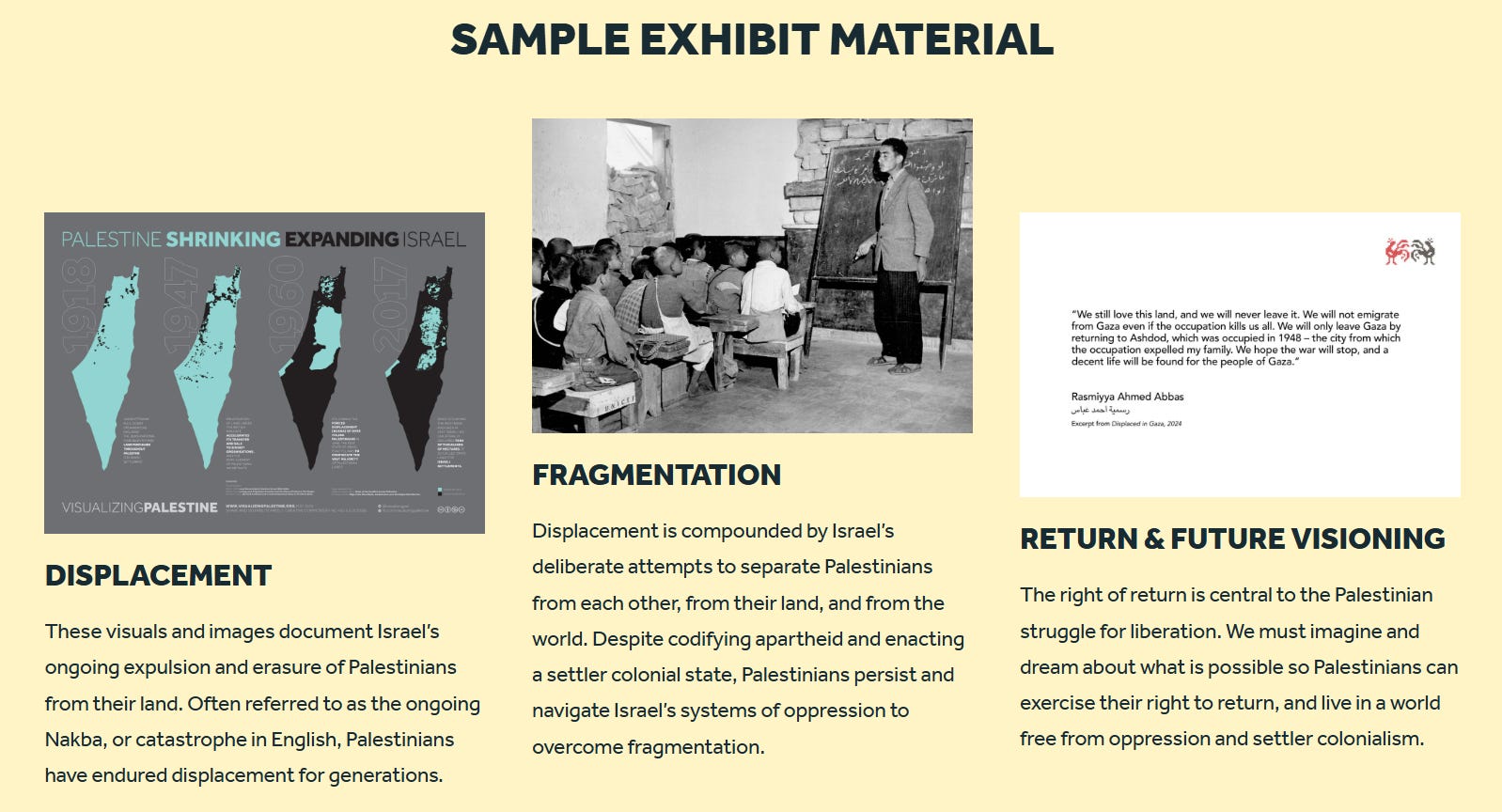
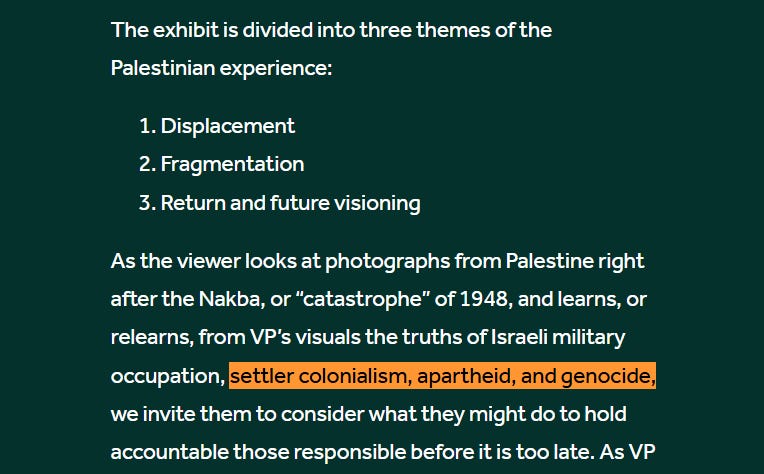
The exhibition, “Why We Record: Defying Fragmentation and Erasure in Palestine,” is being displayed at Paul Watkins Art Gallery before moving to the Arab American National Museum in Dearborn, Michigan, where it will remain on display through December 31. The exhibit’s stated framing centers on claims involving “occupation,” “apartheid,” “settler colonialism,” and “genocide,” while the Arab American National Museum describes the exhibition in similar terms.
While Winona State University’s exhibit listing identifies AFSC and Visualizing Palestine as the producers, related promotional materials connected to the university-hosted exhibition also encourage educators and students to engage with additional classroom resources from Rethinking Schools’ Teaching Palestine curriculum and the Zinn Education Project.
Previous Jewish Onliner investigations have examined Visualizing Palestine’s international connections, including its links to Lebanon and broader Middle Eastern networks, as well as partnerships with organizations that have faced scrutiny over alleged ties to entities designated as terrorist organizations.
Built for Reproduction and Wider Distribution
Visualizing Palestine’s downloadable exhibit page makes clear that “Why We Record” was designed not simply as a one-off installation, but as a reproducible exhibit built for wider circulation.
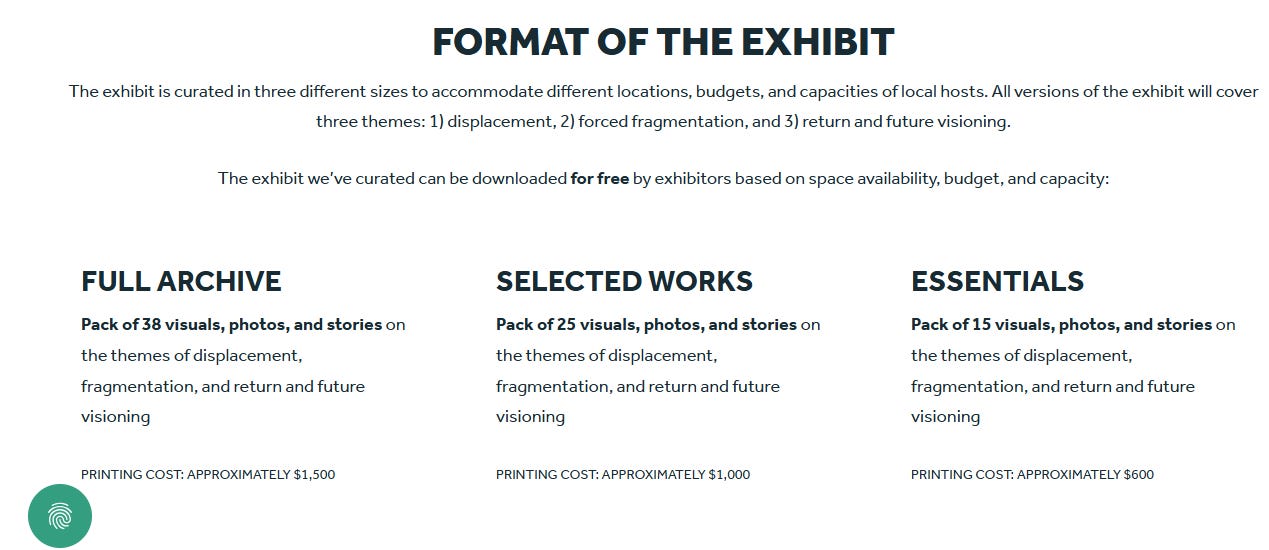
According to the project page, the exhibit is curated in three formats to accommodate different host locations, budgets, and capacities. A “Full Archive” package includes 38 visuals, photos, and stories and carries an estimated printing cost of approximately $1,500. A “Selected Works” package includes 25 visuals, photos, and stories at an estimated cost of about $1,000. An “Essentials” package includes 15 visuals, photos, and stories at an estimated cost of about $600.
The materials are offered as free downloads, and prospective hosts are directed to complete a “Host the Exhibit” form in order to obtain access to the files and exhibit toolkit. Once approved, hosts receive access to a Google Drive containing high-resolution exhibit files, a display plan, a sample flyer, an exhibit guide, and a sample press release. The site also explicitly states that organizers may host the exhibit as a stand-alone installation or incorporate it into related programming such as conferences, lectures, workshops, panels, or film screenings.
Visualizing Palestine and AFSC also provide usage guidelines stating that hosts must use the title “Why We Record: Defying Fragmentation and Erasure in Palestine,” represent all three themes, and use the provided gallery materials and project descriptions.
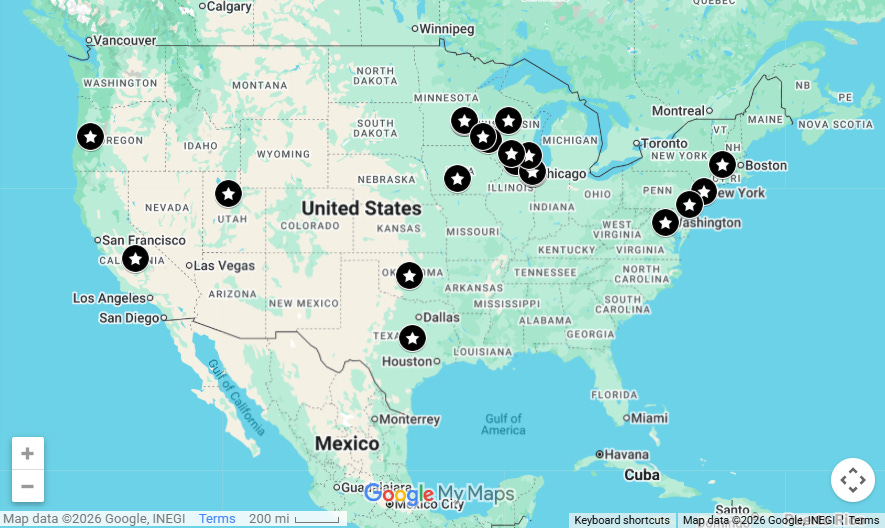
The same page includes an “Interactive Map” showing where the exhibit has already been hosted, underscoring that this is a traveling and replicable advocacy product intended for distribution across multiple communities and institutions. The site states that prospective organizers can contact AFSC and Visualizing Palestine to be connected with previous hosts who may be able to lend exhibit materials locally.
Meet Visualizing Palestine
A previous Jewish Onliner investigation examined VP’s organizational structure, including its U.S. nonprofit status through fiscal sponsorship and its connections to Lebanon-based personnel and networks. The full report is available here.
The investigation examined how Visualizing Palestine operates while holding tax-deductible nonprofit status through the fiscal sponsorship of Empowerment Works and analyzed the organization’s international relationships and operations.


The organization has previously drawn scrutiny over its collaborations with organizations including Al-Haq and the Al Mezan Center for Human Rights, both of which have been sanctioned by the U.S. and have alleged ties to Hamas and the PFLP. Visualizing Palestine has also partnered with groups such as the Cairo Institute for Human Rights Studies and other regional organizations as part of its broader international network.
VP has also publicly outlined efforts to expand the reach of its materials among Western audiences. Its 2023–2026 strategic plan describes efforts to increase the impact of its narratives among Western publics.

Visualizing Palestine’s Growing Reach Into U.S. Educational Institutions
The expansion of “Why We Record: Defying Fragmentation and Erasure in Palestine” into Winona State University and the Arab American National Museum demonstrates how pro-Palestine advocacy organizations are increasingly bringing their materials into public universities, museums, and other educational institutions.
The exhibit’s presence at a public university, together with its intentionally reproducible format, host toolkit, interactive location map, and connection to external classroom resources, raises questions about how advocacy-driven narratives are introduced into educational environments and how far these materials are designed to travel through formal and informal educational channels.
Visualizing Palestine presents itself as a visual storytelling organization, but its partnerships, strategic framing, and exhibit infrastructure point to a broader effort to disseminate a highly politicized narrative through cultural and educational spaces. As public institutions continue hosting such material, transparency about the organizations behind it, the frameworks embedded in it, and the networks facilitating its spread becomes increasingly important.