


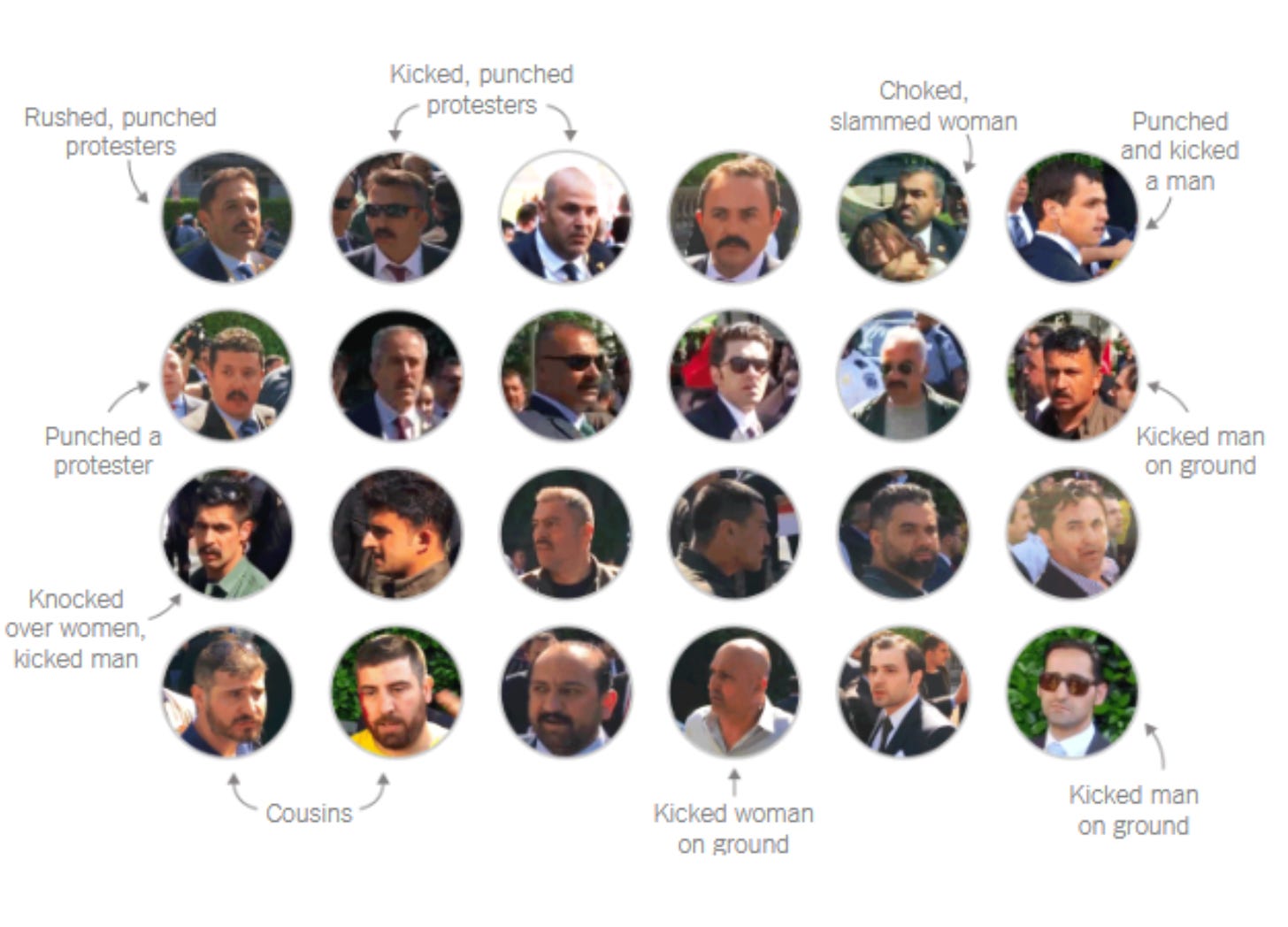
A federal judge has determined that Turkey bears legal responsibility for a coordinated 2017 assault on peaceful protesters outside its ambassador’s residence in Washington, D.C., in a decision that marks an unprecedented holding of a NATO member state accountable for politically motivated violence on American territory, Nordic Monitor reports.
US District Judge Colleen Kollar-Kotelly finalized the October 7, 2025 decision by adopting Magistrate Judge Matthew J. Sharbaugh’s comprehensive findings after Turkish officials withdrew completely from the case, abandoning their defense and allowing extensive evidence of the May 16, 2017 Sheridan Circle attack to stand without challenge.
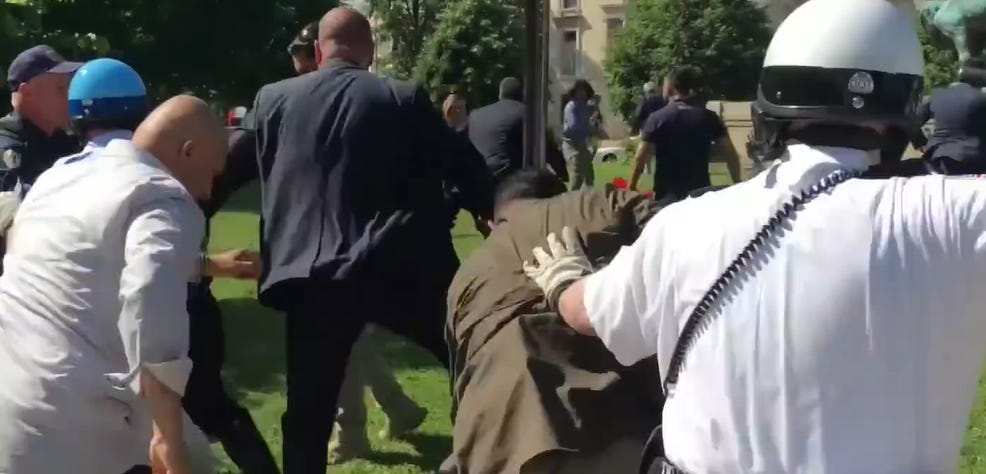
The violence occurred within an hour of President Recep Tayyip Erdogan’s White House meeting with then-President Donald Trump. Turkish security personnel and pro-government supporters overwhelmed law enforcement barriers maintained by Metropolitan Police, Secret Service, and Diplomatic Security personnel, then charged demonstrators positioned across the street.
Court records reveal that Erdogan stopped his motorcade and conferred with his security chief moments before his forces initiated the assault, evidence the court considered when establishing intentionality.
Victims Describe Calculated Violence Targeting Kurdish Demonstrators
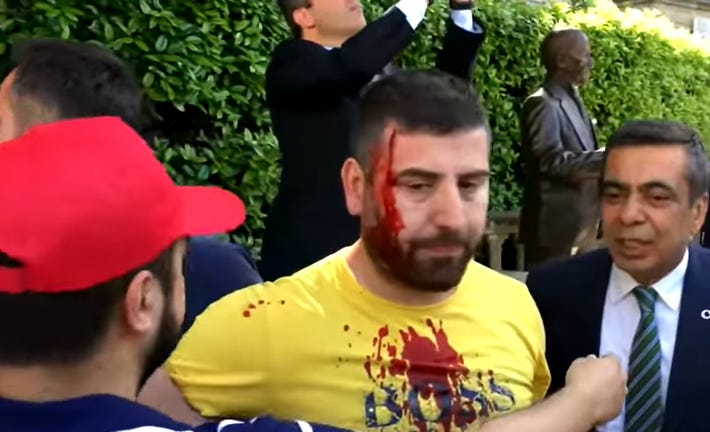
Fourteen individuals who brought suit detailed sustained beatings that left multiple people hospitalized and many others with enduring psychological damage, their accounts reinforced by video recordings analyzed in court proceedings. The court determined that Turkish agents made no attempt to detain or interrogate anyone, concluding the violence served purely punitive purposes rather than any legitimate security function.
Among the documented attacks: Hulya Kartal lost consciousness after being struck in the head, then sustained repeated kicks while lying motionless as Turkish personnel filmed the scene. Ceren Borazan fled across Sheridan Circle before being dragged from a vehicle, restrained in a chokehold while hearing death threats, and thrown to the pavement. Heewa Arya attempted to protect his young daughter before being knocked down and beaten.
Ethnic Targeting Established Under DC Hate Crime Law
Judge Kollar-Kotelly’s ruling found that anti-Kurdish animus directly motivated the assault, establishing liability under the District of Columbia’s Bias-Related Crime Act. Demonstrators had displayed Kurdish symbols and messaging critical of Turkey’s policies toward Kurdish populations, prompting Turkish forces and supporters to respond with ethnically targeted slurs and threats.
The decision establishes Turkey’s responsibility across multiple legal categories: assault through deliberate creation of fear of imminent bodily harm; battery affecting virtually all plaintiffs through intentional harmful contact; false imprisonment where Borazan’s freedom of movement was forcibly restricted; intentional infliction of emotional distress for eleven plaintiffs who developed serious psychological conditions; and violations of civil rights protections against bias-motivated criminal acts.
Ankara Withdraws After Unsuccessful Immunity Claims
Turkish officials pursued dismissal on sovereign immunity grounds through multiple judicial levels but failed to prevail before the district court, the D.C. Circuit Court of Appeals, or the Supreme Court, which declined review, court filings show. Facing certain defeat on the merits, Turkey directed its American legal counsel to withdraw and stopped all participation, leaving plaintiffs’ evidence and testimony uncontested.
Global Pattern of Violence by Presidential Security Forces
The Washington incident represents one episode in a multi-year, international pattern of aggression by Erdogan’s protective detail documented across four continents. The security apparatus, whose complete structure and personnel numbers remain classified state information, has grown substantially while receiving increased government funding.
Previous incidents include: a 2014 assault on journalists in New York during Erdogan’s UN visit; a 2015 confrontation with Belgian security officials after protocol violations in Brussels; a 2016 attack in Quito that resulted in a broken nose for an Ecuadorean legislator; reported beatings of protesters outside the Turkish Embassy in South Africa in 2018; and a 2019 standoff with Bosnian police over weapons protocols at Sarajevo’s airport.
Domestic Turkish incidents show similar patterns. The European Court of Human Rights ruled that a 2007 beating of an Erdogan critic in Trabzon constituted degrading treatment or punishment. In another case, security personnel abducted an Istanbul attorney who criticized motorcade traffic disruptions, subjected him to hours of physical abuse, and coerced a false confession to insulting the president.
Personnel implicated in violent incidents have received promotions rather than accountability. At least one individual indicted by US authorities for the 2017 Washington attack subsequently received appointment to a diplomatic security position in Switzerland, demonstrating institutional protection for those involved in suppressing dissent abroad.