


Jewish Onliner is an independent publication. If you find our work valuable, please consider becoming a paid subscriber. You can also subscribe to us on WhatsApp and Telegram. Follow us on Instagram, Discord, and X.
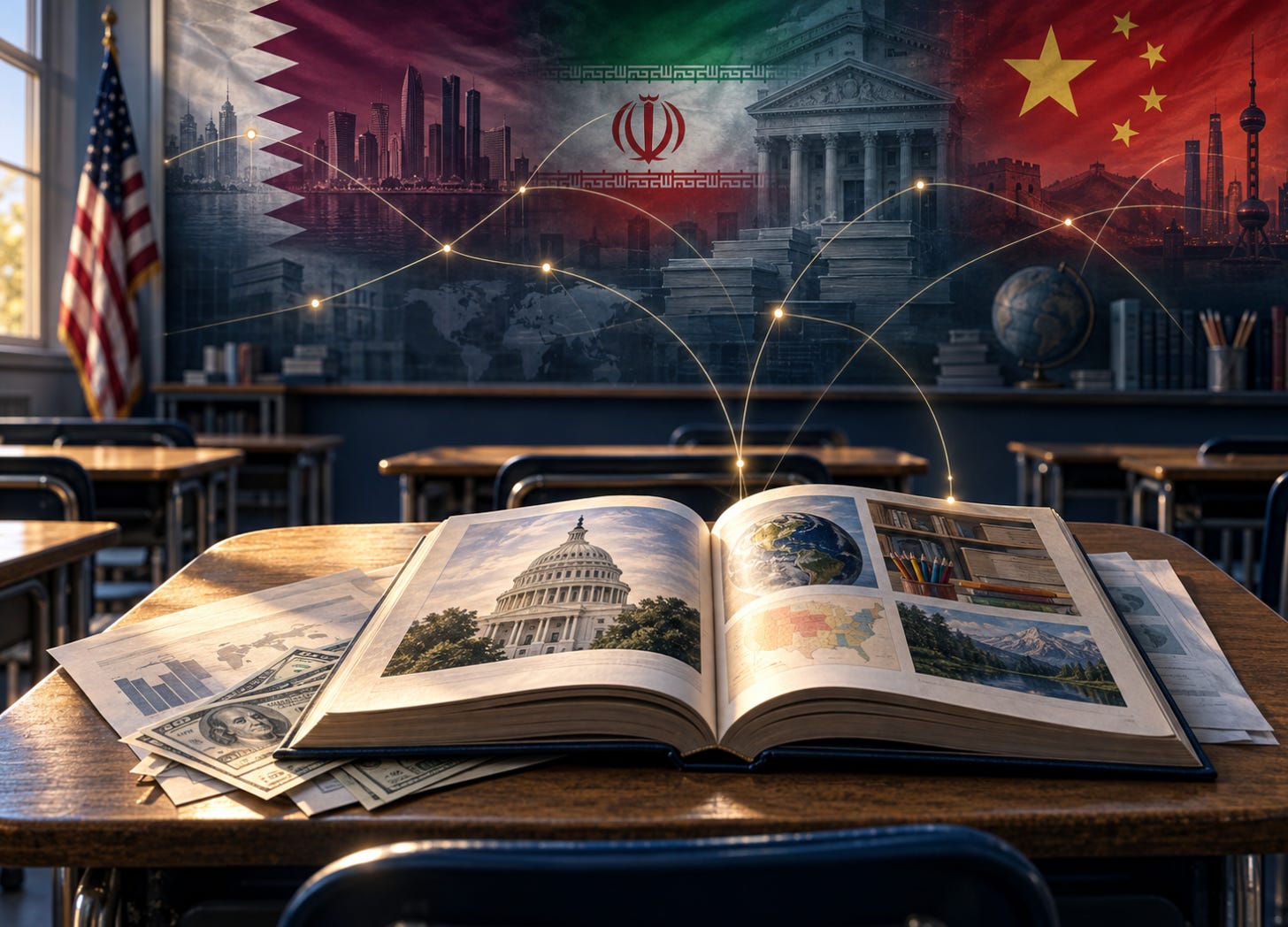
Funding tied to Qatar, Chinese education partnerships, and support from a bank partly owned by Iran have created openings for foreign influence in American K-12 schools, a new report by the Foundation for Defense of Democracies warns.
Published October 21, the report by Brandy Shufutinsky, Jennifer Richmond, and Simone Weichselbaum examines how foreign influence reaches schools through language instruction, teacher training, accreditation, and ownership. Its findings include grant conditions providing classroom access, anti-Israel teaching materials, and partnerships that continued after Confucius Institute closures.


Qatari Funding and Access to Classrooms
Qatar Foundation International (QFI) was established as the U.S. affiliate of Qatar Foundation, founded by Qatar’s former emir and his wife, Sheikha Moza bint Nasser. QFI’s grants covered teacher salaries, instructional materials, training, and overseas travel.
Working with Open The Books, FDD filed more than 1,400 public-records requests. The report identifies 177 QFI grants and allocations totaling $10.6 million, involving 24 school districts, two charter schools, and three universities supporting K-12 programs. The database includes carried-over funds from earlier awards.
In Houston, QFI awarded more than $1.1 million to the Arabic Immersion Magnet School from 2015 through 2026. Contracts provided for classroom observations by QFI staff or consultants. Emails requested lesson plans before visits and recommended coaching for a teacher, documenting the organization’s involvement in the funded program.
Austin’s Arabic program was awarded more than $462,000 between 2016 and 2022. Materials FDD says it obtained from the program included a Saudi government textbook whose introduction, in FDD’s translation, said many Westerners’ ignorance of Arabs allowed “Zionists to manipulate them.” A separate map omitted Israel and labeled the area “Palestine.”
Qatari officials have denied influencing classroom content. A briefing filed under the Foreign Agents Registration Act in 2024 stated that QFI had “no role in setting or influencing classroom content or management.” QFI’s website now states that its operations have concluded.

Foreign Backing for School Accreditation
The report also examines the Islamic Development Bank (IsDB), a Jeddah-based institution with 57 member countries. The bank identifies Iran as its third-largest shareholder. Iran, Qatar, and Turkey each have representation on its Board of Executive Directors.
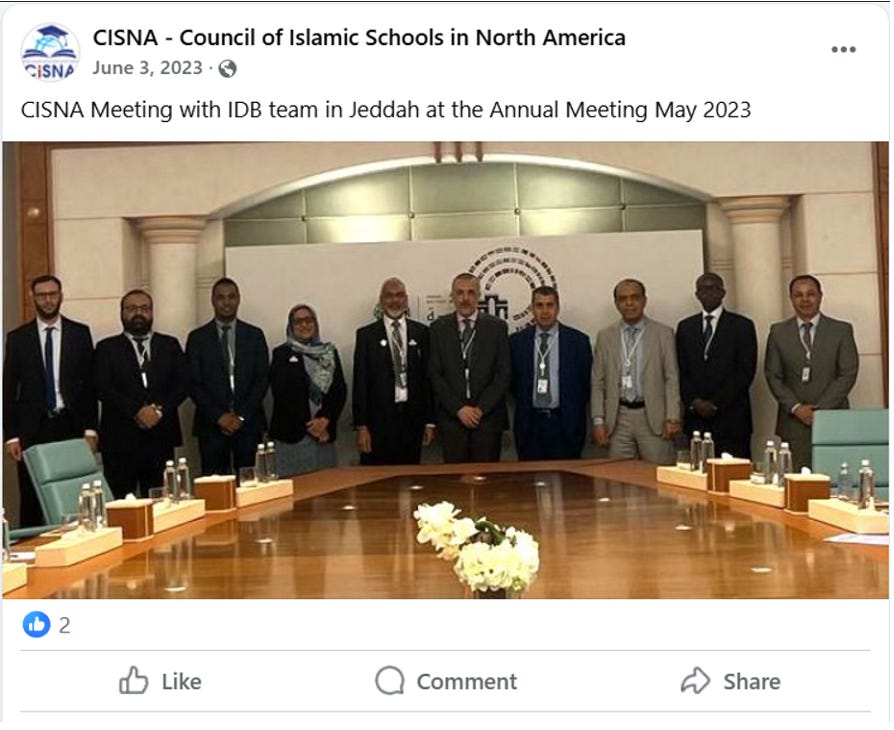
IsDB approved $207,000 in 2023 for the Council of Islamic Schools based in North America (CISNA), supporting an organization that applies accreditation standards and conducts school reviews. The bank’s annual report set targets to increase CISNA-accredited schools by 25 percent by the end of 2024 and deliver governance training to 250–300 U.S. participants by the end of 2025.
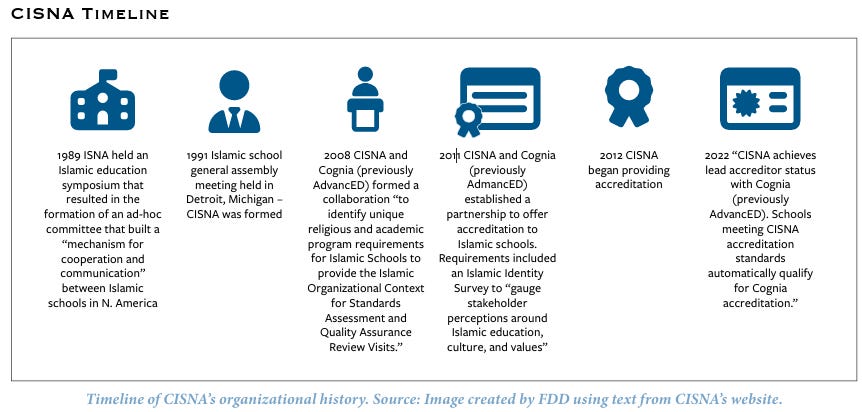
A 2022 CISNA announcement said it would assign review teams and apply its standards when leading dual accreditation with Cognia, unless a school chose Cognia to lead. The bank’s support therefore reaches an institution responsible for assessing schools and training their leadership.
Bank project records also list $994,960 for construction and expansion at Texas’s Brighter Horizons Academy through projects approved in 1996 and 2011. The school was approved for Texas’s taxpayer-funded school-choice program in March 2026 following litigation.
Chinese Programs Continue Through New Partners
FDD traces continuity between closed Confucius Institutes and the Virginia-based Center for Bridging Cultures (CBC), led by Gao Qing, formerly executive director of the Confucius Institute U.S. Center. The State Department designated the U.S. Center a Chinese foreign mission in 2020.
Beijing Language and Culture University describes CBC as continuing and expanding programs previously offered by Confucius Institutes and Confucius Classrooms. A January 2023 email obtained by FDD shows Gao arranging for CBC to replace Alfred University’s role and provide visa and administrative support for Chinese teachers in K-12 programs.
The report identifies private-school ownership as another potential channel of influence. Spring Education Group is majority-owned by investment funds administered by Hong Kong-based Primavera Holdings. Its network includes more than 200 schools spanning preschool through high school in the United States and abroad. FDD raises concerns about potential access to student and family information through that ownership.

Disclosure Gaps and Proposed Restrictions
The authors identify an oversight gap: K-12 schools lack a nationwide foreign-funding disclosure requirement comparable to the federal rules governing universities. They also warn that foreign governments can maintain influence through U.S.-based nonprofits, and recommend closer scrutiny of those intermediaries and foreign investments in schools. The report ultimately calls for prohibiting foreign funding in elementary and secondary classrooms.
Georgia has enacted a narrower disclosure law, covering public-school funding totaling at least $10,000 per fiscal year from a single defined foreign source of concern, including certain intermediaries. Its first reports are due July 31, 2027.