


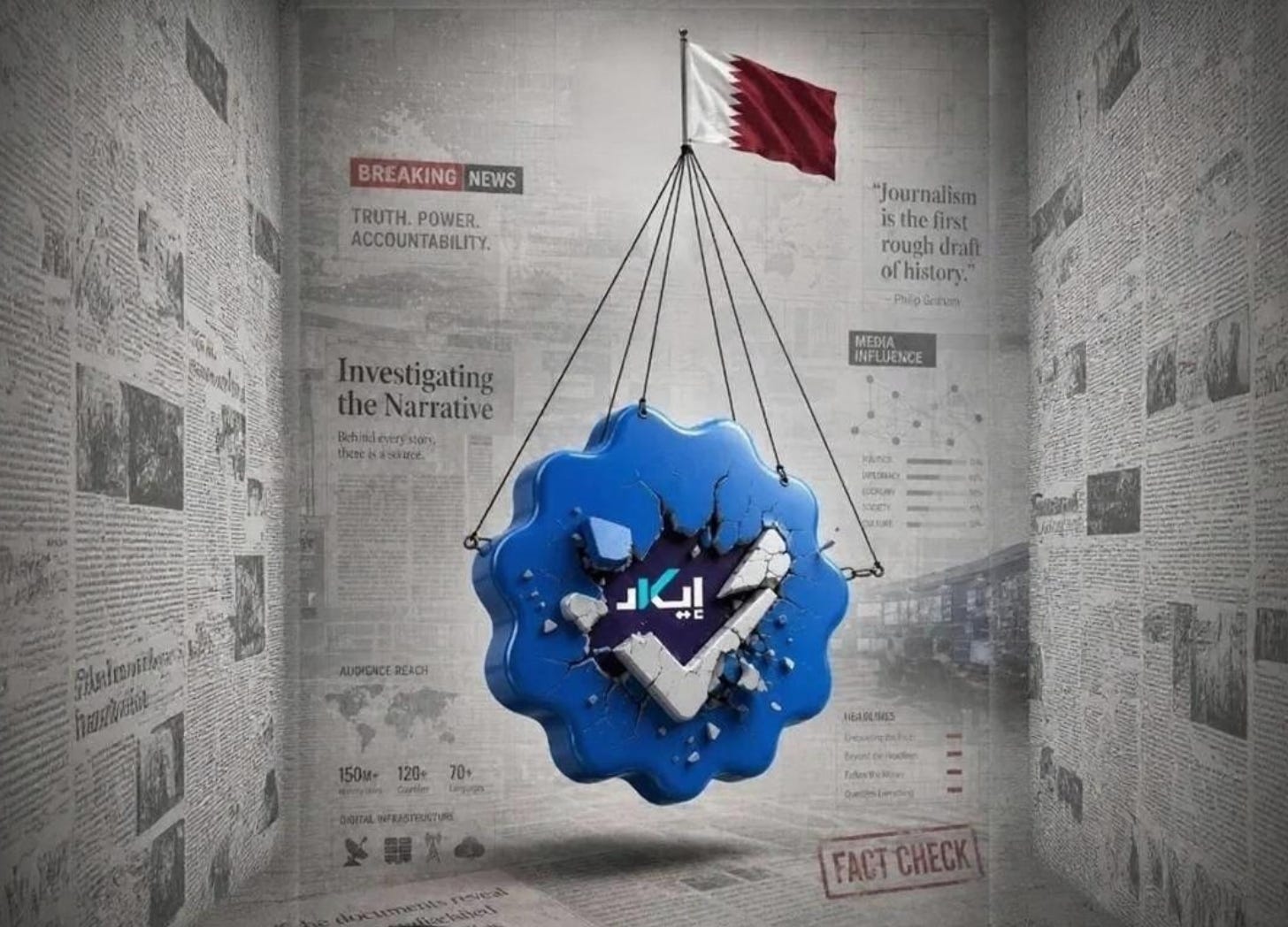
A new Foundation for Defense of Democracies (FDD) investigation released on April 27 argues that Eekad, an Arabic-language open-source investigation and fact-checking platform, is likely part of a Qatari influence operation. FDD’s analysis identified personnel and infrastructure links to Al Jazeera, Qatari government ministries, and firms that have worked with Qatari entities.


FDD characterized parts of Eekad’s content as promoting extremist narratives and as often antisemitic or prejudicial toward minority communities. In July 2025, amid sectarian violence in Syria’s Suwayda region that the UN later said left more than 1,700 people dead, killings were reported at Suwayda National Hospital. Eekad used selective evidence to place the blame on local Druze forces, while other evidence indicated that Syrian government forces were responsible. The post amassed more than 1.5 million views.


The Qatar Connection
FDD reported that Eekad provides no public transparency about its employees, funding sources, affiliations, or physical location. Yet FDD’s analysis of current and former staff revealed direct ties to Al Jazeera, Qatari government ministries, and PR firms contracting for Doha. Rand Abu Hilalah, daughter of former Al Jazeera Managing Director Yaser Abu Hilalah, worked as Eekad’s social media coordinator and news editor after publishing articles on Al Jazeera’s Arabic site.
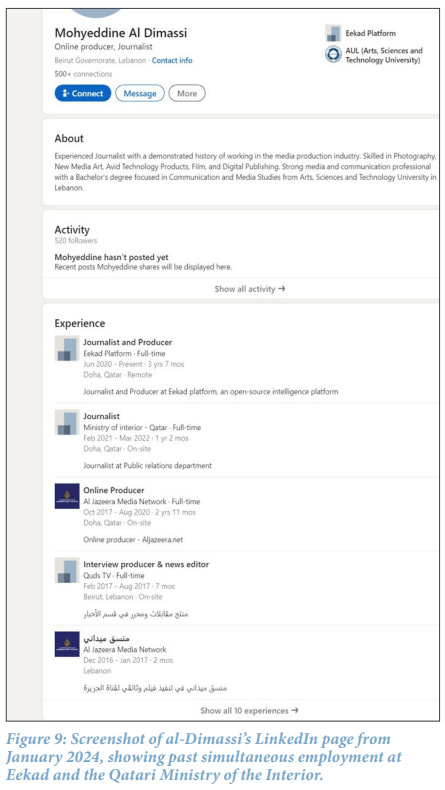
Video editor Joanne Mrad listed on her LinkedIn profile that she produced content for both Eekad and Qatar’s National Cyber Security Agency, Ministry of Interior, and National Archives. Journalist Mohyeddine al-Dimassi simultaneously worked at Eekad, Al Jazeera, and the Qatari Ministry of Interior.
FDD also cited infrastructure indicators pointing to Qatar. Facebook transparency data showed page managers in Qatar, Turkey, and Egypt. Furthermore, Meta’s ad library reveals Eekad pays for advertisements using Qatari Rials. Nearly all of these ads have been removed for violating Meta’s policies on political advertising without proper disclosure. FDD argued that Eekad’s apparent ability to operate despite Qatar’s restrictive cybercrime law suggests at least tacit tolerance by Qatari authorities.
Sympathetic Coverage of Hamas
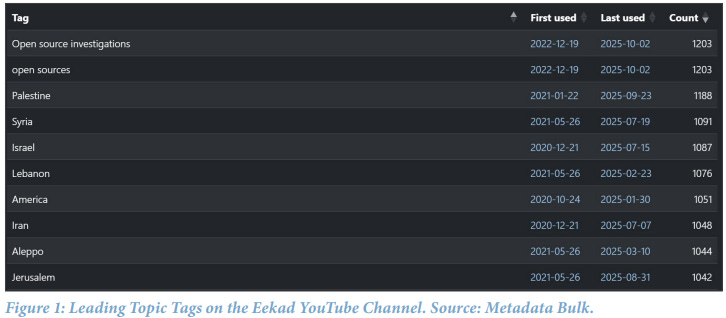
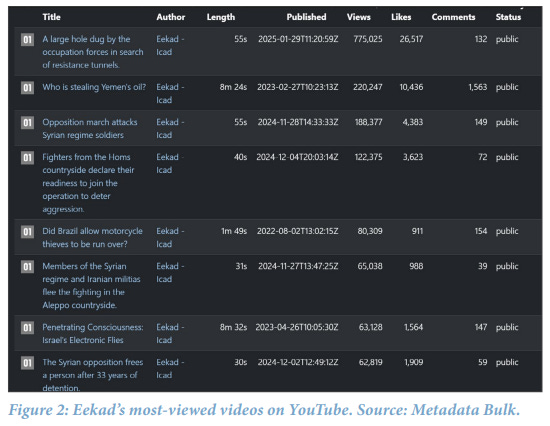
Since its founding in 2020, Eekad has uploaded more than 2,300 videos to YouTube and 2,500 posts on X. Analysis of its YouTube metadata shows Palestine as the most-tagged topic with 1,188 tags, followed by Syria, Israel, and Lebanon. FDD argues those links help explain why Eekad’s coverage often aligns with Qatari foreign-policy interests, including sympathetic framing of Hamas and harsh coverage of Israel, the UAE, Saudi Arabia, and Syrian minority groups.
On October 9, 2023 — two days after Hamas’s massacre of Israelis — Eekad posted a thread in English defending the attack, referring to it by Hamas’s official name: “al-Aqsa Flood.”
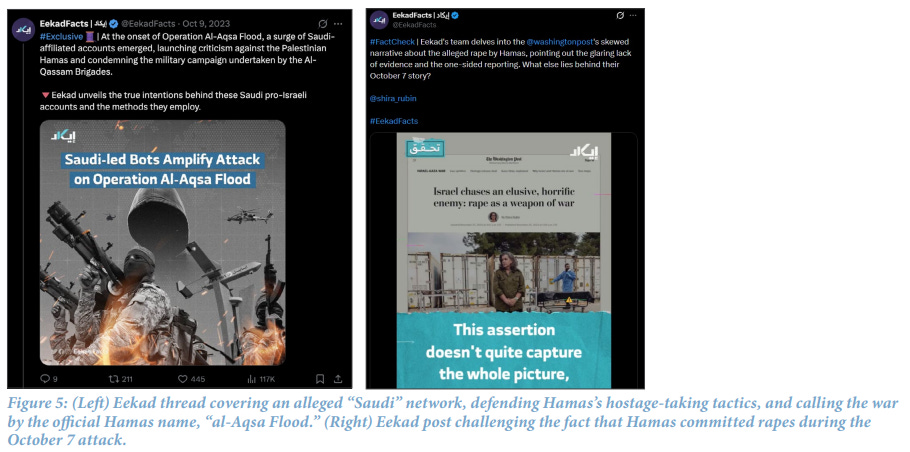
The organization regularly calls Hamas “the resistance” and uses the red triangle symbol associated with Hamas propaganda. When reports emerged of sexual violence against Israeli women on October 7, Eekad criticized The Washington Post’s coverage, claiming it lacked “Palestinian voices.”

The platform regularly uses social network analysis tools to create graphs purporting to expose alleged Israeli “bot farms”, without publishing underlying data or methodology.
Targeting Qatar’s Rivals
Eekad’s most prominent investigation claimed the UAE was behind “QLeaks,” a website that posted leaked Qatari government documents. Doha News, a Qatar-based outlet, was the first to cover Eekad’s findings. The platform also alleged the UAE funded Sudan’s Rapid Support Forces and accused the Emirates of running influence operations against Qatar.
Syrian Druze are another frequent target. A pinned post on Eekad’s X account accused the Syrian Druze community of conspiring with Israel to secede from Syria and adopting the “Torah” doctrine of “Greater Israel.”

When Qatar faced criticism over its relationship with U.S. universities following campus protests, Eekad posted a thread accusing “Zionist” accounts of defaming Qatar, just weeks after Qatar’s media attaché to the United States issued a denial.
Signs of Inauthentic Amplification
While some Eekad content goes viral, FDD said discrepancies between follower counts and engagement may indicate that parts of its audience are inflated or inauthentic. The platform’s YouTube channel has 38,000 subscribers but most videos receive only several hundred views.
The Bigger Picture
By keeping Eekad at arm’s length, Qatar can reach audiences in countries like the UAE that have banned Al Jazeera. FDD argued that Eekad’s production quality, use of AI tools, apparent staff, freelancers, and contractors indicate significant resources. Yet the organization is not registered as any type of legal entity in Qatar or elsewhere. Based on FDD’s analysis, Eekad appears to function as a vehicle for advancing Qatar-aligned narratives while presenting itself as an independent fact-checking platform.