


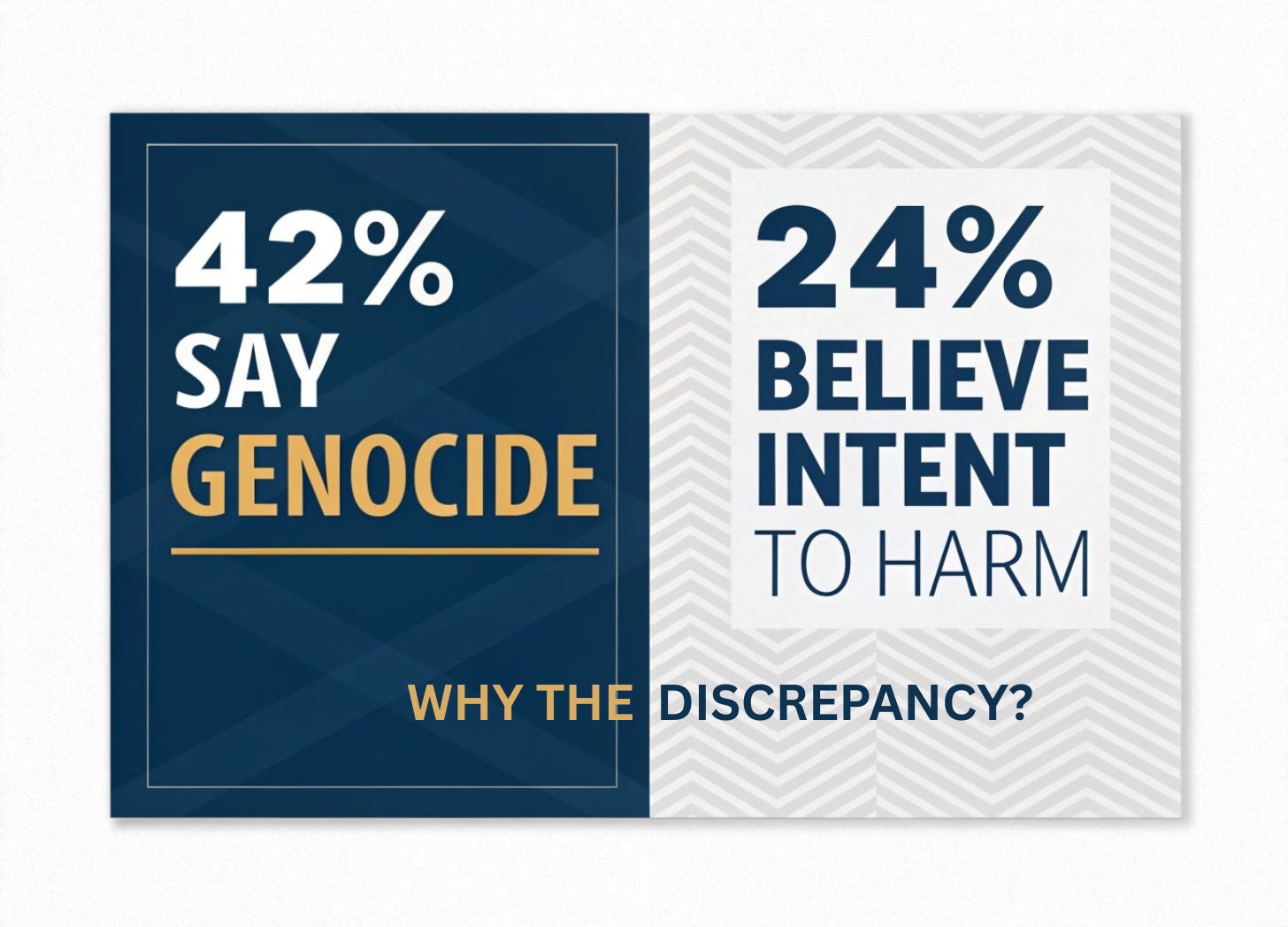
A comprehensive new survey from Florida State University’s Institute for Governance and Civics (IGC) reveals a striking disconnect in American public opinion. While 42% of Americans told pollsters in September 2025 that Israel is “committing genocide” in Gaza, only 24% actually believe Israel even intends to harm Palestinian civilians.
The finding suggests that binary yes-or-no polling questions may have significantly overstated Americans’ beliefs that Israel is committing genocide, with many respondents using the term without holding the core belief that legally defines genocide, namely deliberate intent to destroy a population.
The study, conducted by researchers Zach Goldberg, Ryan Owens, and James “Lynn” Woodworth, surveyed 1,447 U.S. adults between September 17-23, 2025. Unlike previous polls that asked simple questions about whether Israel is “committing genocide,” the IGC research offered respondents multiple distinct options to describe Israel’s intentions. This revealed a public considerably more divided, uncertain, and conflicted than headline polls suggest.
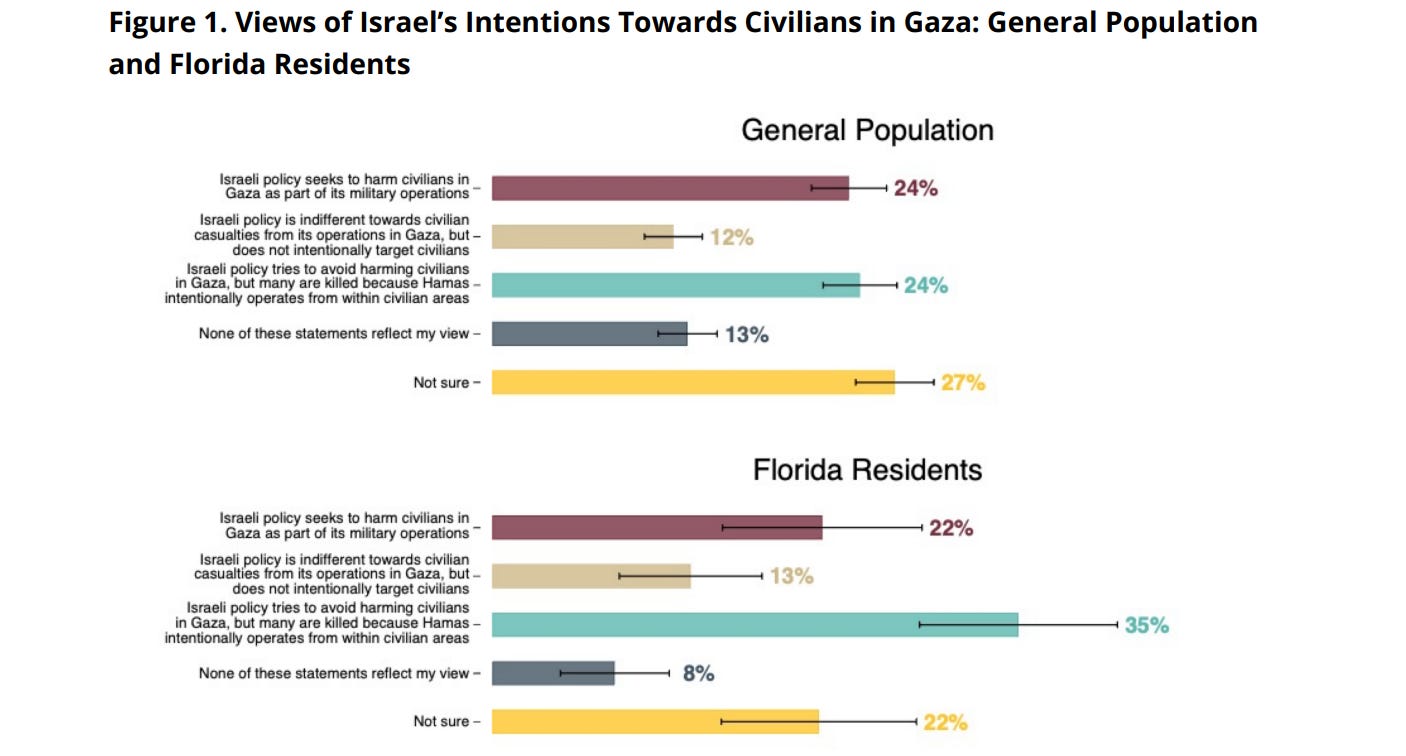
The “Genocide” Gap: Label vs. Intent
When presented with nuanced options about Israel’s intentions, Americans split almost evenly across multiple perspectives. Some 24% believe Israel tries to avoid harming civilians but many are killed because Hamas operates from within civilian areas. An identical 24% believe Israel seeks to harm civilians as part of its military operations. Another 12% view Israeli policy as indifferent toward but not intentionally targeting civilians. Additionally, 13% said none of the statements reflected their view, and 27% were not sure.
The gap between genocide label usage and intent attribution is even more dramatic among specific ideological groups. In previous YouGov polling, 81% of liberals and 67% of Democrats said Israel is “committing genocide.” But in the IGC study, only 50% of liberals and 37% of Democrats said Israel “seeks to harm civilians.” Even adding those who see Israel as “indifferent” brings totals only to 50-60%, still substantially below the “genocide” figures.
“The difference suggests that many Americans’ views are more uncertain or qualified than a single question can capture,” the researchers explain. “By offering multiple, mutually exclusive statements that distinguish between intent, indifference, and restraint, this survey uncovers a broader spectrum of opinion.”
The findings indicate that 40% of Americans either don’t have a firm opinion or find available framings inadequate. This suggests the “genocide” narrative, while widespread in some communities, sits atop a foundation of significant public uncertainty.
Ideology and Age Drive the Divide
The study reveals that partisanship and ideology are by far the strongest predictors of how Americans interpret Israel’s motives, stronger than age, education, or any other demographic factor.
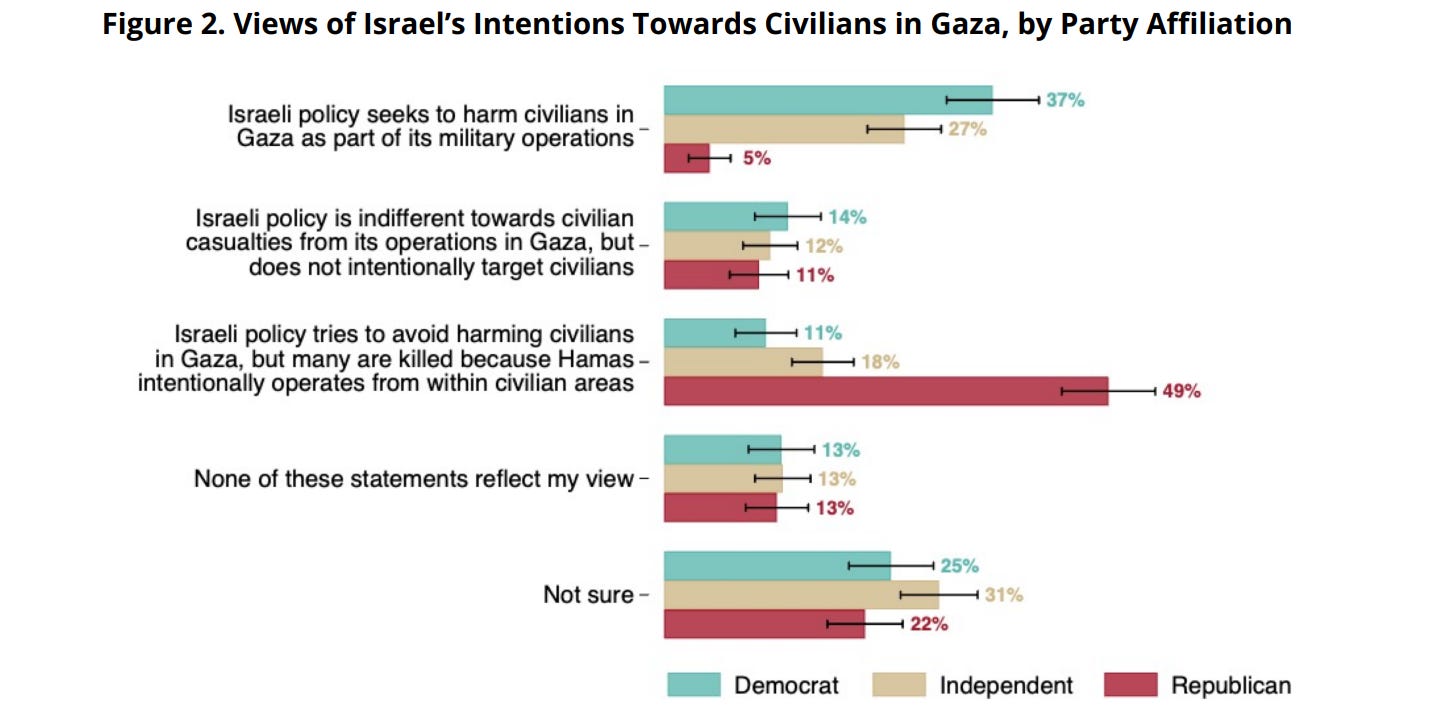
Among liberals, 50% say Israeli policy seeks to harm civilians, compared with just 9% of conservatives. Meanwhile, 47% of conservatives say Israel tries to avoid harming civilians, compared to 7% of liberals. The partisan split shows similar patterns, with 37% of Democrats versus 5% of Republicans attributing harmful intent to Israel.
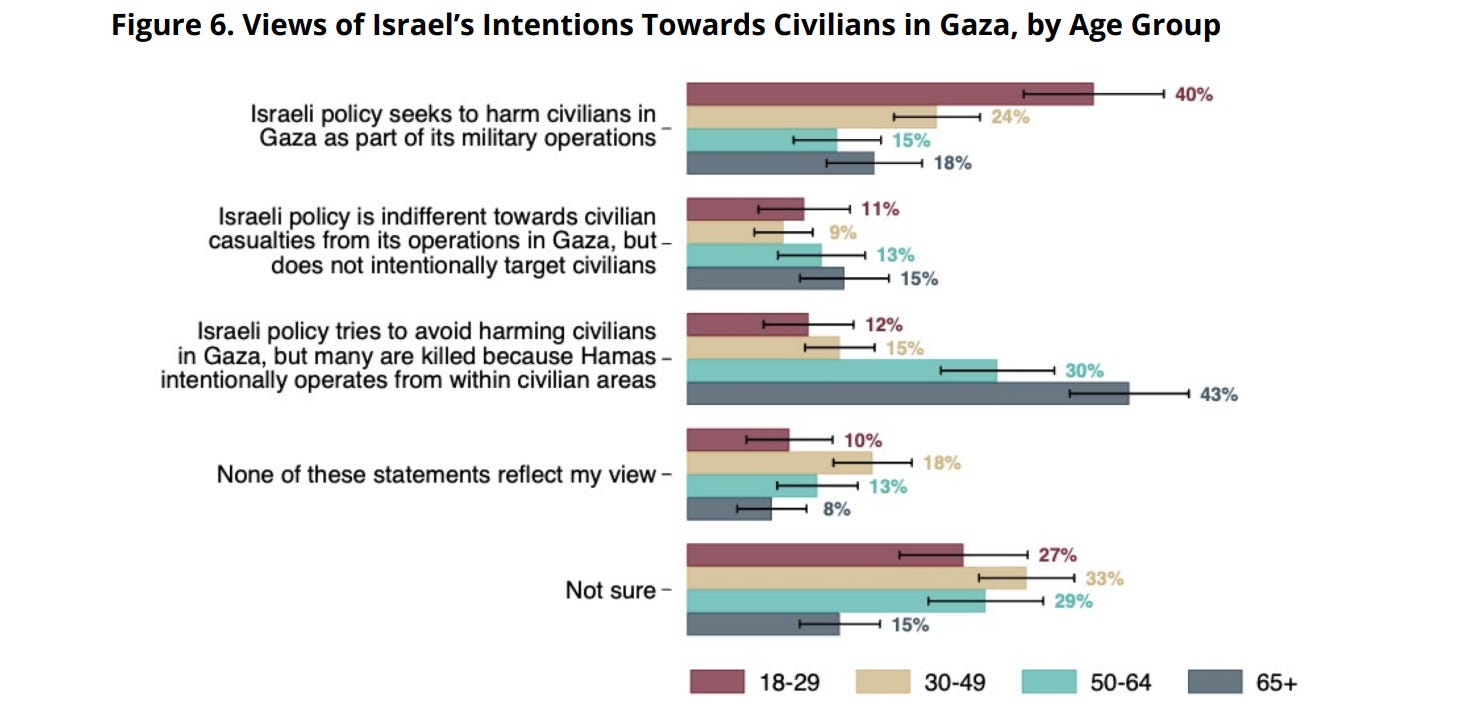
Age emerged as another powerful dividing line. Some 40% of adults under 30 believe Israel seeks to harm civilians, more than triple the 12% of those 65 and older who hold this view. Conversely, 43% of seniors believe Israel tries to avoid harming civilians, compared to just 12% of those under 30.
What Binary Polling Misses
The researchers emphasize that their findings reveal significant limitations in how public opinion on complex issues is measured and reported.
“While 42% of respondents in a September 2025 YouGov poll said Israel is ‘committing genocide,’ only about half that share in this study ascribed deliberate intent to harm civilians,” they write. “The survey highlights the limits of binary polling questions that reduce complex moral evaluations to a simple ‘yes’ or ‘no.’”
If substantial portions of Americans use “genocide” terminology without believing Israel actually intends to destroy Palestinian civilians, it suggests the term may function more as political expression or tribal signaling than as a precise legal or moral judgment, the researchers contend.
Validating Research on Coordinated “Genocide” Campaign
The IGC findings take on additional significance when examined alongside research published earlier this year by scholars from Chukwuemeka Odumegwu Ojukwu University in Nigeria. Their analysis, “Political Mobilization and Advocacy Strategies of Palestinian Groups Amid Genocide Allegations in the Gaza Conflict, 2023-2024,” documented how Palestinian organizations coordinated advocacy efforts during the war. The research identified “Pillar 1” as focusing specifically on the deliberate use of genocide framing as strategic communication.
The Nigerian researchers documented that genocide allegations appeared 112 times across analyzed documents and argued this framing was chosen not for its accuracy, but for its “strategic utility.” They found it functioned as a “universal language” to appeal simultaneously to international courts, global public opinion, and diplomatic actors.
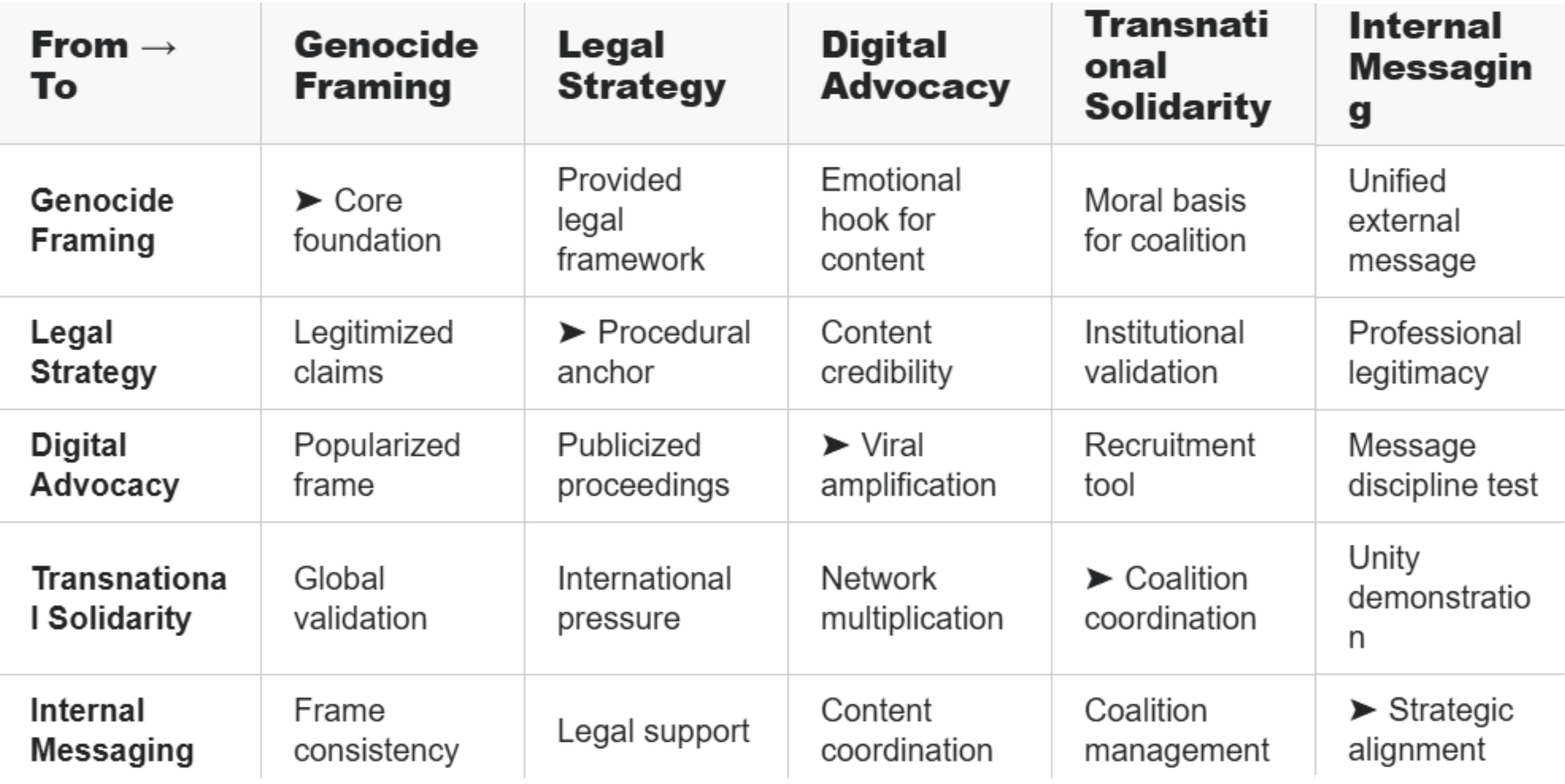
The IGC data now provides empirical validation of that analysis. The 42% adoption rate represents extraordinary penetration for such an extreme accusation in just over a year, with particularly high uptake among liberals (81%) and Democrats (67%). These are precisely the constituencies most likely to influence media, academia, and international institutions.
Most significantly, the 18-percentage-point gap between genocide label usage (42%) and actual intent attribution (24%) validates the Nigerian researchers’ core argument. The term was selected for strategic impact rather than descriptive legal accuracy. The gap essentially measures the success of coordinated strategic framing over factual persuasion.
The age breakdown particularly validates the documented digital advocacy strategies targeting younger demographics through TikTok and Instagram. The fact that 40% of under-30s attribute harmful intent versus 12% of seniors aligns precisely with platforms the Nigerian study identified as primary targets.
When Messaging Outpaces Conviction
The IGC study reveals that American public opinion on Israel’s actions in Gaza is far more divided, uncertain, and complex than binary polling suggests. When viewed alongside systematic analysis of Palestinian advocacy strategies, it provides empirical evidence of how coordinated communication can achieve widespread narrative adoption even among populations that don’t fully believe the literal content, while also exposing the potential fragility of support built on strategic framing rather than deep conviction.