


Jewish Onliner is an independent publication. If you find our work valuable, please consider becoming a paid subscriber.

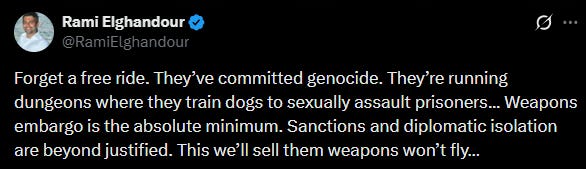
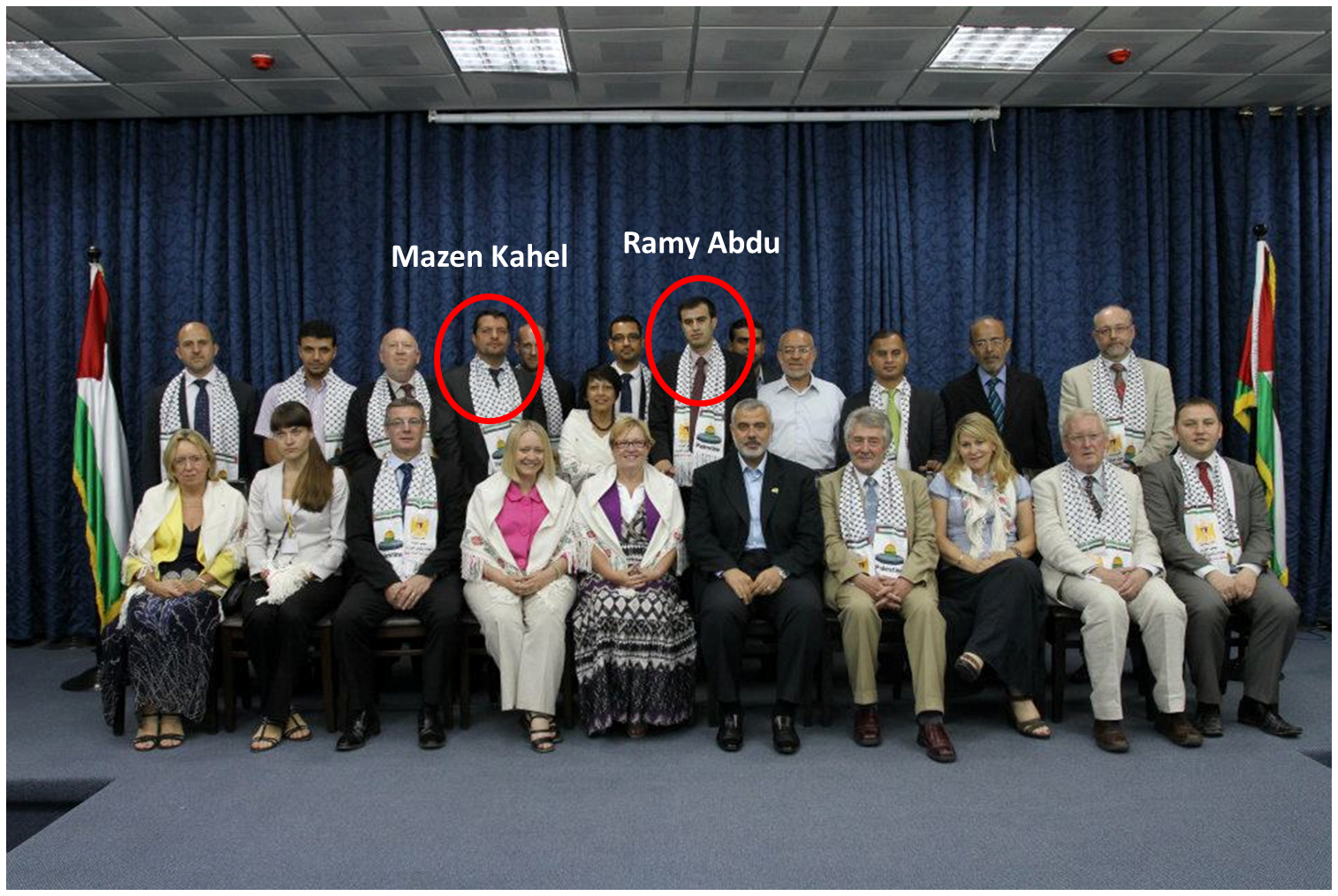
Rami Elghandour, CEO of Nasdaq-listed biotech firm Arcellx and executive producer of the Oscar-nominated film The Voice of Hind Rajab, published an X post on April 20, 2026, that Israel was “running dungeons where they train dogs to sexually assault prisoners.” The unverified claim had circulated in advocacy channels, including through Euro-Med Human Rights Monitor, a Geneva-based advocacy group whose founder and board chair Ramy Abdu and former board chair Mazen Kahel appeared on a 2013 Israeli list of Hamas “main operatives and institutions” in Europe.
Rutgers later cited the post as an “inflammatory claim” when it rescinded Elghandour’s invitation to address the School of Engineering’s May 15 convocation. His broader social media record, however, shows a wider pattern of amplifying severe and often unverified accusations against Israel, while several major outlets framed the controversy primarily as “criticism of Israel” or pro-Palestinian speech.
The controversy illustrates how an extreme and unverified allegation can move from advocacy channels with alleged terrorism-linked leadership histories into mainstream debate when amplified by a credentialed public figure and framed primarily as political speech.
Alleged Hamas-Linked Leadership
NGO Monitor’s investigation reveals that Euro-Med Monitor founder and chairman Ramy Abdu appeared on Israel’s 2013 list of Hamas “main operatives” in Europe. Former board chair Mazen Kahel appeared on the same list. A 2011 photograph shows both men posing alongside Hamas political bureau leader Ismail Haniyeh.

Abdu received an Israeli administrative seizure order from November 2020 to August 2022 for work with Israeli-designated terrorist organizations. Euro-Med Monitor publishes zero financial data, reflecting what NGO Monitor calls a “complete lack of transparency.”
NGO Monitor has documented how Euro-Med Monitor has repeatedly promoted claims about Israel that it characterizes as blood libels or conspiracy theories, including allegations involving organ harvesting and deliberate child-targeting. These claims follow patterns the Anti-Defamation League documented in its report on blood libel accusations that resurged after October 7, 2023.
A Pattern of Amplifying Inflammatory Claims
In December 2023, two months after Hamas’s October 7 attack killed roughly 1,200 people in Israel, Elghandour wrote that ‘both parties engage in atrocities.’ The statement placed Israel and Hamas in the same moral frame without addressing the specific nature of Hamas’s attack, including the massacre of civilians in homes and at a music festival.
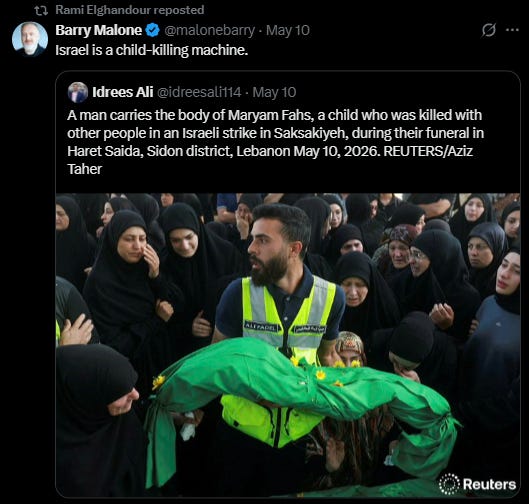
Furthermore, on May 10, 2026, Elghandour reposted Barry Malone’s social media claim that “Israel is a child-killing machine.”
The Media-Framing Gap
The Associated Press characterized Elghandour’s posts as “criticism of Israel.” The Guardian described them as “pro-Palestinian posts.” NBC called them “anti-Israel social media posts.”
The result was a public debate framed largely as a dispute over pro-Palestinian expression, rather than the more specific question at issue: how an unverified, historically charged allegation moved from advocacy channels with alleged Hamas-linked leadership into mainstream debate through a public-company CEO’s social media account.
Real Consequences
Rutgers said some graduating students indicated they would not attend the ceremony because of concerns about Elghandour’s social media posts. This came only months after the university settled a federal civil-rights investigation in January 2025 over allegations that it had failed to protect Jewish students from antisemitism after October 7.
Elghandour characterized the decision as abandoning ‘the dignity and belonging of Arab and Muslim students.’ He framed it as a free-speech issue, while Rutgers framed the decision around student concerns over social media posts, including one it described as an ‘inflammatory claim.’
According to JNS, some 19,000 people signed a petition demanding his reinstatement, treating his disinvitation as a free speech violation rather than a university declining to platform conspiracy theories.
Credibility Laundering
Elghandour’s credentials helped move the allegation beyond activist networks and into mainstream debate. As a Wharton MBA, Rutgers engineering graduate, CEO of a Nasdaq-listed biotech company, and executive producer of an Oscar-nominated film, he brought institutional credibility to a claim whose source and evidentiary basis required closer scrutiny.
The pattern resembles credential laundering: an advocacy group promotes an unverified allegation, a prominent public figure amplifies it, and the controversy becomes centered on speech and institutional response rather than the provenance of the claim. In this case, that provenance includes Euro-Med Monitor’s leadership history, lack of financial transparency, and NGO Monitor’s reporting that two senior figures appeared on an Israeli list of Hamas “main operatives and institutions” in Europe.