


Jewish Onliner is an independent publication. If you find our work valuable, please consider becoming a paid subscriber.
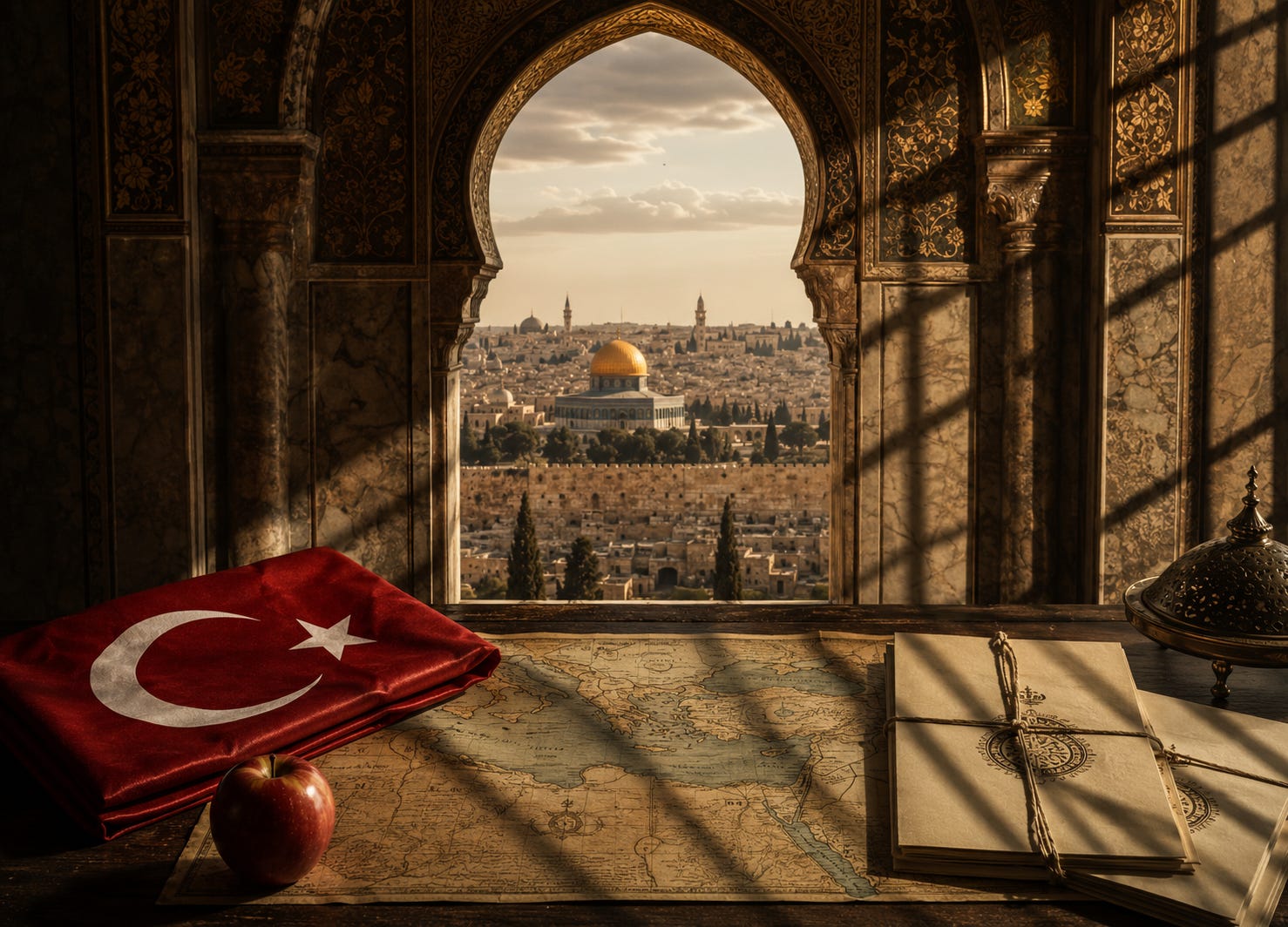
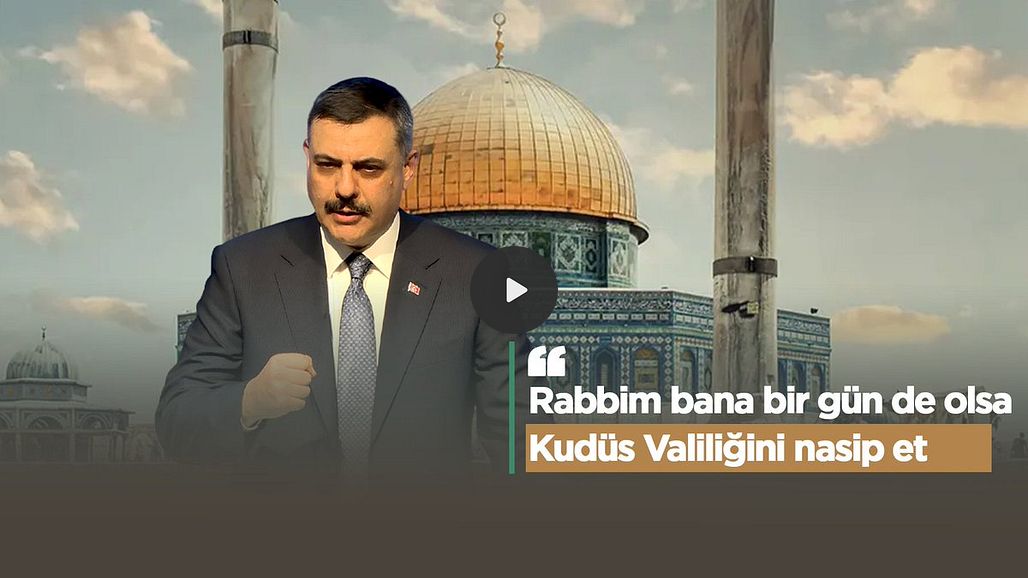
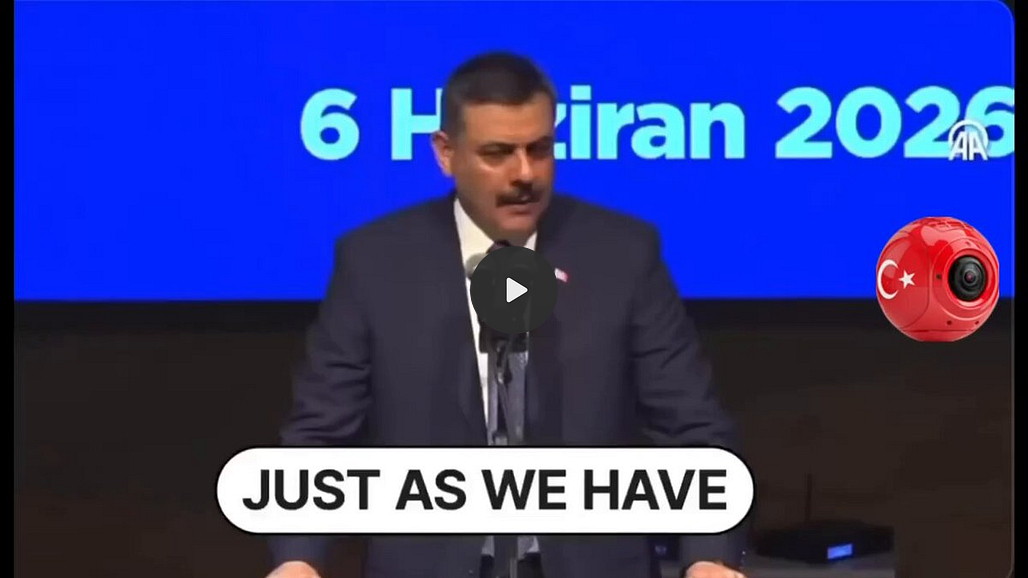
Turkish Interior Minister Mustafa Çiftçi told an AK Party gathering in Çorum on June 6 that “just as we witnessed the liberation of Damascus, Aleppo, and Karabakh, God willing, one day we will also witness the liberation of Jerusalem,” and revealed he has prayed to be appointed “governor of Jerusalem, even for a single day.”
The remarks — delivered by Erdoğan’s top internal-security official, not a fringe figure — were posted by Çiftçi himself to his official X account, confirmed by pro-government Daily Sabah, and prompted Israel’s Foreign Ministry to respond that “the corrupt Ottoman Empire is gone. Forever.” Analysts at JISS have argued that Erdoğan-era Kızıl Elma messaging places Jerusalem inside a neo-Ottoman irredentist imagination.
The Hafız Minister
Çiftçi, a career bureaucrat from Konya, graduated from Ankara University’s prestigious Faculty of Political Science in 1995, then completed a second degree at the same university’s Faculty of Theology in 2011. He served as district governor in five provinces, then as governor of Çorum (2018–2023) and Erzurum (2023–2026), before Erdoğan elevated him to Interior Minister in February 2026, replacing Ali Yerlikaya.
He is also a hafız — one who has memorized the entire Quran — and won the national title in the Diyanet’s 2024 Quran memorization competition in the 15-juz category. Turkish commentators noted he may be the first hafız to lead the Interior Ministry. By his own account, he sets aside an hour daily for Quranic study.

A Record That Foreshadowed the Speech
As Çorum governor in February 2021, he attended a commemoration for İskilipli Atıf Hoca, a cleric hanged in 1926 for opposing Atatürk’s secular reforms and advocating Sharia law. When criticized, Çiftçi defended the visit as “right, justified and necessary.”
As Erzurum governor, he closed the building that hosted the 1919 Erzurum Congress — a foundational site of Atatürk’s republican movement — citing damage, and publicly noted its earlier use as the Armenian Sanasaryan School, floating that it could be demolished. Critics across the political spectrum, including the nationalist MHP, denounced the move as an assault on republican memory. Haaretz reported that Israeli sources read the Jerusalem remarks as Çiftçi positioning himself to Erdoğan’s right.
Jerusalem in the Neo-Ottoman Frame
Çiftçi’s words were not isolated. They echoed a broader Erdoğan-era fusion of Kızıl Elma, neo-Ottoman memory, and Jerusalem rhetoric that analysts have identified in official Turkish messaging.
The Jerusalem Institute for Strategy and Security has documented that on August 24, 2020, the Turkish Presidency’s Communications Directorate officially embraced Kızıl Elma — the “Red Apple,” a centuries-old Turkic irredentist concept of conquest — and explicitly portrayed Jerusalem as the next “Red Apple objective.”
In 2021, Erdoğan proposed a new tri-religious “governing regime” for Jerusalem, challenging Israeli sovereignty directly. AKP MP Iffet Polat publicly prayed for Turkish soldiers to liberate Jerusalem and Al-Aqsa “the way Saladin did in the past.” Erdoğan himself told Turkish lawmakers in 2020 that “Jerusalem is our city, a city from us.”

The infrastructure follows the rhetoric. As the JISS study details, Turkey subsidizes pilgrim visits, funds religious and educational institutions in East Jerusalem, restores Muslim sites, distributes Ramadan iftar meals, and maintains ties to the northern branch of the Islamic Movement — a Muslim Brotherhood offshoot. Qantara has described Turkey’s Al-Aqsa campaign, including the Istanbul-based Mirasımız association’s restoration work, as serving state-prescribed neo-Ottomanism in Jerusalem.
The Template: Damascus, Aleppo, Karabakh
Çiftçi’s chosen precedents were not random. In Karabakh, Turkey’s military support helped Azerbaijan shift the balance in the 2020 war, while Azerbaijan’s September 2023 offensive retook the remaining Armenian-controlled enclave and triggered the near-total exodus of its ethnic Armenian population. In Syria, Damascus and Aleppo fell in December 2024 after a lightning rebel advance led by HTS, with Turkish-backed Syrian National Army factions also taking part in the wider offensive that brought down Assad’s regime.
In each case, Turkey supplied the military edge that produced what AKP officials now call “liberation.” By placing Jerusalem in the same sentence, the Interior Minister is not citing miracles — he is citing a working model.
Israel’s Response
Defense Minister Israel Katz replied in Turkish on X: “Jerusalem is not Constantinople, and the State of Israel is not a crumbling Crusader Empire… You and the Ottoman Empire that Erdoğan dreams of have collapsed and will never return.” The Foreign Ministry told Çiftçi to “wake up and smell the coffee.”


But the more sobering point is institutional. The man calling for Jerusalem’s “liberation” is not a polemicist or a backbench MP — he is the official who oversees Turkey’s national police, gendarmerie, and provincial administration. When a hafız Interior Minister, appointed by Erdoğan four months ago, tells a party hall in central Anatolia that “those lands will be ours again… under our sovereignty and dominion,” he is not breaking with policy. He is reciting it.
Seems like a staged act to please domestic forces or constituants. Or should it be taken serious?
In any case, is it not remarkable that Turkey feels the need to join the anti Israel vibe so loud and publicly (they been financing it for ages of course), while many Arab states are changing lane to join the Abraham Accords?
Turkey wants to bevthe Ottoman Empire again and put Jerusalem in its dirty hands.