


Jewish Onliner is an independent publication. If you find our work valuable, please consider becoming a paid subscriber.
The Committee to Protect Journalists (CPJ) announced on June 25 that it has launched a full review of its database of journalists killed during the Israel-Gaza War, after Hamas and Palestinian Islamic Jihad published obituaries identifying terrorists that CPJ had previously listed as journalists.
The disclosure is significant because CPJ’s casualty count has been treated by international media, United Nations statements, and diplomatic actors as the authoritative tally of Gaza journalist deaths — and because the catalyst for the correction is the terror groups’ own publications.


CPJ said it has removed eight names from its Killed database after they were established as Hamas or PIJ combatants, and 12 more for other reasons — 20 total removals. The organization’s review is set to complete in July.
A Pattern of Retroactive Disclosure
The CPJ review lands at a moment when the same dynamic — Hamas and PIJ identifying their own commanders only after the fact — is also driving the most detailed open-source casualty analysis of the war to date.
On June 24, one day before the CPJ announcement, an independent investigator publishing under the name MiddleEastBuka released a dataset mapping 391 PIJ commanders to 364 reconstructed casualty incidents, identifying 1,547 people killed in the same events. The study cross-references PIJ’s bulk obituary releases against the Hamas Health Ministry’s casualty lists, Palestinian casualty datasets, local reports, and social-media death notices.
A Commander List Built From PIJ’s Own Publications
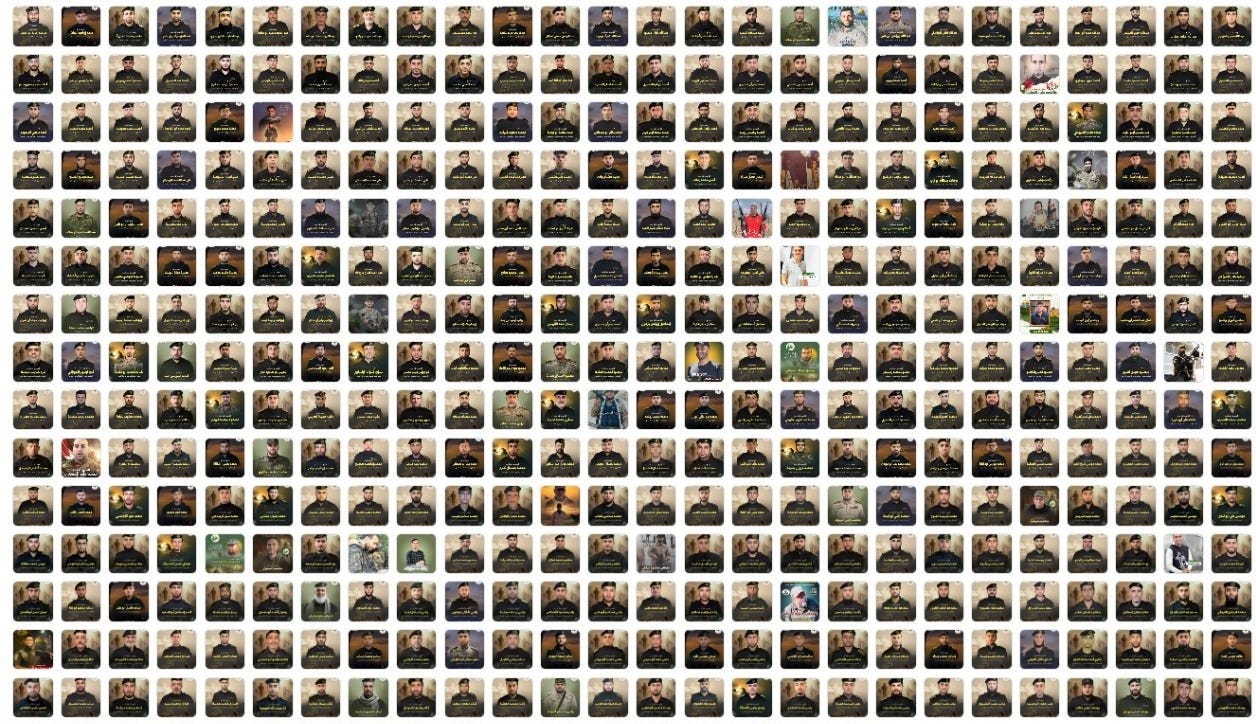
The study says it began with 19 official Palestinian Islamic Jihad obituary batches published between October 22, 2025, and June 1, 2026. Those releases contained 425 names of killed commanders, including photographs, military roles, brigade affiliations, battalion information, and, in some cases, unit-level details.


The author analyzed 391 of those names, excluding 34 because they were killed after the relevant Hamas Ministry of Health list was released, could not be confidently identified, were missing from the MoH list, or lacked enough incident evidence for casualty reconstruction. The resulting dataset identified 391 PIJ commanders, 60 additional combatants or political figures, and 1,096 “collateral casualties” — people killed in the same incident who are not currently identified in the dataset as combatants.
That distinction matters. The author explicitly warns that “collateral casualty” is not a final civilian-status determination. It means only that no Palestinian or factional source reviewed in the project had identified the person as a combatant at the time of publication — exactly the kind of classification that CPJ is now revising as new PIJ obituaries surface.
The Methodology Cuts Against Simple Narratives
The dataset is notable because it does not rely on Israeli combatant claims to classify PIJ personnel. It uses PIJ’s own Saraya al-Quds publications as the starting point, then checks the names against MoH records, Airwars searches, Shireen and GIGAZA datasets, Telegram posts, Facebook notices, X posts, family announcements, and local casualty reporting.


The study captures a specific slice of the war: PIJ commander-linked incidents visible through PIJ’s own later publications and reconstructable through open sources. It is not a full accounting of Gaza deaths, all PIJ terrorists, or all civilian casualties.
A Long-Overdue Reckoning
Together, the CPJ review and the MiddleEastBuka dataset point at the same structural problem in how Gaza’s casualty record has been read. Both rely on Hamas and PIJ self-identification — through obituaries published months after the fact — to revise classifications that had been confidently asserted at the time of the strikes.
CPJ is now reckoning with the journalist-list version of that problem. MiddleEastBuka is mapping a far broader version of the same dynamic across the wider death registry.