


Jewish Onliner is an independent publication. If you find our work valuable, please consider becoming a paid subscriber.
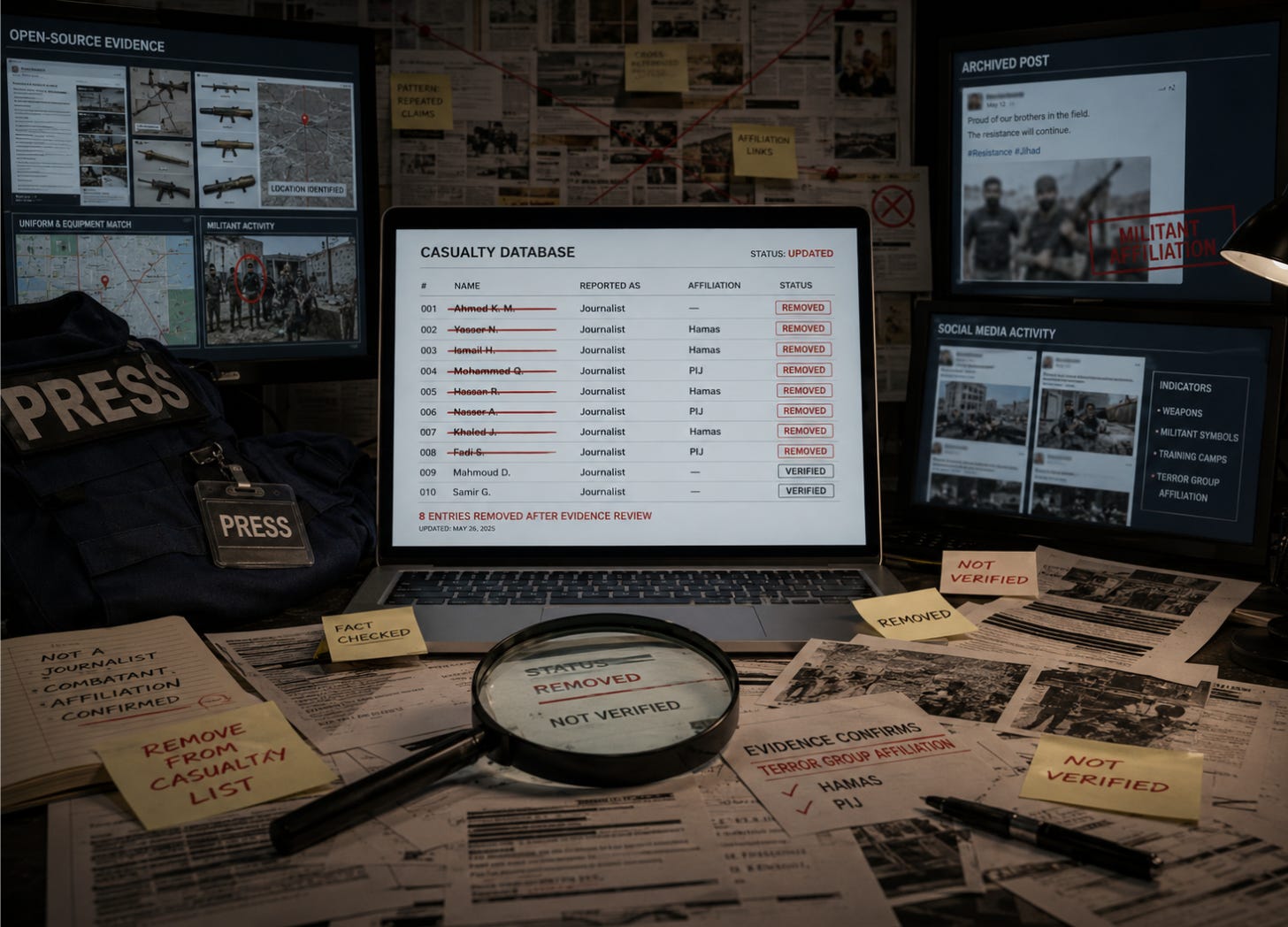
Open-source researcher Salo Aizenberg says the Committee to Protect Journalists has “quietly removed 8 fake Gaza ‘journalists’” from its casualty records after CPJ’s own update said the men were removed because its research indicated they had “participated in combat.”
Aizenberg, a board member of HonestReporting and a persistent public critic of Gaza journalist-casualty lists, wrote on X that CPJ had issued more than 100 articles and statements criticizing Israel over journalist deaths since October 7 while making “not ONE mention” that Hamas and Palestinian Islamic Jihad had abused press cover for combat activity.
In a June 2 update to its Israel-Gaza journalist-casualty page, CPJ said eight Palestinian men were removed after “subsequent research and investigations” indicated that they had participated in combat.
The names listed by CPJ were Mohamed Manhal Abu Armanah, Mohamed Naser Abu Huwaidi, Yacoup Al-Borsh, Rizq Abu Shakian, Maisara Ahmed Salah, Mahdi Al-Mamluk, Mustafa Bahr, and Abdullah Darwish.
The update places renewed scrutiny on CPJ’s verification process. Israel has long provided evidence that Hamas and Palestinian Islamic Jihad used media cover in Gaza, including alleged use of media buildings, press-style markings, and journalist identities.


CPJ’s Own Corrections Changed the Record
CPJ says it removes names from its database when later evidence shows that the person was not a journalist or media worker, was not active in that role when killed, or was directly participating in hostilities. CPJ says its approach is consistent with international humanitarian law, which protects journalists in conflict zones so long as they do not take action that adversely affects their civilian status.
The June 2 update did more than add a technical note. CPJ removed eight names after its research indicated combat participation. It also removed other names after concluding that individuals were not journalists, were not media workers under its definition, had survived, or were not working when they were killed or abducted.
Those revisions complicate the public record around journalist deaths in Gaza. CPJ’s broader Israel-Gaza page continues to describe Israeli actions as the “deadliest and most deliberate” effort to kill and silence journalists that the organization has documented. At the same time, its own update now shows that some people previously included in the casualty record did not meet CPJ’s standard for inclusion.

Israel Provided Evidence for Years
Israel’s evidence about terror groups abusing media status predates the current CPJ revisions. In 2012, the IDF published an article titled “How Hamas and Islamic Jihad Use Journalism as a Cover for Terrorism,” saying that four senior Palestinian Islamic Jihad operatives used an office in a civilian media building in Gaza during Operation Pillar of Defense. The IDF said the building housed major international news networks.
The same 2012 IDF article also alleged that Hamas used media buildings for military purposes, including an intelligence and command center in a media building in Gaza City’s Rimal district and antennas on the roof of another media building to communicate with field operatives. It also described a case in which an Islamic Jihad commander’s vehicle had “TV” painted on the hood, while the IDF said there was no television or communications equipment inside.
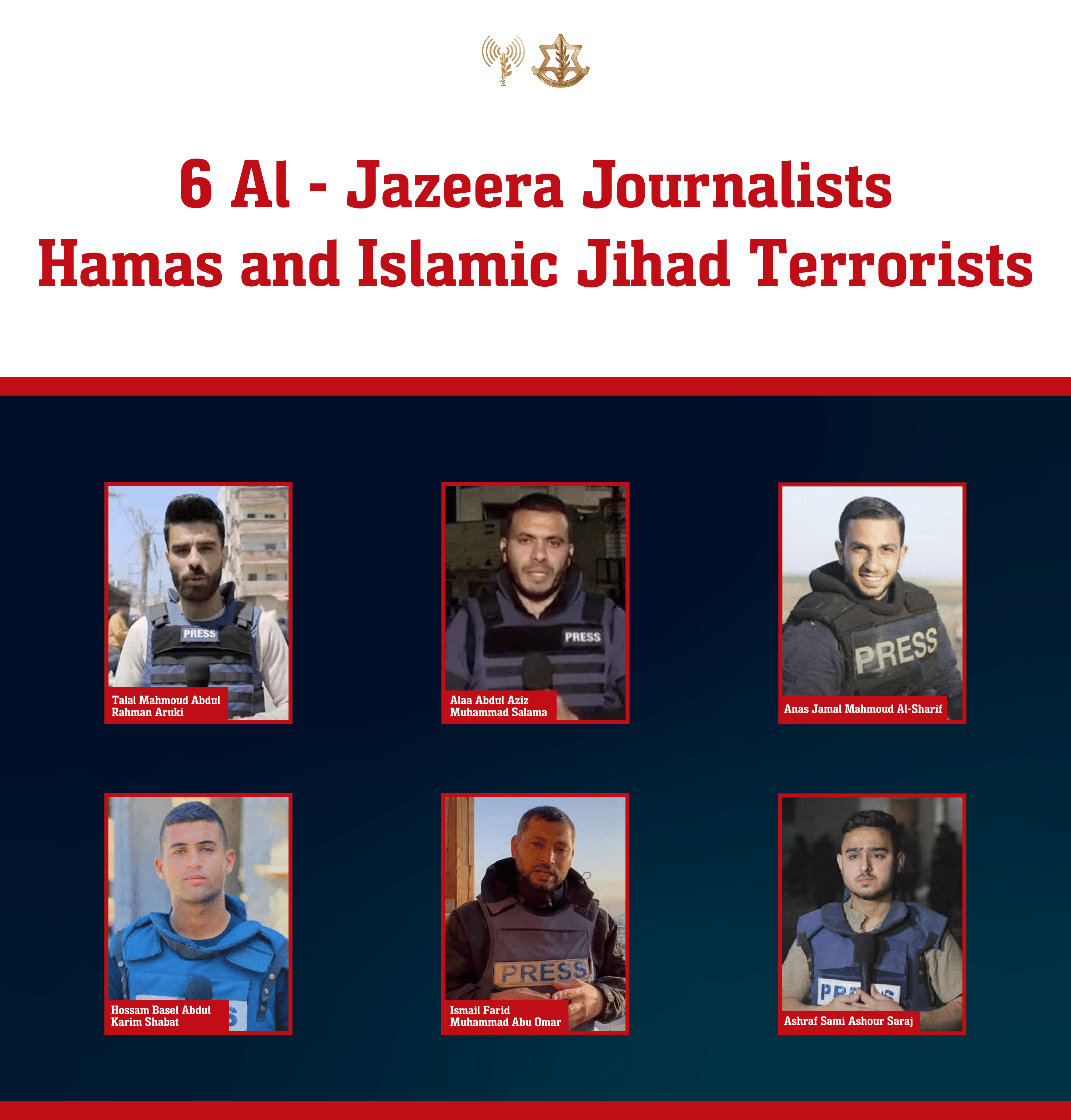
In October 2024, the IDF said documents and intelligence information found in Gaza showed that six Al Jazeera journalists were affiliated with Hamas or Palestinian Islamic Jihad. The IDF said the documents included personnel tables, training-course lists, phone directories, and salary records.
The Real Accountability Question
CPJ’s revisions now put the verification process itself under scrutiny. The organization acknowledges that verification in Gaza is extraordinarily difficult, a reality that makes casualty documentation unusually sensitive and consequential. But that difficulty also underscores the need for greater caution before disputed names are entered into the international record as killed journalists, cited by major institutions, and used to shape public claims about Israel’s conduct in Gaza. Once those claims circulate, later corrections rarely receive the same attention as the original count.