


Jewish Onliner is an independent publication. If you find our work valuable, please consider becoming a paid subscriber.
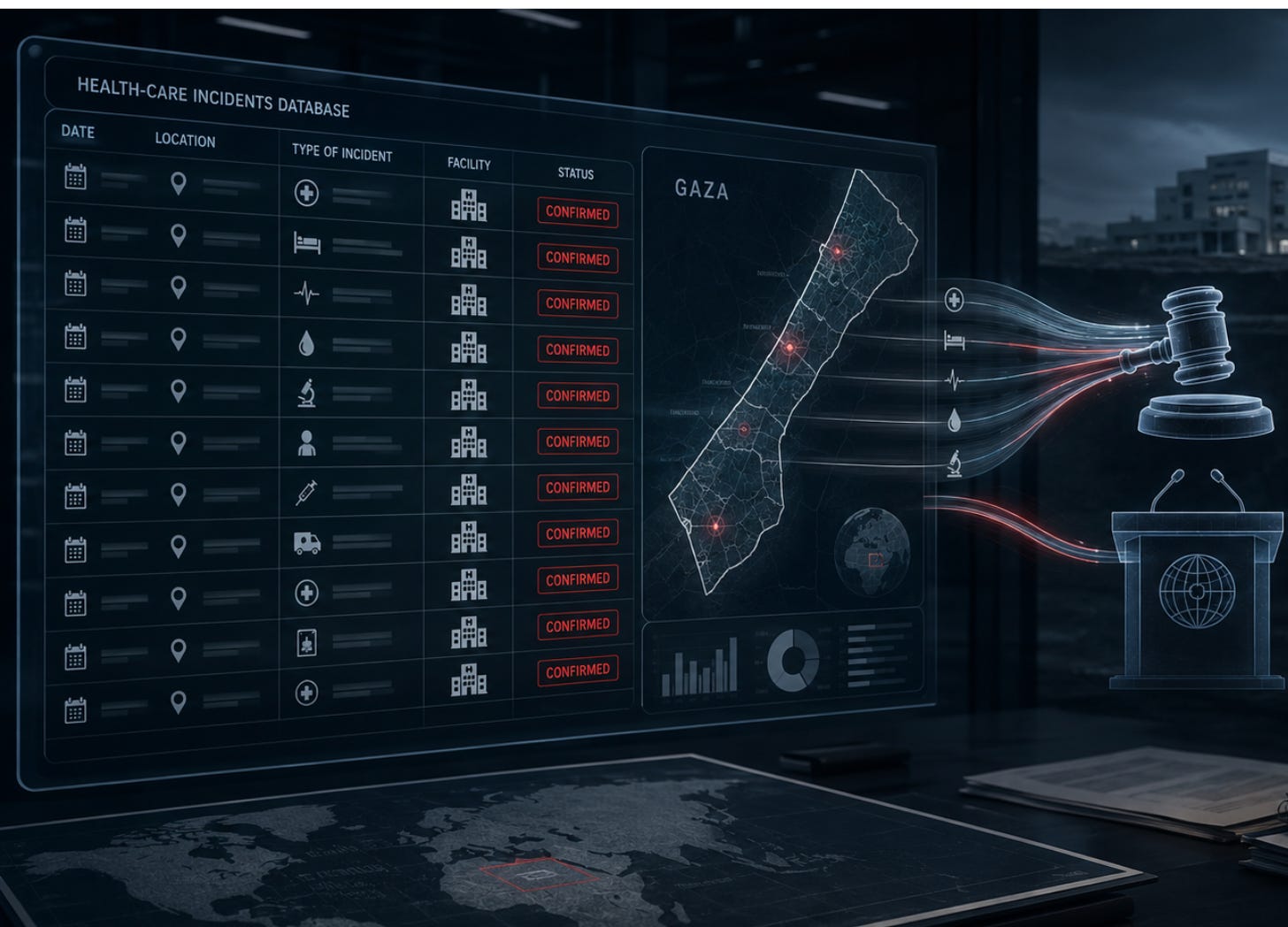
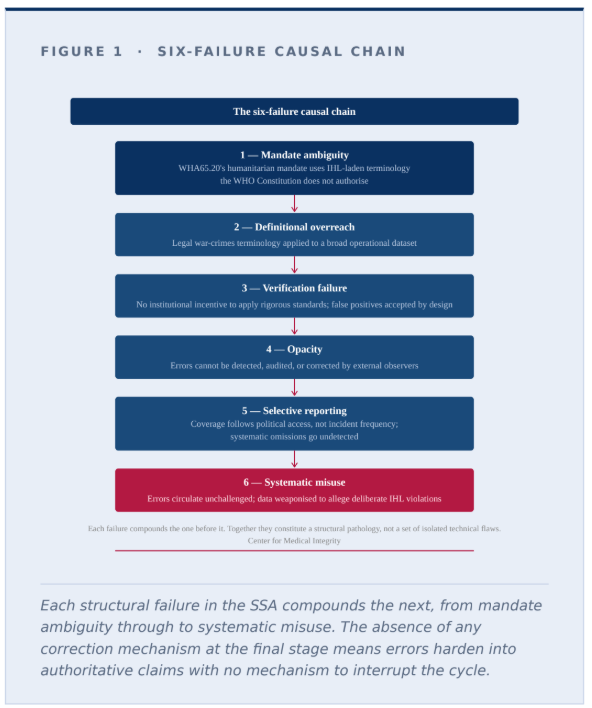
A May 2026 policy paper by the Center for Medical Integrity argues that the World Health Organization’s Surveillance System for Attacks on Health Care is being used in international forums in ways that turn a public-health monitoring tool into a political instrument against Israel. The report says SSA collapses analytically distinct categories of incidents under the single label “attacks on health care,” allowing obstruction, intimidation, and direct violence to be cited together without the legal context needed to assess culpability.
The issue matters now because Gaza hospital cases remain central to diplomatic, legal, and media narratives about the war, while evidence and intelligence assessments regarding Hamas and PIJ exploitation of medical infrastructure are often treated as secondary or omitted altogether.


A Broad Database With a Loaded Label
The report explains that WHO defines an attack on health care as “any act” of verbal or physical violence, obstruction, or threat that interferes with health services during emergencies. Its own examples include heavy-weapons violence, psychological intimidation, obstruction to care, armed searches, denial of services, and “militarization of health care facility.”
That breadth may make sense for emergency monitoring. But CMI argues the word “attack” gives operational data the appearance of a legal finding. WHO has also acknowledged that both high-impact events, such as bombings, and lower-impact incidents, such as verbal threats, are included in the same framework.
The concern, CMI argues, is not merely semantic. Under WHO’s SSA methodology, certainty levels indicate confidence that an incident occurred, but they do not resolve disputed questions about perpetrator identity, legal culpability, intent, proportionality, or whether a facility had previously been used for military purposes. WHO separately says it does not collect or verify perpetrator information and that its objective is to raise awareness of attacks on health care, not to pursue accountability.
How Counts Become Accusations
The sharpest allegation in the report concerns the way WHO-linked data travels through international institutions. According to CMI, at WHO’s 158th Executive Board session in February 2026, WHO’s Eastern Mediterranean regional office cited SSA data to claim that “almost 1,000 people” had been killed in documented attacks by Israel, with nearly half that figure deriving from the disputed October 2023 Al-Ahli Hospital explosion.
CMI’s broader concern is that WHO-linked health data can omit battlefield context relevant to legal assessment. U.S. officials said in November 2023 that Hamas and Palestinian Islamic Jihad used Al-Shifa Hospital and tunnels beneath it to support military operations and hold hostages. A later declassified U.S. assessment, reported by AP, said American intelligence was confident the groups used the Al-Shifa complex to house command infrastructure, exercise command-and-control activity, store some weapons, and hold at least a few hostages.
Human Rights Watch later found that the Al-Ahli blast resulted from an apparent rocket-propelled munition of a type used by Palestinian terror groups, while saying a full investigation was still needed. HRW also said it could not corroborate the Gaza Health Ministry’s reported death toll of 471, calling it significantly higher than other estimates and out of proportion with visible damage.
The case illustrates the report’s central warning: an early battlefield claim can enter a health database, continue circulating with institutional authority, and later be folded into diplomatic accusations against Israel even after key facts are contested.
Israel itself told WHO’s Executive Board that the body was in “dire need of reform” and accused the session of fueling “yet another politicized discussion” while ignoring facts on the ground.
The Legal Distinction WHO Data Cannot Resolve
International humanitarian law affords special protection to medical facilities, personnel, transports, and supplies, but that protection is not absolute. CMI notes that, under the Geneva Conventions and ICRC guidance, protected medical status can cease when such entities are used outside their humanitarian function for acts harmful to the enemy, including military operations, weapons storage, sheltering able-bodied combatants, use as observation or firing positions, or placing military objectives near protected sites for shielding purposes.
That distinction is central to CMI’s critique of WHO’s data. A database entry categorized as an “attack on health care” does not establish whether the protected status of a facility, vehicle, personnel, or medical supply chain had been compromised by military use. Nor does it determine whether the incident involved a lawful military objective, whether warnings were required or provided, whether feasible precautions were taken, or whether expected civilian harm was disproportionate. CMI argues that without this context, WHO’s surveillance data can be cited in ways that imply legal conclusions the system itself is not designed to reach.
A Data Problem With Strategic Consequences
The report points to a real gap between what health databases count and how those counts are used. In Gaza, CMI argues, that gap creates a recurring evidentiary risk for Israel: broad incident counts may be cited as proof of deliberate or unlawful Israeli targeting, while evidence regarding Hamas and PIJ use of medical infrastructure may be underweighted.
CMI’s reform demand is therefore straightforward: WHO should make SSA’s limitations explicit wherever the data are published or cited, or provide enough context for readers to distinguish alleged unlawful attacks from battlefield incidents shaped by the military use of protected medical infrastructure.
China is the biggest funder of the WHO. Are you really surprised that their data is biased?
Label...or libel