


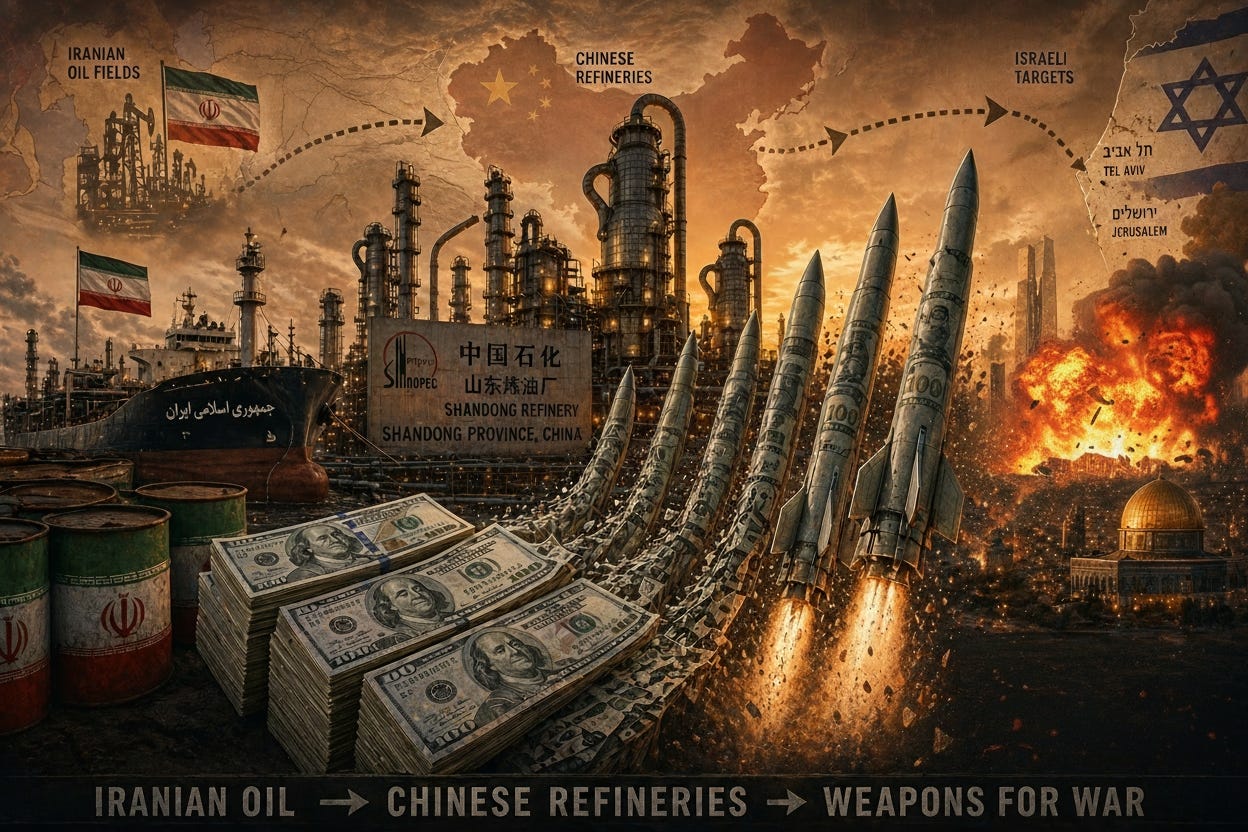
The U.S. Treasury Department issued an alert this week warning financial institutions about Chinese ‘teapot’ oil refineries processing Iranian crude, a trade U.S. officials say benefits Iran’s military, weapons programs, and regional terrorist proxy network. The April 28 warning comes as China purchases approximately 90% of Iran’s oil exports, with independent refineries accounting for the majority of these imports.
The Revenue Pipeline
Iran’s oil sales through Chinese buyers generate billions of dollars annually for the regime’s armed forces. Analysis by Small Wars Journal argued that Iran’s most recent defense budget allocated over half of its oil export revenues to the armed forces and security institutions, with the Islamic Revolutionary Guard Corps (IRGC) receiving the largest share.
On April 24, Treasury sanctioned Hengli Petrochemical and approximately 40 shipping firms and vessels tied to Iran’s shadow fleet. Since at least 2023, Hengli has received Iranian crude oil shipments from Iran’s Armed Forces General Staff, generating hundreds of millions of dollars in revenue for the Iranian military. The refinery has processed over five million barrels of Iranian crude delivered by sanctioned shadow fleet vessels.

Funding the Axis of Resistance
U.S. sanctions records describe Chinese purchases of Iranian oil as a major revenue source for Iran’s armed forces and terrorist proxy network, creating a financial link between the oil trade and Tehran’s regional military activity. Treasury said in November 2025 that, since January 2025, the IRGC-QF had transferred more than $1 billion to Hezbollah, mostly through money exchange companies.
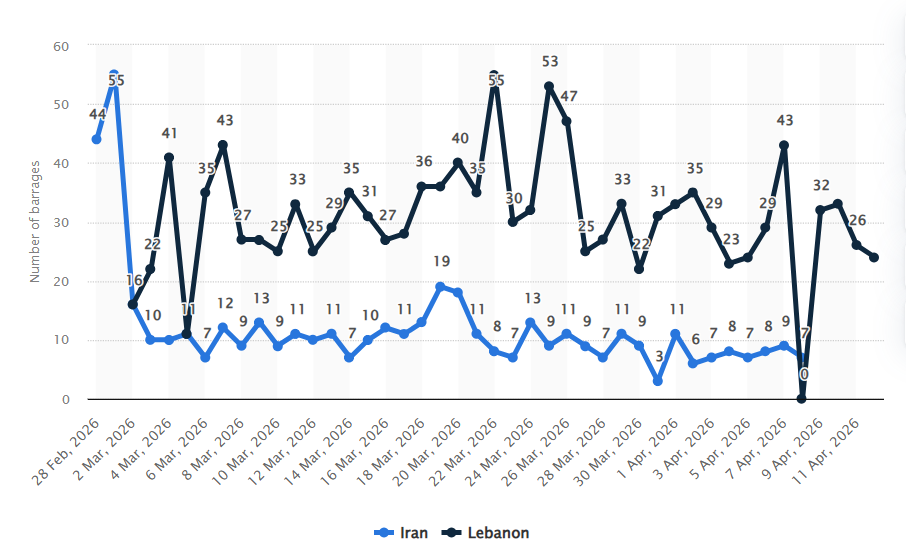
Treasury’s focus on Iranian oil revenue comes amid a war that has brought sustained missile and rocket fire against Israeli territory. According to Statista, Iran fired a total of 479 missile barrages at Israel between the start of the U.S.-Israel war with Iran on February 28, 2026, and the April 9 ceasefire. Statista also recorded 1,288 barrages from Lebanon as of April 26, after Hezbollah joined the Iranian strikes. On March 28, Yemen’s Houthi terror group joined the offensive, claiming their first attack against Israel.
The Shadow Fleet Network
Treasury’s alert highlights the sophisticated evasion tactics enabling this trade. Iranian oil reaches Chinese refineries through a “shadow fleet” that employs ship-to-ship transfers at sea, falsified documentation, and vessel identity manipulation to obscure the oil’s origin.
Front companies in Asia and the United Arab Emirates have historically served as intermediaries, obscuring the Iranian origin of the oil and allowing refineries to access the U.S. financial system for dollar-denominated transactions and procurement of American goods.
Iran Faces a Gulf Setback
The Treasury alert comes as Iran faces a major setback in the Gulf. On April 28, the United Arab Emirates announced it will leave OPEC effective May 1. The decision, which Reuters reported followed a review of UAE energy policy, comes against the backdrop of the Iran war and Abu Dhabi’s increasingly close ties with Washington and Israel.


The UAE has long served as a financial hub where Iranian businesses evaded Western sanctions. Front companies based in the Emirates have facilitated billions in illicit Iranian oil sales to China, according to Treasury sanctions records. But after suffering Iranian attacks, the UAE has strengthened its relationships with the United States and Israel, distancing itself from Tehran.
The move adds another layer of uncertainty to Gulf energy politics at a time when Treasury is targeting the sanctions-evasion channels Iran uses to move oil revenue through foreign markets.
Secondary Sanctions Warning
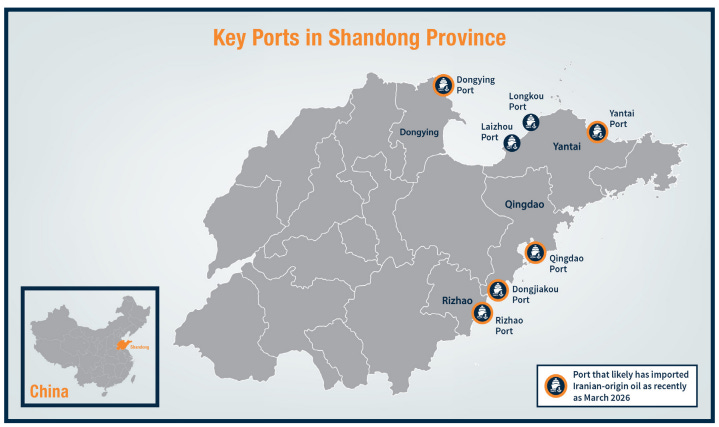
The Treasury Department is now warning that it’s prepared to deploy secondary sanctions against foreign financial institutions that continue supporting Iran’s oil trade. The alert urges banks to implement risk-based controls to avoid facilitating transactions involving designated teapot refineries, conduct enhanced due diligence on transactions involving China-based refineries, particularly in Shandong Province, and communicate sanctions compliance expectations clearly to correspondent banks.
Treasury Secretary Scott Bessent pledged to continue targeting “the network of vessels, intermediaries, and buyers Iran relies on to move its oil to global markets,” warning that “any person or vessel facilitating these flows, through covert trade and finance, risks exposure to U.S. sanctions.”
For Israel, the stakes are acute. As long as Chinese refineries continue processing Iranian crude, Tehran preserves a major revenue stream that U.S. officials say benefits its military and weapons programs, while helping sustain the regional proxy network that has repeatedly targeted Israeli civilians and destabilized the broader Middle East.