


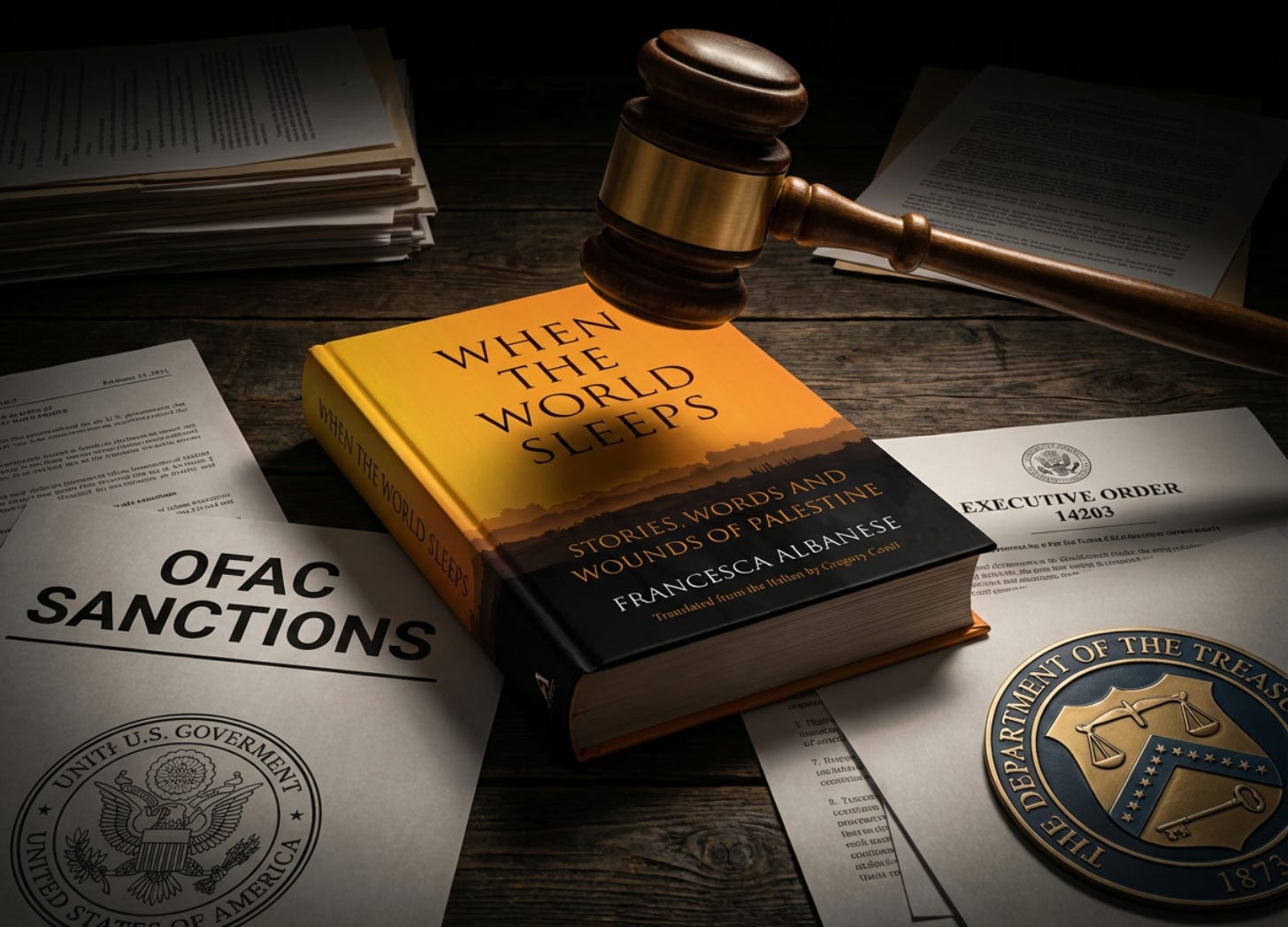
Amazon is facing mounting legal pressure to remove books and author services for Francesca Albanese, the UN Special Rapporteur on Palestinian territories designated as a Specially Designated National (SDN) by federal authorities in July 2025, with advocacy organizations warning that the company’s continued hosting of her author page and book sales potentially violates U.S. sanctions law.
Under the International Emergency Economic Powers Act, all property and interests of SDNs are blocked and cannot be transferred or paid out without specific OFAC authorization, creating serious compliance exposure for the e-commerce giant.
Two prominent watchdog organizations—the National Jewish Advocacy Center and UN Watch—have issued formal notices to Amazon asserting that allowing Albanese to earn income from book sales violates federal sanctions provisions. The groups cite particular concern over Amazon’s upcoming April release of Albanese’s book “When the World Sleeps: Stories, Words and Wounds of Palestine,” arguing that facilitating such transactions without Office of Foreign Assets Control (OFAC) authorization exposes the company to strict liability.
Mark Goldfeder, director of the National Jewish Advocacy Center, emphasized that “under federal law, property and interests of Specially Designated Nationals are blocked and may not be transferred or paid out without specific authorization.”

Sanctions Designation and Legal Framework
Albanese’s SDN designation stems from Executive Order 14203, issued by President Trump in February 2025. According to the State Department’s official release, Secretary of State Marco Rubio sanctioned Albanese for “directly engaging with the International Criminal Court in efforts to investigate, arrest, detain, or prosecute nationals of the United States or Israel, without the consent of those two countries.”
Rubio accused Albanese of writing “threatening letters to dozens of entities worldwide, including major American companies across finance, technology, defense, energy, and hospitality,” and pursuing “campaigns of political and economic warfare” that threaten American national interests.
The designation states that “any contribution, provision of funds, goods services, or donation for the benefit of the sanctioned individual is prohibited”—representing the strongest sanctions that can be placed on a foreign individual.
Under 50 U.S.C. §1705(a), transactions involving SDNs without proper OFAC licensing constitute federal law violations. Goldfeder detailed that “the prohibition extends to royalties, advances, deferred payments, escrow credits, correspondent routing, and indirect facilitation.” Violations can trigger civil penalties, administrative enforcement, and potential criminal liability, with OFAC operating under a strict-liability standard that holds violators accountable even for unintentional violations.
UN Watch’s Legal Demand
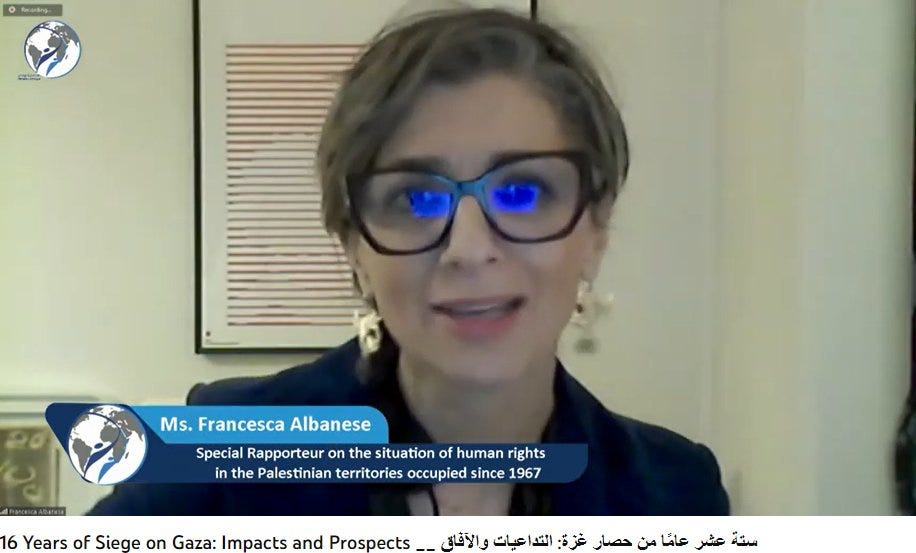
UN Watch, the Swiss-based organization that monitors the United Nations, sent Amazon a formal legal demand letter on October 30, 2025. Executive director Hillel Neuer reminded Amazon CEO Andy Jassy that the company faces significant exposure if it continues providing a platform for Albanese.
The letter argues that Amazon’s e-commerce platform—providing publishing, promotion, sales, and distribution tools—constitutes prohibited services under Executive Order 14203 and its implementing regulations at 31 C.F.R. Part 528. UN Watch identifies five publications by Albanese currently available on Amazon, including Palestinian Refugees in International Law and A Moon Will Rise from the Darkness.
Neuer asserted that Amazon’s conduct violates its “clear internal terms of use as well as external compliance obligations under U.S. sanctions laws—most notably under Executive Order 14203—which impose strict liability and expose violators to significant fines and penalties,” adding that “even unintentional violations expose Amazon to significant civil penalties.”
The letter argues that while the "information exception" under 50 U.S.C. § 1702(b)(3) protects import and export of informational materials, OFAC regulations specify that this exemption does not extend to services that market, produce, or distribute such materials or that result in royalty payments or other financial benefits to a blocked person.
Amazon’s own terms of service explicitly state that users “may not use any Amazon Service if you are the subject of U.S. sanctions.” Amazon has not publicly commented on the legal demands.
Georgetown Cuts Ties as NJAC Pursues Defamation Claims
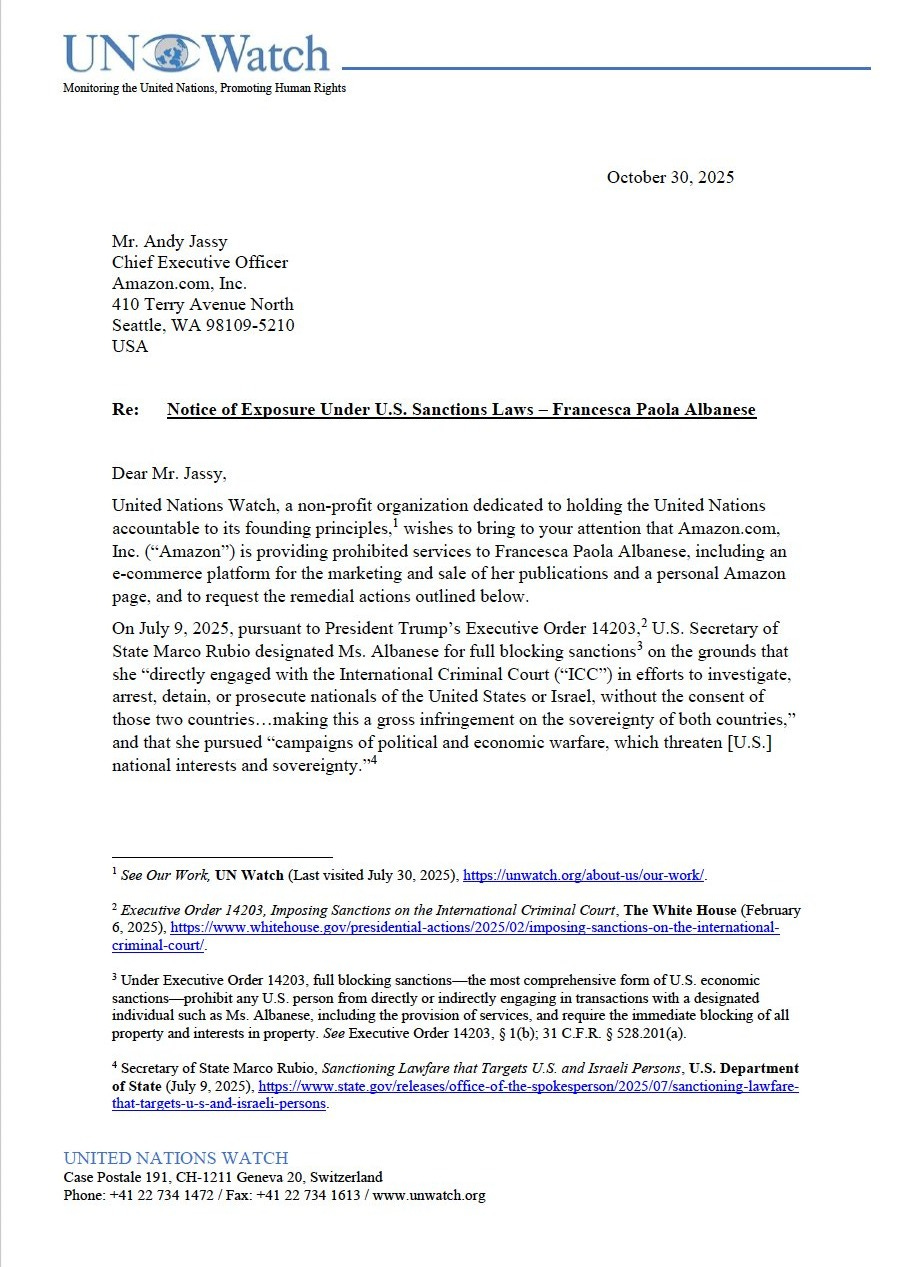
Just days before the intensified Amazon legal pressure, Georgetown University severed its ties with Albanese following pressure from American officials. The director of Georgetown’s Alwaleed Center, Nader Hashemi, stated he will invite Albanese to return once sanctions are lifted.
Beyond sanctions enforcement, the National Jewish Advocacy Center filed a defamation lawsuit against Albanese in September 2025 on behalf of two Christian organizations. The case remains pending with no judgment entered. Goldfeder stated that proceeds could be escrowed to satisfy any future judgments if the lawsuit succeeds.
Congressional Pressure Mounts
The involvement of Senator Ted Cruz, copied on UN Watch’s letter, signals potential Congressional interest. NJAC indicated they are pursuing similar actions against unspecified “others” beyond Amazon, suggesting the book retail and publishing industry will monitor this case closely.
For Albanese, the sanctions designation creates financial isolation within the U.S. market. The combination of blocked payments and potential escrow for judgment satisfaction could eliminate any U.S.-based revenue from her publications—even as her international sales reportedly flourish.
What can we do?