


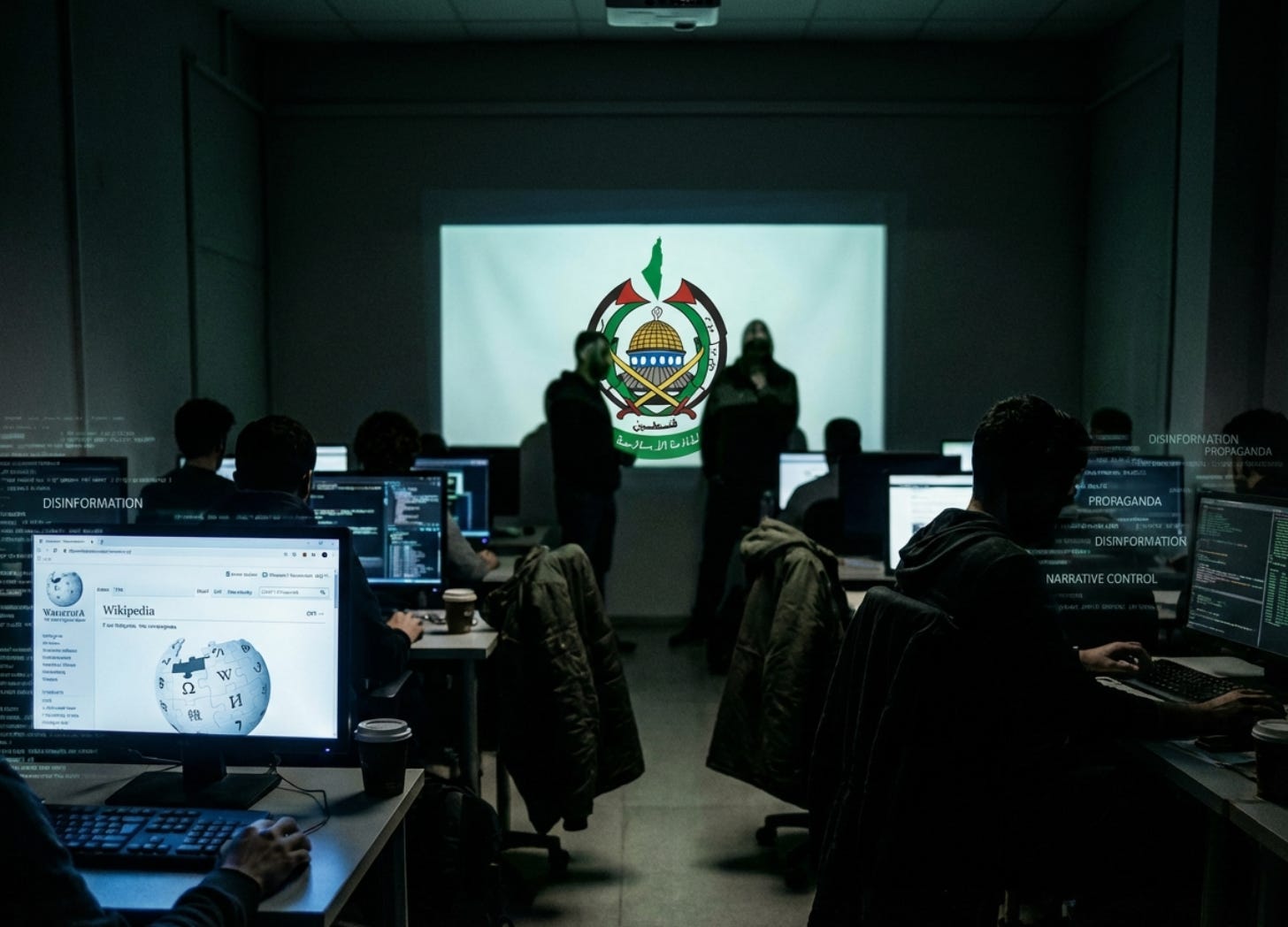
Last Thursday, the Euro-Med Human Rights Monitor launched the third round of its "WikiRights" project in the Gaza Strip. The Geneva-based pro-Palestine organization has alleged ties between its leadership and Hamas, according to watchdog groups. The program is designed to train participants in documentation work and professional Wikipedia editing related to the Israel-Hamas war in Gaza.
According to the organization’s announcement, the training includes creating, developing, and updating content using Wikipedia’s editing tools in both Arabic and English. The program also emphasizes “live field documentation and interviewing victims and witnesses,” which it says is necessary to counter attempts to conceal the “true story” of events.
While training contributors in Wikipedia mechanics is not unusual, the program’s framing highlights a clear advocacy objective. Critics describe that emphasis as a cause for concern about how such work aligns with Wikipedia’s own policies governing neutrality, sourcing, and conflicts of interest.

The Training Program Violates Wikipedia’s Editorial Standards
Wikipedia is governed by three core content policies — Neutral Point of View (NPOV), Verifiability (V), and No Original Research (NOR).
These rules require that content summarize “reliable, independent, published sources with a reputation for fact-checking and accuracy.” Personal testimony collected in the field qualifies as a primary source, which isn’t sufficient for contentious claims about ongoing conflicts.

The WikiRights description, however, places strong emphasis on interviewing victims and witnesses and documenting events directly. That approach may be valuable for advocacy reports or journalistic investigations, but Wikipedia itself is not intended to function as a platform for publishing newly gathered evidence. Instead, such material must usually be vetted and published by independent outlets before it can be cited in encyclopedia entries.
Another issue concerns transparency. Wikimedia’s paid-contribution disclosure rules require editors who are compensated or directed by an organization to disclose their affiliation. If participants in the program receive stipends, equipment, or structured direction on what topics to edit, disclosure would normally be expected under those terms. Without clear public guidance on how trainees are instructed to handle conflicts of interest or disclosures, the program naturally raises questions of coordinated advocacy editing rather than neutral volunteer participation.
Euro-Med’s Alleged Terror-Affiliations
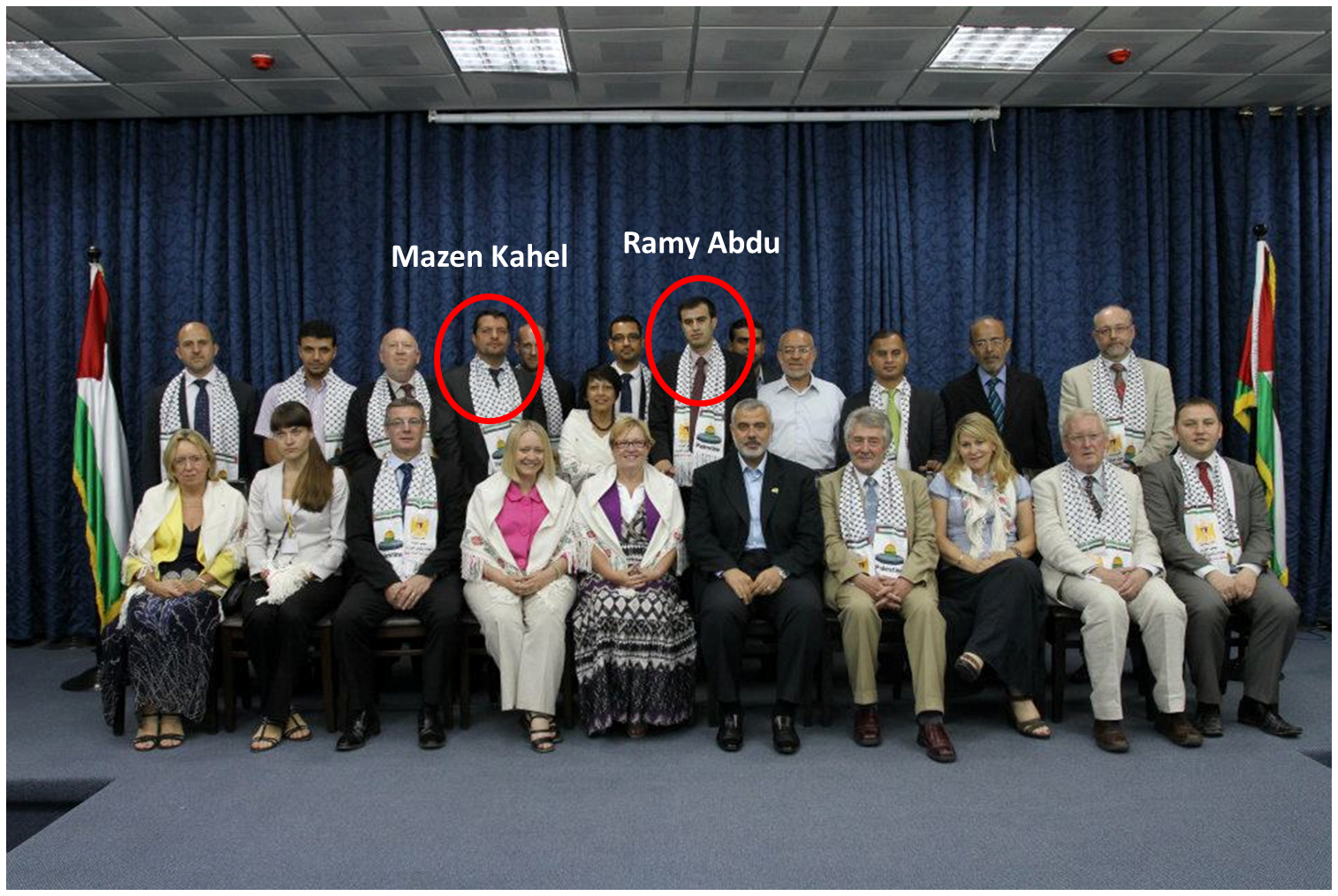
Euro-Med’s leadership has also drawn scrutiny over alleged ties to Hamas and other armed groups. Israel designated Euro-Med chairman Ramy Abdu as Hamas-affiliated in 2013 and placed him under sanction for supporting Hamas’ activities. Abdu’s public record has also fueled controversy. NGO Monitor has published a photograph of Abdu and previous Euro-Med chair Mazen Kahel posing alongside Hamas political leader Ismail Haniyeh in 2011, and Abdu has been documented meeting with Haniyeh in other contexts.
Separately, Abdu has faced criticism over a social media claim that he was a childhood friend of Assad Abu Sharia, identified as a former leader of the Mujahideen Brigades, a Hamas-aligned terrorist organization implicated in the October 7 attacks, including the kidnapping of the Bibas children.
Questions have extended to Abdu's immediate family. After the death of his brother-in-law, Muhammad Daoud Ismail al-Jamassi (Abu Obeida), Abdu publicly acknowledged the relationship. Al-Jamassi was widely reported as a senior figure in Hamas' political bureau, the movement's highest decision-making body.


A Pressure Test for Wikipedia’s Rules
Wikipedia occupies a unique role as one of the world’s most consulted reference sites. Because its entries often shape public understanding of fast-moving conflicts, coordinated editing efforts by any organized group can quickly become a governance issue for the platform.
By explicitly linking documentation, testimony gathering, and Wikipedia editing within a program framed as countering a perceived information battle, Euro-Med’s training program points to the line between advocacy and encyclopedic contribution.
That ambiguity is likely to prompt questions not only about compliance with Wikimedia policies, but also about how the platform handles organized editing campaigns during ongoing conflicts—particularly when such campaigns are led by groups with alleged ties to Hamas, raising concerns about the motivations and potential bias underlying the editorial efforts.