


Jewish Onliner is an independent publication. If you find our work valuable, please consider becoming a paid subscriber. You can also subscribe to us on WhatsApp and Telegram. Follow us on YouTube, TikTok, Instagram, Discord, and X.
Michigan Democratic U.S. Senate candidate Abdul El-Sayed has built his campaign around higher taxes on billionaires, opposition to corporate PAC influence, and standing up for the working class. El-Sayed’s Democratic primary has unfolded against a backdrop of controversies involving fellow DSA-aligned figures, including a DSA member’s recent call to bomb Iranian and Cuban diaspora communities.
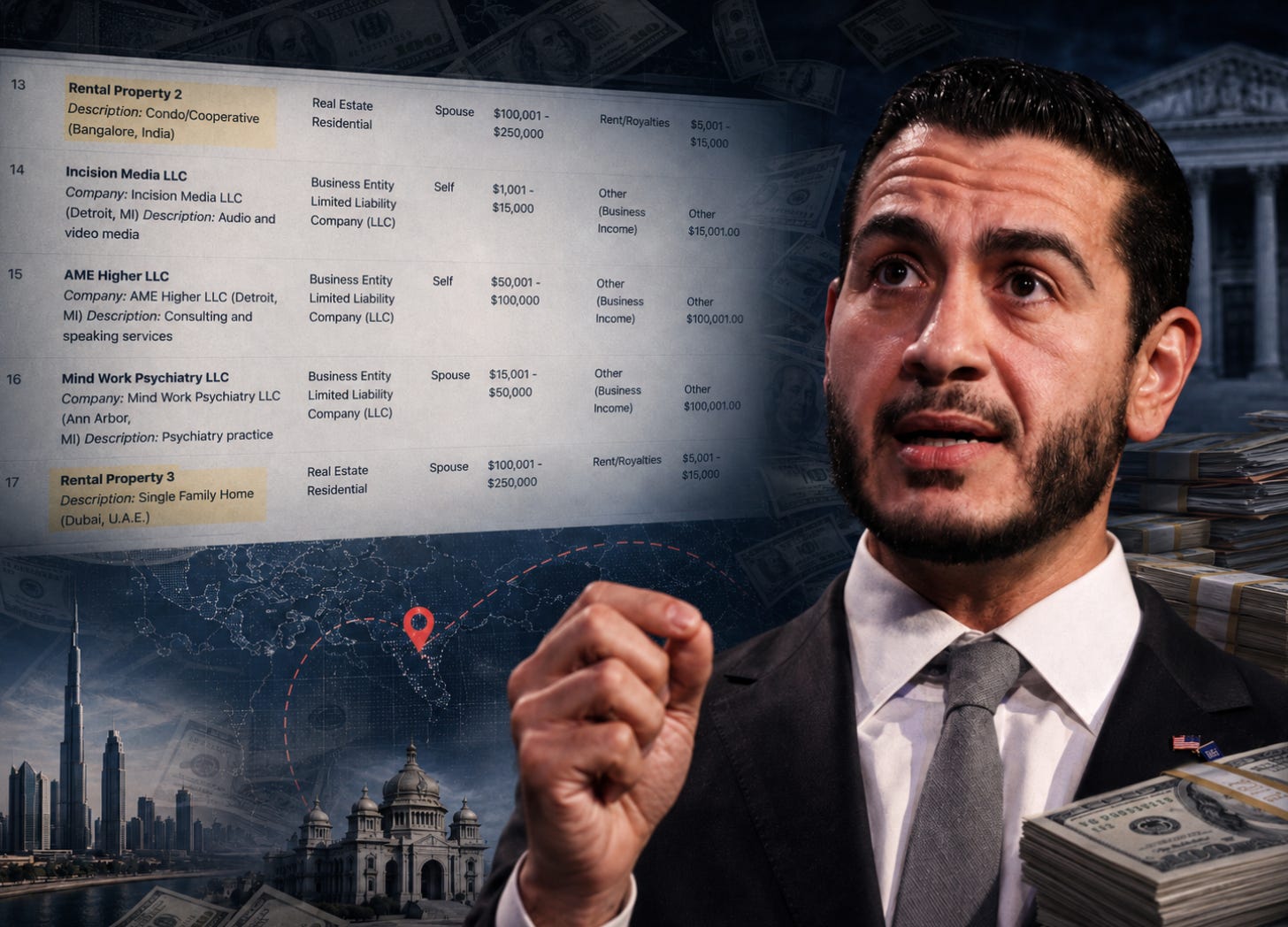
His most recent financial disclosure, filed July 27, 2026, shows that his wife, board-certified psychiatrist Sarah Jukaku, owns two overseas rental properties — one in Bangalore, India, and one in Dubai, United Arab Emirates.
His June 2025 disclosure listed the Bangalore property as his wife’s only overseas rental. Valued between $100,001 and $250,000, it generated between $5,001 and $15,000 in rental income. The Dubai property, also valued between $100,001 and $250,000, first appeared in the latest annual disclosure, filed hours before the July 27 debate. Combined, the properties have a reported gross value of $200,002 to $500,000.
Bridge Michigan’s review placed the household’s estimated reportable wealth between roughly $700,000 and $2.1 million, up from the $586,022 to $1.6 million estimate Bridge derived from the June 2025 filing.
The disclosures and outside spending have given critics new grounds to question whether El-Sayed’s household finances and campaign support match the working-class, anti-big-money message at the center of his candidacy.


Campaign Finance
El-Sayed has also benefited from outside spending: Fighting for Michigan, an independent-expenditure PAC, has spent more than $2.3 million in support of his campaign. Its largest individual donor is El-Sayed's father-in-law, Jukaku Tayeb, who contributed $300,000 to the PAC across three $100,000 installments on February 3, March 31, and June 22, according to FEC records.


A review by the Washington Free Beacon found that Tayeb has served on ISNA’s Founders Committee since at least 2007, previously led CAIR-Michigan and remains on its board. Federal prosecutors named ISNA and CAIR as unindicted co-conspirators or joint venturers in the Holy Land Foundation case and identified them in filings as connected to U.S. Muslim Brotherhood networks.
Islamic Relief Fundraisers Draw Scrutiny
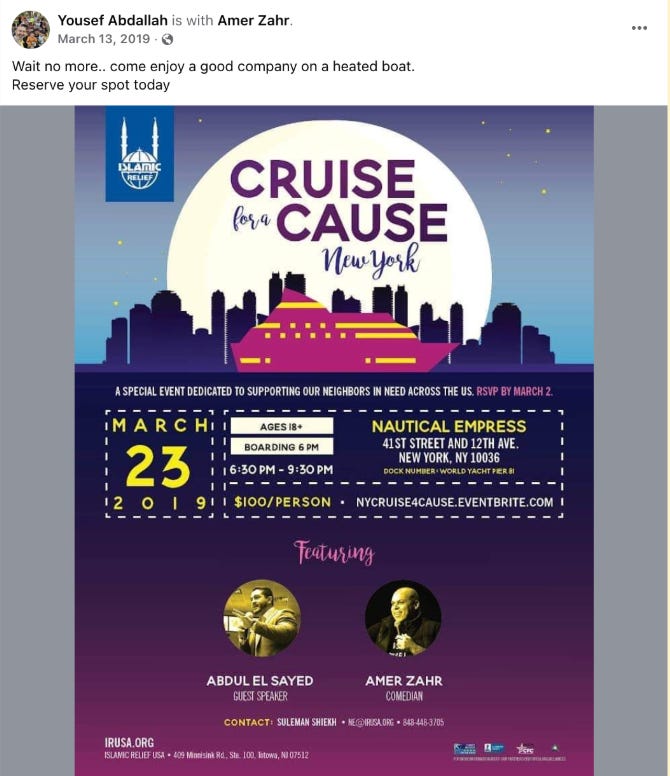
A July 28 it was reported that El-Sayed headlined four $100-per-person Islamic Relief USA fundraisers in 2019, including one aboard a private charter yacht in New York. At the New York and Washington events, he appeared with Amer Zahr, who said at a 2017 rally that he stood with Hamas and Hezbollah against “Israeli occupation.” Islamic Relief Worldwide, then affiliated with IRUSA, was banned from operating in the West Bank by Israel in 2014 over alleged Hamas financing.
The scrutiny echoes broader concerns about how extremist rhetoric can find cover within larger political movements, as documented in the DSA Liberation Caucus's endorsement of the accused killer of two Israeli embassy staffers" fits the "guilt by proximity" pattern already running through that section.
Association With Hasan Piker Amid Federal Scrutiny
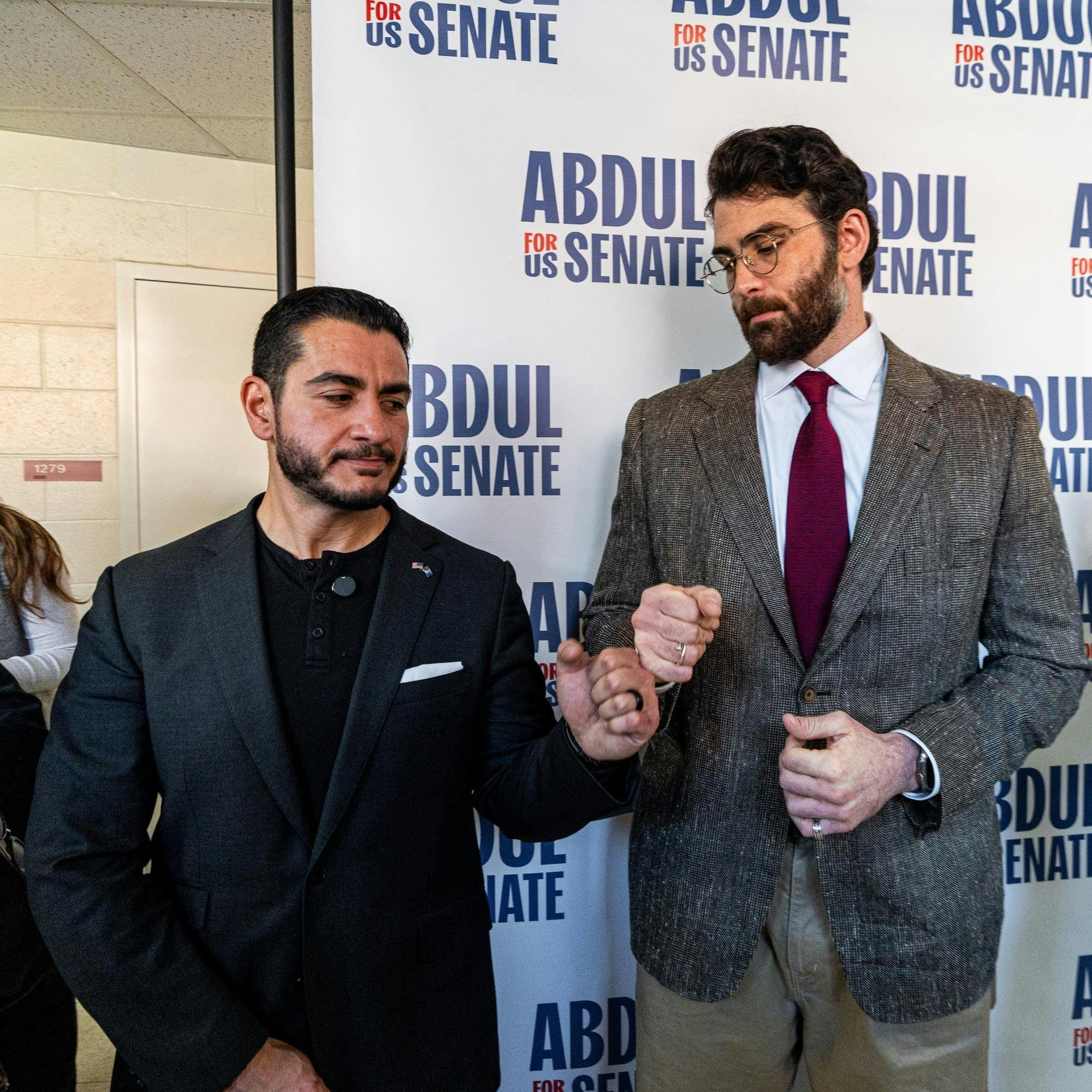
El-Sayed has faced criticism for appearing alongside Twitch streamer Hasan Piker, who has more than 3 million followers on the platform, at two campaign events on April 7, 2026 — one at Michigan State University and one at the University of Michigan in Ann Arbor.
Stevens, the Anti-Defamation League and other Democratic figures criticized the appearances, citing previous Piker statements, including his remark that “America deserved 9/11” and a May 2024 statement that “it doesn’t matter if rape happened on October 7th” because “it doesn’t change the dynamic” for him.
In late May 2026, Fox News reported, citing unnamed sources, that the Treasury Department’s Office of Foreign Assets Control had sent administrative requests for information to Piker and CodePink co-founder Medea Benjamin concerning a March trip to Cuba with the Nuestra América Convoy. Fox described it as part of a broader inquiry involving as many as 40 Americans.
A Growing Political Liability
Taken together, the spouse-owned overseas properties, family-backed super PAC support and controversial political associations have become a major vulnerability for El-Sayed. Scrutiny now extends beyond his personal financial disclosure to the outside funding and political relationships surrounding his candidacy. In the closing days of the primary, these issues give opponents a broader case against the working-class outsider image he has cultivated.